POSCO Future M Seeks a Turnaround with LFP; Price Target Raised
- Input
- 2026-10-21 08:16:05
- Updated
- 2026-10-21 08:16:05
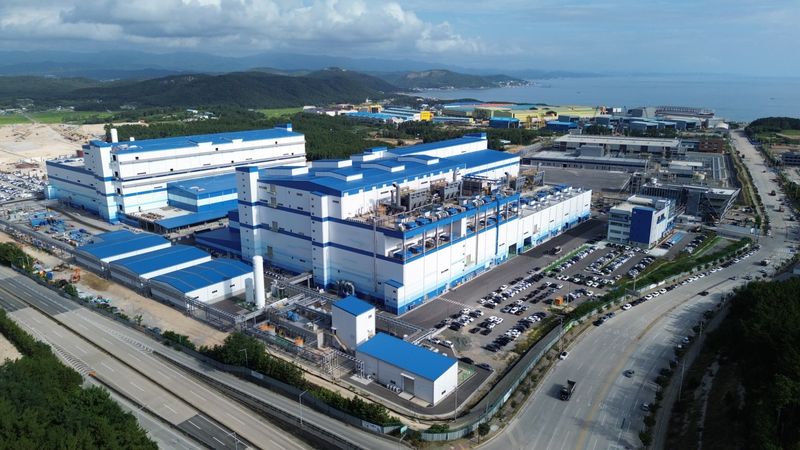
[Financial News] POSCO Future M is moving to target the U.S. energy storage system (ESS) market by converting existing cathode material production facilities to make lithium iron phosphate (LFP).
The strategy is to reduce investment costs and raise capacity utilization by using existing facilities instead of building a new plant. However, with profitability in its cathode and anode materials businesses recovering slowly, results for the third and fourth quarters are also expected to fall short of market expectations.
On the 21st, LS Securities said a visit to POSCO Future M’s Pohang plant confirmed that conversion to LFP had been completed on one of its four existing ternary cathode material calcination lines, with preparations for mass production underway. Another line is being modified, and conversion of all four lines, including the remaining facilities, is expected to be completed around May 2027.
LS Securities maintained its ‘Hold’ rating on POSCO Future M while raising its target price from 140,000 won to 153,000 won.
POSCO Future M is focused on the opening up of demand for non-Chinese LFP materials as domestic battery cell makers enter the U.S. ESS market. The company expects LFP to account for about one-third of its cathode material production between 2030 and 2035. Rather than building new facilities, it plans to convert existing ternary production lines to speed up its market entry and improve plant utilization.
Securing cost competitiveness is another key task. POSCO Future M has set a goal of establishing a cost structure that can compete with Chinese companies before benefits from the U.S. Inflation Reduction Act’s (IRA) Advanced Manufacturing Production Credit (AMPC) expire in 2032. It is also pursuing a ‘precursor-free process,’ which skips a separate precursor manufacturing step, as a way to cut costs.
In a report, LS Securities analyst Jeong Gyeong-hui said, “Converting existing ternary lines to LFP is meaningful because it can reduce investment costs and raise utilization compared with adding new capacity. Whether the company can capitalize on the opportunity to enter the U.S. ESS market and commercialize the precursor-free process to secure cost competitiveness against Chinese companies will determine its medium- to long-term business performance.”
However, near-term results are expected to be weak. LS Securities estimated POSCO Future M’s third- and fourth-quarter revenue at 628.1 billion won and operating profit at 13.2 billion won. Revenue is set to decline 22% from the same period a year earlier, while operating profit is expected to fall 81%. The operating profit estimate is below the market consensus of about 20 billion won.
The cathode materials division sought to make up for lower sales volumes to General Motors (GM) by selling small products to China, but sales were weaker than expected and are forecast to fall short of guidance.
A stronger exchange rate and falling lithium prices are also expected to lead to losses. The anode materials division is estimated to sell about 5,500 tons in the third and fourth quarters, but losses are expected to continue because of low capacity utilization.
The basic materials division is expected to perform relatively well. LS Securities estimated it would post operating profit of about 20.3 billion won, supported by stronger product prices amid rising oil prices.
In effect, basic materials will offset the weakness in cathode and anode materials. However, with the basic materials division driving overall profit, the recovery in profitability of the energy materials business will need to be assessed separately.
Analyst Jeong said, “With losses continuing in cathode and anode materials, the basic materials division is likely to drive overall operating profit. Growth expectations are reflected in the share price, but valuation concerns remain given current profitability and return on equity (ROE).”
[email protected] Kang Jung-mo Reporter