Supreme Court: “Even if a defendant turns themselves in, reducing the sentence is up to the court” ... 15-year prison term finalized for killing an acquaintance they lived with
- Input
- 2026-10-21 08:01:28
- Updated
- 2026-10-21 08:01:28
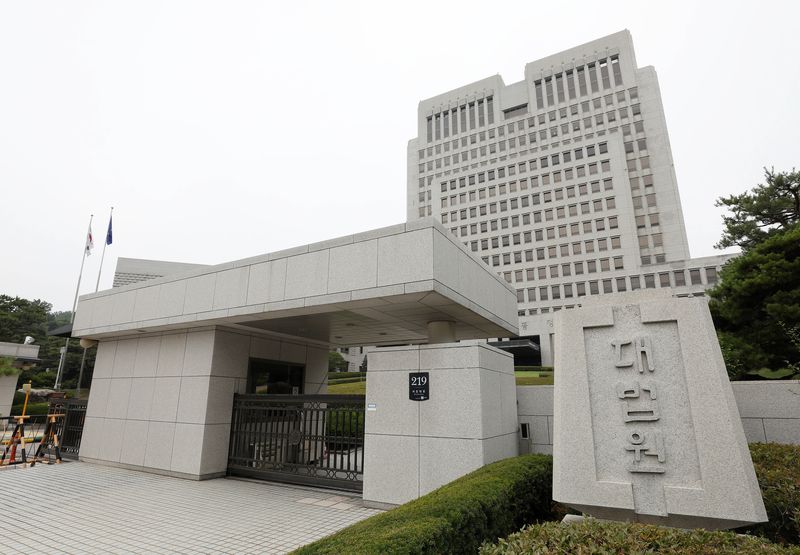
According to legal sources on the 21st, the Supreme Court’s First Division, with Justice Ma Yong-joo as the justice in charge, dismissed A’s final appeal on the 1st and upheld the original sentence of 15 years in prison for murder.
A, who had known B (59) for nearly 30 years and had been living with B for four months, got into a dispute with B at around 12:23 a.m. on December 4 last year at A’s home in Gunsan, North Jeolla Province, while trying to stop B from shouting in a drunken state. When A tried to hit B with a 1-meter clothes-hanger rod, B took it away and struck A in the chest once. Enraged, A stabbed B once, deeply in the left abdomen, with a sashimi knife from the kitchen measuring 32 cm in total length. B died at around 1:26 a.m. that same day from blood loss and other causes. Two minutes after the crime, at around 12:25 a.m., A called 119 and explained what had happened. A was arrested in the act at around 12:49 a.m.
The case raised four main issues: whether A intended to kill, whether A was in a state of diminished mental capacity due to intoxication, whether the 119 call constituted voluntary surrender warranting a reduced sentence, and whether the arrest in the act and the filing of charges were unlawful. Diminished mental capacity refers to a state in which a mental disorder reduces a person’s ability to distinguish things or make decisions. Since both the first and second trials found intent and sentenced A to 15 years in prison, the key question was whether the lower courts’ findings of fact and legal reasoning would stand on appeal to the Supreme Court.
The Jeonju District Court’s Gunsan Branch, which heard the first trial, sentenced A to 15 years in prison last April. It found that, in light of the weapon used, the manner in which the crime was committed, and the type and depth of the wound, the intent could not be considered weak. The court treated the impulsive nature of the crime and the 119 call as favorable sentencing factors, but found it difficult to regard the call as voluntary surrender since A denied intending to kill during the investigation.
The Gwangju High Court, which heard the second trial, also dismissed the appeal last June. It found that A was unlikely to have been in a state of diminished mental capacity, given A’s manner of speaking during the 119 call, the detailed statements made during police questioning on the day of the crime, and the gait shown in CCTV footage recorded about 20 minutes before the crime.
The Supreme Court also upheld the lower courts’ rulings. The panel stated, “There was no error in the lower court’s ruling: it neither violated the rules of logic and experience nor exceeded the limits of the principle of free evaluation of evidence, and it did not misinterpret the law concerning intent to murder, diminished mental capacity or related matters.”
On the claim of voluntary surrender, the court said, “Even when voluntary surrender is recognized, the court merely has the discretion to reduce or remit the sentence; therefore, the lower court’s failure to reduce the sentence on that basis cannot be deemed unlawful.” The Criminal Act provides only that the sentence of a person who voluntarily surrenders may be reduced or remitted, leaving the decision on whether to reduce it to the court. The Supreme Court reached the same conclusion in June 2004. It also addressed A’s arguments that the sentence violated the principles of proportionality between crime and punishment and of responsibility, concluding that they “ultimately amount to a claim that the sentence was unfair.” In light of the various sentencing factors, it found that the 15-year sentence could not be considered grossly unfair.
The claims that the arrest in the act was unlawful and that prosecutorial authority had been abused were not even considered on their merits. The panel said they “cannot constitute valid grounds for a final appeal,” since A had not raised them as grounds for appeal and the lower court had not brought them up for review on its own initiative. In other words, an issue not contested in the appellate proceedings cannot be raised for the first time before the Supreme Court. The panel added that there had been no violation of A’s right to a defense during the investigative process.
[email protected] Kim Dong-gyu Reporter