“The market is crashing, so double returns” ... Retail investors flock to leveraged ETFs
- Input
- 2026-10-21 07:51:59
- Updated
- 2026-10-21 07:51:59
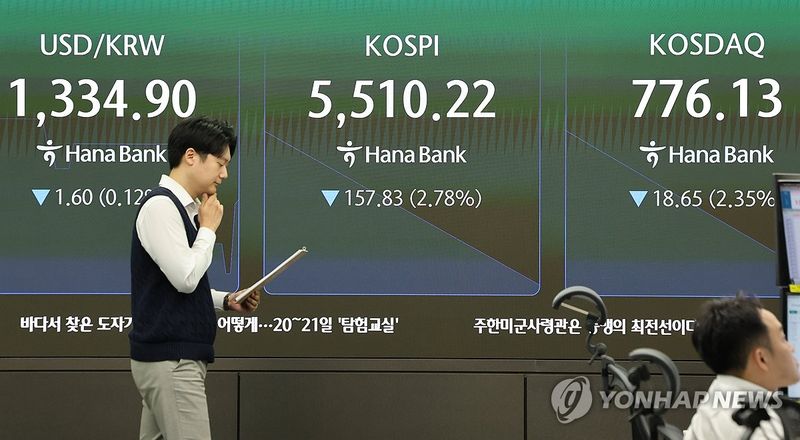
[Financial News] As the KOSPI plunges, individual investors are buying large amounts of leveraged exchange-traded funds (ETFs) to bet on a rebound in the index. Five of the 10 ETFs with the highest net purchases by individual investors over the past week were leveraged products.
The buying is believed to reflect investors putting money into products that magnify both gains and losses compared with ordinary ETFs, as they expect a turnaround after stock prices fell sharply in a short period.
According to Koscom ETF Check on the 21st, the product with the highest net purchases by individual investors over the past week was the KODEX Leverage ETF, with net purchases totaling 668.2 billion won.
The KODEX Leverage ETF tracks twice the KOSPI 200 Index’s daily percentage change. If the KOSPI 200 rises 1% in a day, the ETF is structured to gain about 2%. Conversely, if the index falls 1%, the ETF could lose about 2%.
The ETFs that individual investors bought in large quantities also included leveraged products tied to the KOSDAQ and semiconductor sectors.
The KODEX KOSDAQ 150 Leverage ETF ranked third, with net purchases of 270.9 billion won, while the Samsung KODEX Semiconductor Leverage ETF ranked fourth, at 173 billion won. The KODEX SK Hynix Single-Stock Leverage ETF ranked eighth, at 125.4 billion won, and the Mirae Asset TIGER Semiconductor TOP10 Leverage ETF ranked ninth, at 94.3 billion won.
Five of the 10 ETFs with the highest net purchases by individual investors were leveraged products.
Foreign investors and institutions took a different investment approach from individual investors. Among the 10 ETFs with the highest net purchases by foreign investors, the only leveraged product was the KODEX Leverage ETF, with net purchases of 13.6 billion won. It ranked seventh in net purchases.
Institutional investors mainly bought inverse products, which gain when the index falls, and leveraged inverse products that track twice the rate of decline. No leveraged products were among the 10 ETFs with the highest net purchases by institutions.
Unlike foreign investors and institutions, individual investors focused on products that can generate high returns when the index rises. The increase in net purchases of leveraged ETFs is seen as a sign that many individual investors expect a rebound in the stock market.
Given the steep recent decline in the KOSPI, demand for leveraged products appears to have grown among investors seeking higher returns than ordinary ETFs would offer if a short-term rebound occurs.
The KOSPI’s decline this month was 18.8%, the steepest among major stock markets worldwide. In particular, it plunged 14.46% in the week from the 12th to the 16th, when individual investors’ purchases of leveraged ETFs were concentrated.
The KOSPI fell for seven consecutive trading days, from the 6th through the 15th. Its cumulative decline over that period reached 20.70%.
There have been only three occasions in the past when the KOSPI fell more sharply over seven trading days. It dropped 25% in December 1997 amid the International Monetary Fund (IMF) foreign exchange crisis, and 31% in October 2008, when the Global Financial Crisis (GFC) occurred.
The KOSPI also fell 25% over seven trading days in March 2020, when the financial markets plunged due to COVID-19.
The financial investment industry is warning that while leveraged ETFs offer the prospect of high returns, they also carry a high risk of losses.
In particular, even if investors buy in anticipation of an index rebound, further declines in stock prices can cause losses to mount faster than with ordinary ETFs. Because leveraged ETFs track twice the daily return, losses in volatile markets may be greater than investors expect.
[email protected] Han Seung-gon Reporter