Jeju superintendent says up to 1.2 million won a year is available for teacher counseling after support criticized as “the lowest”
- Input
- 2026-10-21 00:03:14
- Updated
- 2026-10-21 00:03:14
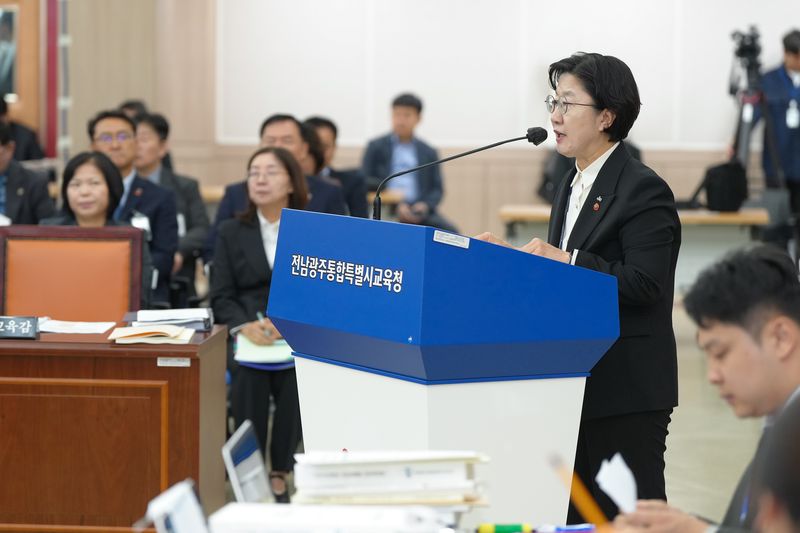
【Financial News Jeju = Reporter Jeong Yong-bok】 In response to lawmakers’ criticism that support for teacher counseling in Jeju was among the lowest nationwide, Jeju Superintendent of Education Ko Eui-sook acknowledged inconsistencies in the submitted materials and said she would correct them. An AI-based written- and essay-response assessment system and the disclosure of education finance performance were also issues at the audit.
According to the Jeju Special Self-Governing Province Office of Education on the 20th, Rep. Park Beom-gye of the Democratic Party of Korea said at that day’s National Assembly Education Committee audit, held at the Jeonnam office of the Jeonnam-Gwangju Integrated Special City Office of Education, that Daejeon and Jeju had the lowest levels of support for teacher counseling.
Superintendent Ko said, “There was some confusion in the submitted materials, and I will correct it,” explaining that “each teacher can receive counseling support for up to 12 sessions a year and up to 1.2 million won a year.”
She added that psychiatric treatment costs are covered up to 500,000 won per teacher per year, while injury and psychological treatment costs related to interference with educational activities are covered up to 3 million won through the Teacher Protection Mutual Aid Program.
An AI-based written- and essay-response assessment system also became an issue. Rep. Kim Mun-su of the Democratic Party of Korea asked why the Jeju education office had not built its own written- and essay-response assessment system.
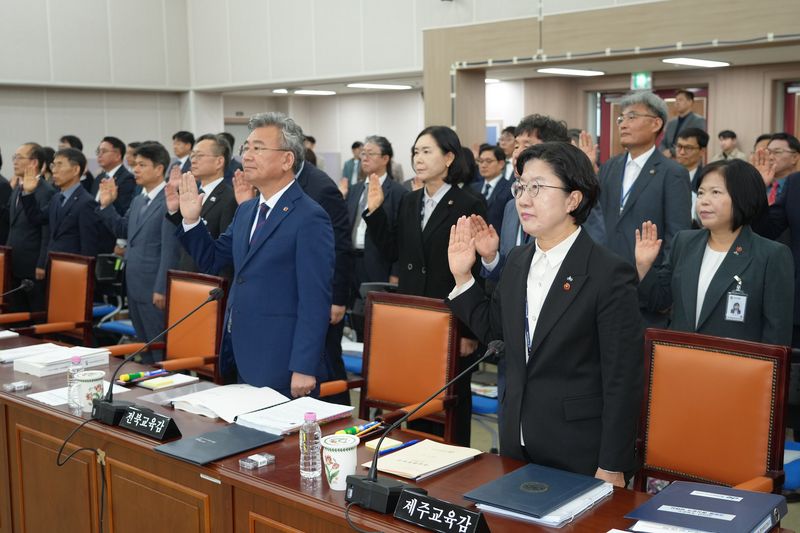
Superintendent Ko replied that “teachers are using the AI tools on the teaching and learning platform ‘Jeju Badang’ at their discretion.” She also said the plan was to review the progress made by the Ministry of Education and other cities and provinces, and to reduce teachers’ grading workload through cooperation to make joint use of the system.
Written- and essay-response assessment is a method in which teachers evaluate answers written by students themselves according to set criteria. It can gauge students’ critical thinking and ability to express themselves, but grading and feedback take considerable time.
Accountability in education finance management was also raised. Rep. Ko Min-jeong of the Democratic Party of Korea called for education offices, as part of discussions on reforming the Local Education Subsidy Grants, to assess and analyze how existing budgets were spent and the results of funded programs, and to make that information public.
The Local Education Subsidy Grants are a major source of education funding allocated by the government to provincial and metropolitan education offices. The audit raised the need to evaluate and disclose the performance of education finance.
Superintendent Ko said she generally agreed with disclosing the results of budget performance evaluations, while stressing that because educational outcomes do not emerge in the short term, the relationship between financial investment and program results should be assessed carefully.
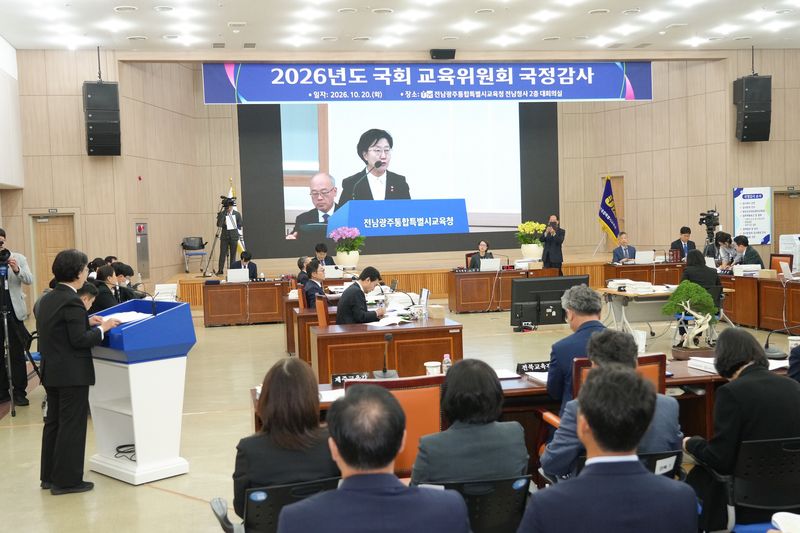
The operation of autonomous schools using education-related special provisions in the Jeju Special Act was also raised. When Rep. Jang Dong-hyeok of the People Power Party asked about Jeju’s competitiveness in future education, Superintendent Ko outlined Jeju-style autonomous schools and policies to revitalize small schools.
Superintendent Ko said that 23 of the 31 elementary schools in the province where student numbers increased this year were small schools in eup and myeon areas. She said the province was flexibly adjusting school attendance zones to allow students to transfer from schools with 400 or more students to small schools, and was pursuing rural school exchange programs, among other measures.
The audit identified as a challenge how to evaluate and manage key Jeju education policies, including actual counseling support for teacher protection, plans for developing an AI assessment system, and disclosure of education finance performance.
[email protected] Jeong Yong-bok Reporter