One year of whole-of-government response to transnational crime: arrests up 2.5-fold, victim reports down 95%
- Input
- 2026-10-21 12:00:00
- Updated
- 2026-10-21 12:00:00
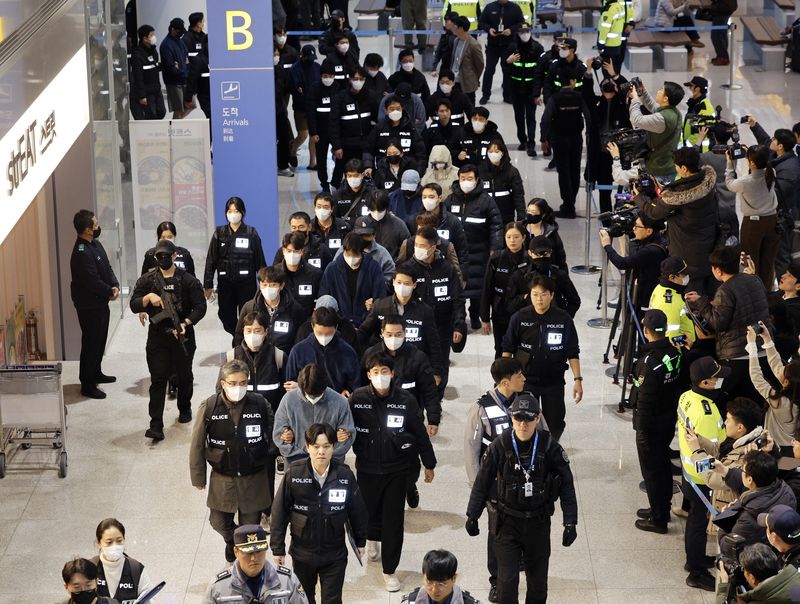
[Financial News] One year after the government launched a whole-of-government response to transnational crime, the number of criminals arrested in Southeast Asia has risen 2.5-fold. Reports of victimization, including kidnapping and confinement linked to scam crimes in Cambodia, have fallen by more than 95%.
According to the government’s “One-Year Results of the Whole-of-Government Response to Transnational Crime,” released on the 21st, 834 people were arrested for crimes in Southeast Asia from January through September, about 2.5 times the 340 arrested in the same period a year earlier. The number of fugitives repatriated from overseas also rose 2.6-fold, from 254 to 655.
Indicators related to crime victimization also improved. Reports of victimization, including kidnapping and confinement linked to scam crimes in Cambodia, fell 95.1%, from 386 last year to 19 this year. Over the same period, the number of voice-phishing incidents dropped 50.2%, from 18,746 to 9,333, while losses fell 57.5%, from 986.7 billion won to 419.6 billion won.
The government’s response to transnational crime gathered pace last year amid a series of incidents involving overseas criminal organizations, including the kidnapping and killing of a South Korean university student in Cambodia. At a meeting of relevant ministers on October 23 last year, President Lee Jae-myung ordered relevant agencies to pool their capabilities across investigations, diplomacy, the judiciary and finance to respond.
On December 29 that year, the whole-of-government consultative body, the “Special Response Task Force on Transnational Crime,” was launched. Ten agencies are currently involved, including the Ministry of Foreign Affairs, the Ministry of Justice, the Financial Services Commission, the National Police Agency and the National Intelligence Service. The government has worked through the task force to crack down on overseas criminal hubs, arrest key members of criminal organizations and repatriate fugitives.
One major achievement has been the large-scale arrest and repatriation of members of overseas criminal organizations. After forcibly repatriating 64 suspects who had taken part in scam operations in Cambodia by chartered plane last October, authorities established the “Korea-Cambodia Joint Task Force for Koreans” in November, a joint operation unit of the Korean and Cambodian police. That same month, Chinese national Li Guangho, the main suspect in the kidnapping and killing of a South Korean university student, was also arrested.
Last January, 73 suspects accused, among other things, of defrauding 869 South Koreans out of about 48.6 billion won were repatriated to South Korea in one operation. The government described it as the largest group repatriation on record.
The repatriation of overseas fugitives in cases that had remained unresolved for a long time also took place. Park Wang-yeol, who had been held in the Philippines, was suspected of involvement in drug distribution in South Korea, among other activities, but his repatriation had not been secured for about 10 years. The government strengthened cooperation among relevant agencies, and after President Lee personally requested his transfer to South Korea at a summit with the Philippines in March, Park was repatriated on the 25th of that month.
Using leads obtained during the investigation into Park Wang-yeol, authorities also arrested Choi Byeong-min, a drug supplier who was in Thailand, and repatriated him to South Korea.
Investigations into overseas illegal gambling organizations also continued. In cooperation with authorities in the United Arab Emirates (UAE), the government arrested the ringleader of an illegal gambling website operation worth 10 trillion won and repatriated him to South Korea on July 4. On the 14th, a key member at the ringleader level of an illegal gambling website operation worth 3 trillion won was also repatriated.
The government also responded to the so-called “balloon effect,” in which criminal organizations move their bases to other countries to evade crackdowns. After a crackdown in Cambodia, authorities tracked a Korean scam organization that had moved its operations to Kazakhstan, arrested 14 members on July 23 and repatriated them to South Korea.
Relevant agencies also focused their cooperation on preventing drugs from being smuggled into the country. The government strengthened enforcement, including by establishing a second line of defense at five mail-sorting centers, and seized a total of 1,339 kg of drugs from January through September. Based solely on seizures intended for import into South Korea, the figure was a record high, up 104% from the same period last year.
Going forward, the government plans to link crackdowns on overseas criminal hubs and the arrests of ringleaders and key members with the recovery of criminal proceeds and the rescue and protection of victims, in order to cut off the operational foundations of transnational criminal organizations.
The government is also pursuing institutional measures. The Financial Services Commission’s system for suspending transactions in accounts suspected of being used for new types of phishing has been in effect since June. In August, a bill related to an independent confiscation system—which allows criminal proceeds to be confiscated and collected even if offenders die or flee overseas—passed the National Assembly.
A government official said, “The past year was a time when we brought together capabilities that had been scattered across ministries and fundamentally changed the Republic of Korea’s approach to transnational crime. We will marshal all the government’s capabilities until transnational crime that threatens the lives and property of the people is eradicated.”
[email protected] Kim Ye-ji Reporter