[Editorial] ‘52-hour workweek exemption clause’ deferred for now, but must be pushed through to the end
- Input
- 2026-10-20 18:20:20
- Updated
- 2026-10-20 18:20:20
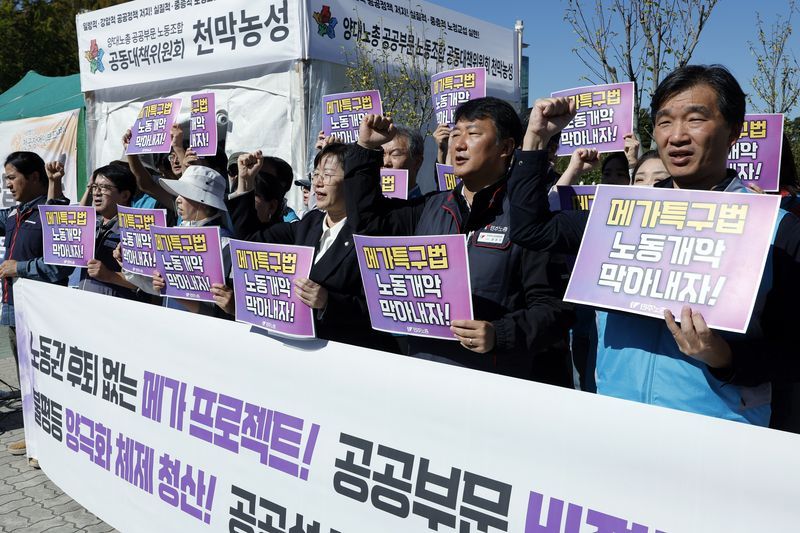
The Democratic Party said it would decide whether to apply an exemption from the 52-hour maximum workweek regulation after further deliberation, and introduced two bills simultaneously—one with the provision and one without it. It plans to listen further to public opinion, including views from labor groups, combine the two bills and ultimately introduce a single bill. The opposition People Power Party argues that the 52-hour maximum workweek regulation should be loosened, while labor groups and the Rebuilding Korea Party, among others, oppose an exemption, making the outcome difficult to predict.
The bill that includes an exemption from the 52-hour maximum workweek regulation stipulates that employees engaged in research and development of new products or technologies whose earned income ranks in the top 3% may negotiate their working hours with their employers. It opens the way for employers to negotiate with these employees through written agreements without being bound by the provisions of the Labor Standards Act. Matters to be covered by written agreements, such as the specific scope and compensation, as well as measures needed to protect workers’ health, are to be set by Presidential Decree.
Even this limited provision would go a long way toward keeping the lights on in research labs and allowing R&D work to continue without interruption. Workers whose earned income ranks in the top 3% are generally highly paid, and their numbers would be extremely limited. Even so, labor groups are obstinately opposing regulatory easing, invoking workers’ right to health.
The governing Democratic Party now bears greater responsibility. In the past, while handling the Special Act on Semiconductors, the party deleted this provision, mindful of labor groups’ opposition, and passed the bill without it. It must not take the same path with the Super-Regional Special Zone Act. It must continue to persuade labor groups and win their agreement to recognizing the exemption. The case for doing so is strong: time is of the essence in completing the special zones, and the areas and periods in which the easing of working-hour regulations would apply are limited.
Global competition over advanced industries such as semiconductors and artificial intelligence is every bit as fierce as war. It is unlike traditional manufacturing, where development and change move slowly. R&D to beat competing countries is a race against time in which every second counts. If the exemption clause again fails to be adopted, we will fall behind in the competition with major countries. The governing party that spearheaded this bill and the current administration will have to bear responsibility.
Fortunately, aside from the exemption from working-hour rules, the bill includes comprehensive support measures, including tax, fiscal and financial assistance. It is also noteworthy that the bill includes some 320 ‘menu-style’ regulatory exceptions and around 40 policy support packages, enabling companies and local governments to choose the regulatory exceptions they need.
The government should also actively facilitate implementation and support businesses on other projects. Industry drives the economy, and businesses are the horses that pull industry’s wagon. The government’s job is to clear obstacles from the road so the wagon can reach its destination quickly. If the mega special zones succeed, they will remain an achievement of the Lee Jae-myung administration. The government should advance the special-zone project not merely for the sake of an achievement, but in recognition that, amid an era of fierce competition, this is a pivotal moment for the country to take another step forward.