Korea University selected for Ministry of Science and ICT’s AI Star Fellowship, worth 11 billion won
- Input
- 2026-10-20 17:42:11
- Updated
- 2026-10-20 17:42:11
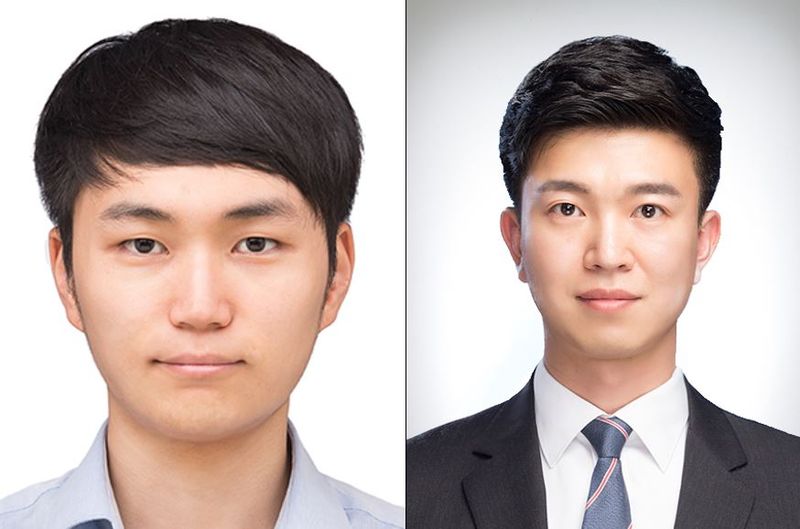
[Financial News] Korea University announced on the 20th that consortia involving Professors Kang Hyeong-yeop and Kim Yeong-geun, both from its Department of Computer Science, have been selected for the AI Support for Top-Tier Early-Career Researchers (AI Star Fellowship Support) program run by the Ministry of Science and ICT and the Institute of Information & Communications Technology Planning & Evaluation. After being selected as the lead institution in the program’s first year, last year, Korea University has been recognized for its research capabilities in AI for the second consecutive year. Each consortium is expected to carry out a research project worth 11 billion won over five years and six months through 2031.
This year, the program was restructured as a collaborative model in which universities in the Seoul metropolitan area and regional universities jointly build their research capabilities. Professor Kang will lead core research for the project as the principal investigator for a joint research institution in the Next-Generation Virtual Production consortium, led by Jeonbuk National University, while Professor Kim will do so for the Agricultural Physical AI consortium, led by Chungnam National University.
Professor Kang will lead a study on immersive world models based on object and scene structures for generating and controlling 3D virtual worlds. His research team will develop technology to create people, spaces, and objects in virtual worlds as individually editable entities; simulate their interactions according to the laws of physics; and control movement, lighting, and cameras using natural language. Research labs led by Professors Moon Gyeong-sik, Kim Sang-pil, and Park Gyeong-mun at Korea University will also take part. Together with partner institutions Westworld and NCSoft, the team plans to apply and expand the technology to physical AI training environments in areas such as virtual reality, gaming, robotics, and autonomous driving.
Professor Kang said, “I will work closely with the researchers and partner companies to secure foundational technologies that connect not only to content production but also to virtual reality and physical AI, and to nurture young researchers who will lead this field.”
The consortium involving Professor Kim aims to develop foundational physical AI technologies that enable AI to perceive, make decisions about, and act on real-world environments through physical devices such as robots and agricultural machinery, and to address technical challenges in unstructured agricultural settings. Professor Kim will lead research on optimizing on-device inference so AI models run efficiently on field equipment, as well as on continual learning that reflects conditions in the field. Research labs led by Professors Kang Seong-gu and Lee Sang-min at Korea University will also take part, while Kakao Mobility, HyperExcel, and LS Mtron will support the application of the research in the field as partner institutions.
Professor Kim said, “For physical AI to be used in real-world settings, it is essential to have technology that can run large AI models efficiently on devices with limited resources,” adding, “I will work to secure high-efficiency AI system technologies that can be used directly in the field and to train talent in related areas.”
[email protected] Kim Man-gi Reporter