Government to Push Special Act for Nuclear Submarines This Year, but Navy's Operational Deployment Roadmap Is 'Blank'
- Input
- 2026-10-20 17:08:34
- Updated
- 2026-10-20 17:08:34
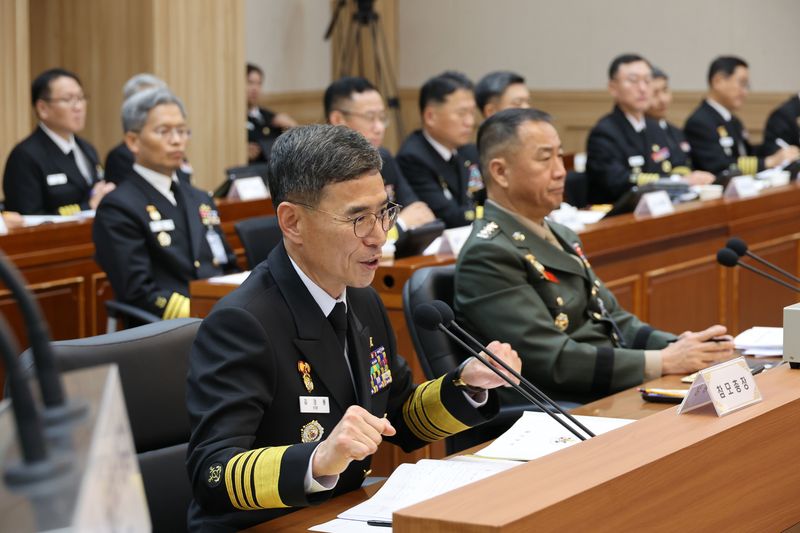
According to Park Sun-won, a Democratic Party of Korea lawmaker on the National Assembly's National Defense Committee, the Navy's report to the committee's parliamentary audit on the 20th classified nuclear subs as a long-term force asset for the late 2030s, but did not specify when they would enter operational service or provide a schedule for each stage, including design, construction, and testing and evaluation.
The Navy's submitted plan for developing a maritime-based Korean-style three-axis system divides preparations to operate nuclear subs into three stages: project preparation and launch; design and construction; and testing and evaluation, and preparations for operational deployment. However, it gives no specific timetable for any of the stages. In particular, establishing a unit to operate the submarines, training personnel, and setting up maintenance and safety management systems are included in the final stage of testing and evaluation and preparation for operational deployment.
At the parliamentary audit on the 20th, Chief of Naval Operations Kim Kyung-ryul emphasized the strategic need for nuclear subs and expressed confidence that the Navy had also secured technology for reactor development. However, with no detailed schedule for their operational deployment, concerns have been raised about a gap between technical capability and readiness for operational use.
Last May, the government set out a goal in its basic plan for nuclear submarine development to launch the first vessel in the mid-2030s and begin operational deployment in the late 2030s or later. It is also seeking to enact a special act within the year to establish the legal framework for introducing nuclear subs. The Navy, for its part, formed a temporary 17-member nuclear submarine task force comprising three teams under a general officer-level chief, but did not provide a detailed schedule for actual operational use.
Rep. Park urged the Navy to specify “when the earliest point would be at which it could carry out operational missions, taking into account securing nuclear fuel, reactor development, and sea trials.” He went on to stress that “unlike conventional submarines, nuclear-powered submarines require specialized personnel and facilities to operate the reactor and manage radiation safety and nuclear fuel. If personnel training begins only after the first submarine is built, the operational deployment schedule could be delayed,” adding that “a nuclear safety management system and a plan to train specialized personnel must also be included in the project plan by the end of this year.”
[email protected] Song Ji-won Reporter