Hyundai family damages suit: Appeal court again sides with Chung Mong-Koo Foundation ... Hyundai Motor Securities ordered to pay around 9 billion won
- Input
- 2026-10-20 17:33:02
- Updated
- 2026-10-20 17:33:02
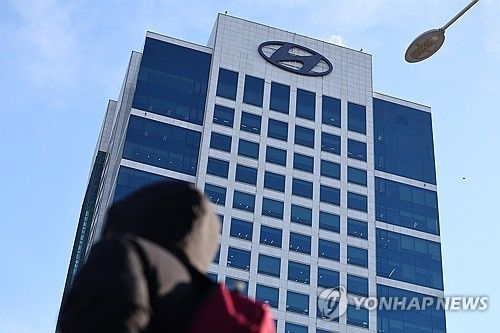
[Financial News] Hyundai Motor Securities must pay around 9 billion won to the Hyundai Motor Chung Mong-Koo Foundation, which suffered a principal loss in the 15-billion-won range in connection with an investment in a mixed-use resort development in Las Vegas, Nevada, a court ruled on appeal.
According to legal sources on the 20th, a Seoul High Court appellate panel, Civil Division 14-1 (High Court Judges Nam Yang-woo, Hong Seong-uk and Park Jae-woo), recently dismissed both sides’ appeals in the Foundation’s damages suit against Hyundai Motor Securities. The first-instance ruling therefore stands: Hyundai Motor Securities must pay 60% of the Foundation’s total loss of KRW 15.109 billion—KRW 9.0654 billion—plus damages for delay.
The case dates back to 2018. Hyundai Motor Securities had entered into a discretionary asset management agreement with the Foundation and was managing its funds when, in November 2018, it recommended investing in a private fund backed by mezzanine loan receivables for a bridge loan used in the development of The Drew Las Vegas resort in Las Vegas. The Foundation agreed, investing KRW 15 billion in the fund in January 2019 and paying KRW 877 million in currency-hedging costs.
Construction at the site was halted soon afterward. In March 2020, the Nevada state government ordered the site closed amid the spread of COVID-19. The developer was unable to repay its debts, triggering an event of default (EOD), and in February 2021 a senior creditor took ownership of the collateral property as repayment in kind. Because the Foundation’s fund held subordinated claims, it became difficult to recover the principal.
As of March 2021, the remaining value stood at just KRW 768 million, and the entire KRW 15.109 billion was written off as a loss. The Foundation filed suit in November 2021.
In the first trial, the Seoul Central District Court’s Civil Division 22 (Presiding Judge Choi Wook-jin) found that Hyundai Motor Securities had breached its duty to explain under the Capital Markets Act. The court pointed out that while the investment prospectus stated that a “subordinated security interest in the ownership” would be established, under the actual investment structure it amounted only to a pledge over the borrower’s equity, not a direct security interest in the real estate.
The court also took issue with the prospectus’s statement that the LTV was “low, at 34.3%, making repayment possible through asset sales alone if needed.” The court’s point was that the risks of sharp changes in value depending on whether the project was completed and on cost increases had not been adequately explained so that the Foundation, as a general investor, could understand them.
However, the first-instance court limited Hyundai Motor Securities’ liability to 60%, taking into account that it had not intentionally deceived the Foundation, that the spread of COVID-19 was an external factor, and that the principle of investor responsibility applies given the nature of investment products. It rejected, among other claims, the Foundation’s argument that it should be allowed to rescind the investment on grounds of fraud or mistake because the deed-in-lieu (DIL) provision for transferring ownership of the real estate had not been disclosed.
The appellate court likewise found no error in the first-instance court’s factual findings or legal conclusions, including its apportionment of liability, and dismissed both appeals. The panel pointed out, “It should have been fully explained that if the development project failed, the likelihood of recovering the investment could be lower than stated in the investment prospectus,” adding, “There is no evidence that this was explained in a way that the Foundation, as a general investor, could understand.”
[email protected] Lee Chang-hoon Reporter