To tackle acne and hair loss, look to the gut, not the face... The science of the gut microbiome [Smart Wellness]
- Input
- 2026-10-25 05:00:00
- Updated
- 2026-10-25 05:00:00
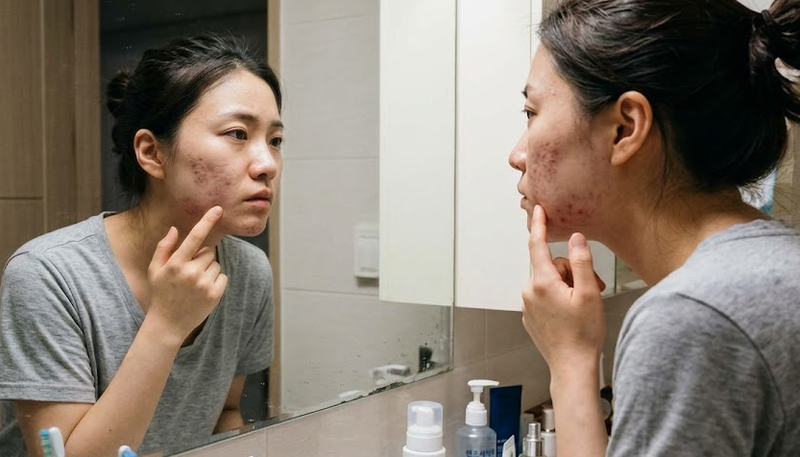
[Financial News] If acne does not clear up even after expensive dermatological procedures or using well-known cosmetics, it may be worth turning your attention to your gut. The medical community has recently identified gut microbiome imbalance as one of the causes of chronic inflammation in the body, which can compromise the skin barrier and hair health.
No improvement despite using cosmetics... Skin inflammation fueled by gut imbalance
The human gut is home to countless microorganisms, some beneficial and others harmful. Metabolites produced when beneficial bacteria break down dietary fiber strengthen the intestinal lining, help prevent external toxins from entering the bloodstream, and support blood sugar regulation, hormone synthesis and immune regulation. Recent research has confirmed that these metabolites also play a direct role in maintaining skin and hair health.
Professor Park Jin of the Department of Dermatology at Jeonbuk National University Hospital said, “In the past, microbes were regarded simply as pathogens that cause infections. But advances in genetic analysis have revealed that microbes regulate immune responses in the skin, gut and mouth, help maintain the skin barrier, and prevent the proliferation of external pathogens.” He described the microbial ecosystem as “a key regulator in maintaining health.”
The problem is that modern lifestyles reduce beneficial gut bacteria and increase harmful ones. Consuming excessive amounts of processed foods or sugar and being exposed to chronic stress can lead to an imbalance in the gut microbiome (dysbiosis). When this weakens the intestinal lining, harmful substances that have entered the body can spread through the bloodstream and cause systemic inflammation.
Professor Park pointed out, “In a healthy state, a variety of microorganisms maintain a balance and serve as a kind of ‘microbial barrier.’ But when that balance is disrupted, inflammatory skin conditions or infectious diseases can worsen.”
Immune dysregulation can lead to attacks on hair follicles... Fewer beneficial bacteria can weaken hair, too
Disruption of the gut microbiome can also affect hair. Biotin, a B vitamin, is essential for producing keratin, the key protein that makes up hair, and beneficial gut bacteria produce a substantial amount of it. According to a study published in the international journal Cell Reports, germ-free laboratory mice whose gut microbes had been removed lost their supply of biotin and developed widespread fur loss and hair loss.
When the balance of gut microbes is disrupted, an “autoimmune response” can occur, in which the immune system mistakes healthy tissue for an enemy and attacks it. Metabolites such as butyric acid, produced by beneficial bacteria, help suppress excessive immune attacks. If that excessive response is not kept in check and immune cells attack hair follicles, it can lead to alopecia areata. A study published in the Journal of the American Academy of Dermatology (JAAD) found that people with alopecia areata had markedly lower proportions of beneficial gut bacteria and less microbial diversity than healthy people.
To protect your skin and hair... start by restoring your gut environment
Experts advise that to address chronic skin conditions and weakened hair at their root, it is essential to go beyond symptomatic treatments focused on the outside and manage the gut microbiome by reshaping its ecosystem.
Taking commercially available probiotics alone is unlikely to change the gut microbiome. That is because live bacteria introduced from outside often remain in the gut only temporarily before being expelled, rather than establishing themselves permanently. The key is to create conditions in which the beneficial bacteria already in the gut can multiply naturally. The complex dietary fiber found in a variety of whole grains, vegetables and seaweed is fermented by beneficial bacteria and converted into high levels of short-chain fatty acids, such as butyric acid, which thickens the intestinal lining.
Conversely, consumption of ultra-processed foods containing simple sugars, liquid fructose and emulsifiers, which promote the growth of harmful gut bacteria, should be limited.
Ways to make life healthier and more vibrant are not far away. [Smart Wellness] shares insights on caring for the body and mind, drawing on scientific evidence and the latest trends. Subscribe to the reporter’s page to receive [Smart Wellness] with ease.
[email protected] Kim Hyeon-seon Reporter