After Beating Cancer, Protect the Body with Muscle
- Input
- 2026-10-20 15:47:11
- Updated
- 2026-10-20 15:47:11
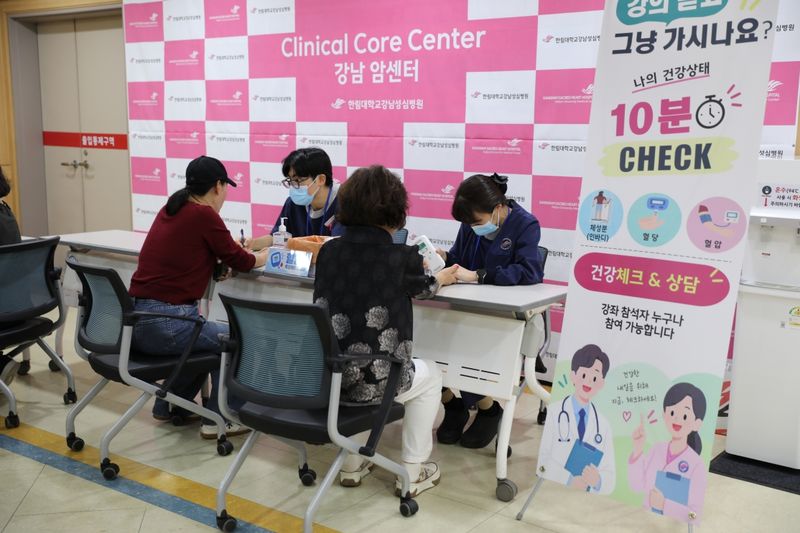
[The Financial News] The key to weight management for cancer patients is not the number on the scale but muscle. Medical professionals say that reducing body fat while preserving and building muscle can determine treatment outcomes and health afterward.
Hallym University Kangnam Sacred Heart Hospital held the Integrated Health Management Symposium for Cancer Patients on the 8th in Michael Hall in the main building, with around 70 people in attendance, including cancer patients and caregivers. The symposium was organized to explain how obesity affects cancer incidence and health after treatment, and how to manage it, focusing on gynecologic cancers such as endometrial cancer, for which obesity is a major risk factor, as well as colorectal and breast cancer. The medical team agreed that patients should avoid excessive losses in weight and muscle during treatment, and afterward should manage their body fat to prevent excessive increases while rebuilding muscle and strength.
The hospital’s cancer center runs the Cancer Patient Integrated Health Management Program, which links multidisciplinary care involving cancer specialists and family medicine with nutrition and exercise counseling. Patients with breast, colorectal and gynecologic cancers are referred to family medicine, where their treatment progress and any recurrence are monitored and their overall health, including obesity and metabolic diseases, is managed on an individual basis. The family medicine department conducts a comprehensive assessment of cancer type, treatment stage, body fat and muscle mass, nutritional status, and physical function, focusing on reducing body fat while preserving or building muscle.
Deputy Director of Clinical Affairs Park Seong-taek, a professor of obstetrics and gynecology, introduced the program and emphasized the need for health management that continues after treatment. He also outlined the hospital’s support system for cancer patients, including a Cancer Patient Fast Track for prompt diagnosis and treatment, appointments accompanied by dedicated coordinators, My Health Passport, which contains information for each stage of treatment, and the Sacred Heart Ribbon Club, which supports follow-up care for long-term survivors.
Gynecologic, colorectal and breast cancers: risks linked to obesity
Professor Jeong Su-yeong of obstetrics and gynecology explained the relationship between obesity and gynecologic cancers, focusing on endometrial cancer. Hormonal changes in fat tissue, insulin resistance and chronic inflammation may contribute to increased cancer risk, she said, emphasizing that adequate nutrition and muscle maintenance are important during treatment.
Professor Kim Gwang-yong of surgery explained how metabolic changes caused by an increase in abdominal visceral fat are linked to colorectal cancer risk. In particular, patients losing weight immediately after surgery or during chemotherapy should not be given blanket advice to lose weight; their diet and physical activity should be adjusted to their condition, he said.
Professor Ahn Su-gyeong of surgery presented research findings on obesity and breast cancer prognosis. Weight can increase during treatment because of reduced activity, medication and early menopause, among other factors, so patients should continue to manage their weight and metabolic health after treatment. She also emphasized that low body weight warrants attention.
Preserving muscle is key ... Bariatric surgery is also an option
Professor Choi Min-gyu of family medicine identified preserving and rebuilding muscle as central to weight management for cancer patients. He said changes in body fat and muscle mass should be tracked through body composition analysis, alongside assessments of muscle strength and physical function. He also outlined a personalized approach that combines adequate nutrition with aerobic and strength-training exercises, and considers medication when needed.
Professor Min Gwan-hong of surgery emphasized that obesity should be viewed as a disease requiring treatment, not a matter of personal willpower. He explained who may be eligible for bariatric surgery and the features of sleeve gastrectomy and gastric bypass. Treatment goals include not only weight loss but also improving coexisting conditions such as diabetes and quality of life, he said, adding that ongoing nutritional and health management is necessary after surgery.
Before the lectures and during breaks, the nursing department also measured participants’ blood pressure, blood sugar and body composition, while Professors Choi Min-gyu and Park Hyo-jin of family medicine held one-on-one health consultations.
A 60-year-old woman participant who said she had remained healthy into her seventh year after a total mastectomy for breast cancer said, “I was told not to gain weight after treatment, so managing my weight was the hardest part.” She added, “It was helpful to look at several health indicators together, including not just obesity but also blood pressure and blood sugar, and to learn what I should focus on managing going forward.”
Deputy Director Park said, “It is important to provide ongoing care so patients can continue to live healthy lives even after cancer treatment ends.” He added, “We will continue to work closely across departments to help each and every patient maintain a healthy daily life after treatment.”
[email protected] Jeong Myeong-jin, Medical Correspondent Reporter