“Even stairs and going out are a struggle” ... Six in 10 patients with geographic atrophy, a form of macular degeneration, find climbing stairs a hardship
- Input
- 2026-10-20 15:15:22
- Updated
- 2026-10-20 15:15:22
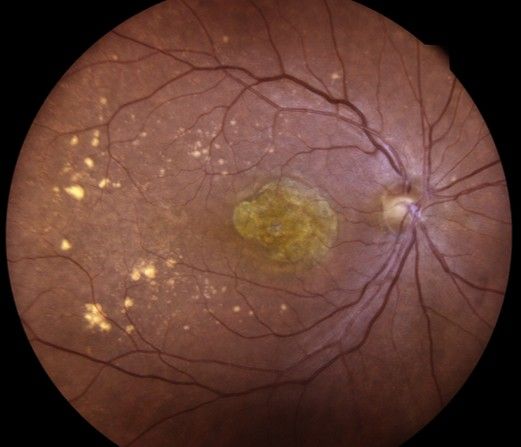
[Financial News] Climbing stairs is a struggle, and going out feels daunting. Six in 10 patients with geographic atrophy, a late-stage form of age-related macular degeneration, were found to have difficulty climbing stairs.
A joint research team comprising Kim Jae-hwi and Kim Ye-ji, specialists at Kim’s Eye Hospital, and Professor Gong Min-gwi of Sungkyunkwan University School of Medicine analyzed the quality of life of patients with geographic atrophy using data from 15,030 adults aged 40 or older who participated in the Korea National Health and Nutrition Examination Survey from 2017 to 2021. It was the first study in Korea to analyze the quality of life of patients with geographic atrophy using these data, and was published in the international journal Journal of Korean Medical Science (JKMS).
Daily limitations on par with wet macular degeneration
The study found that 61.5% of patients with geographic atrophy said they had difficulty climbing stairs, far more than the 40.1% of people without macular degeneration. The figure was also similar to the 64.9% among patients with wet macular degeneration, a condition well known for its risk of blindness. Some 27.3% reported difficulty getting around, while 15.2% said they felt restricted in their everyday activities.
On the EQ-5D quality-of-life index, which assesses health status and difficulties in daily life, patients with geographic atrophy and those with wet macular degeneration both scored 0.93. This means geographic atrophy also places a considerable burden on quality of life, comparable to wet macular degeneration. The research team said support is needed to help patients overcome everyday limitations, including difficulties with mobility and outdoor activities, as well as vision loss.
Geographic atrophy is one of the late-stage forms of age-related macular degeneration, a disease in which retinal cells gradually become damaged and vision progressively declines. As the disease progresses, vision continues to worsen, and some patients may experience severe vision loss. Unlike wet macular degeneration, which is relatively well known to the public and widely treated with eye injections, geographic atrophy has received comparatively little attention. Interest in the condition is growing worldwide as the development of treatments has accelerated.
The importance of quitting smoking was also confirmed. Current smokers accounted for 61.1% of the patients with geographic atrophy, a higher proportion than among people without macular degeneration (38.6%) or patients with wet macular degeneration (52.1%). Since smoking is known to be a risk factor associated with the progression of macular degeneration, it is important to quit if diagnosed with early-stage macular degeneration.
A disease once only monitored ... First treatment approved in Korea
The treatment landscape is also changing. For a long time, there was no proven treatment for geographic atrophy, so in many cases the only option was to monitor its progression. But the development of complement inhibitors that slow the disease’s progression has opened up new treatment possibilities. In the United States, complement inhibitors that slow progression by around 20–30% have been used for about three years, and in Korea, a treatment to slow the progression of geographic atrophy was approved for the first time last September.
Specialist Kim Jae-hwi said, “We confirmed that the quality of life of patients with geographic atrophy has declined to a level similar to that of patients with wet macular degeneration, and that it is closely associated with limitations in daily life, particularly mobility and outdoor activities. If you are diagnosed with macular degeneration, you should focus on measures to reduce the risk of progression, including dietary changes and quitting smoking.”
He added, “Until recently, there was no treatment to slow the progression of geographic atrophy, but the recent approval of a treatment in Korea has marked the beginning of an important change in the treatment landscape. In follow-up research, we plan to determine which patients benefit most from treatment and to compare and analyze the quality of life of patients with geographic atrophy and wet macular degeneration in greater detail.”
[email protected] Jeong Myeong-jin, Medical Correspondent Reporter