“Can AI hacking be eradicated?” Five banks to make a “record-setting” increase in next year’s information security budget, topping 450 billion won
- Input
- 2026-10-25 16:30:49
- Updated
- 2026-10-25 16:30:49
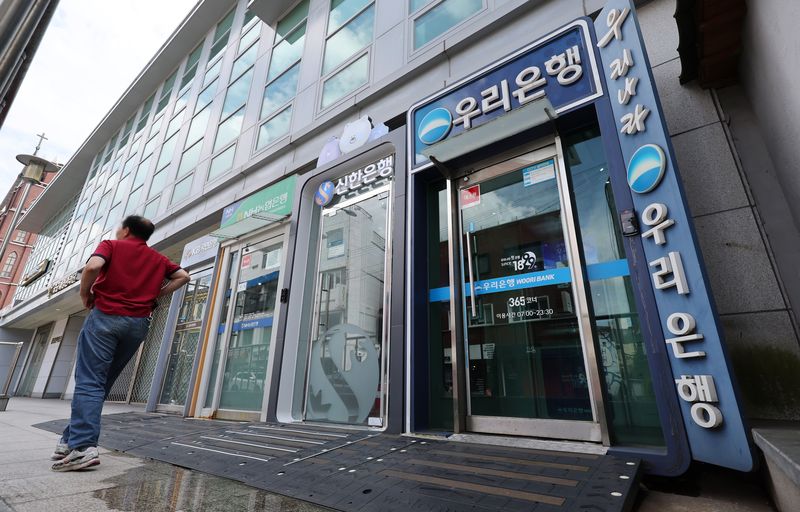
[Financial News] The information security budgets of the five major commercial banks are expected to rise by at least 100 billion won next year, pushing the total well past 400 billion won. A series of hacking incidents has prompted banks to step up security investment. However, some say the planned budget increases may be insufficient as attacks using artificial intelligence (AI) become more sophisticated.
According to the financial sector on the 25th, the five banks—KB Kookmin, Shinhan, Hana, Woori and NH NongHyup—are all seeking to increase their information security budgets for next year in response to a recent spate of personal data leaks. Shinhan Bank, where customer information belonging to about 25,000 people was leaked in the latest hacking incident, is expected to make a record-setting increase. Its information security budget this year was 40.591 billion won, the lowest among the five banks, and it is considering raising the amount to the 100-billion-won range. There are also indications internally that it plans to allocate more to information security than Kookmin Bank. If so, its budget would nearly triple from this year.
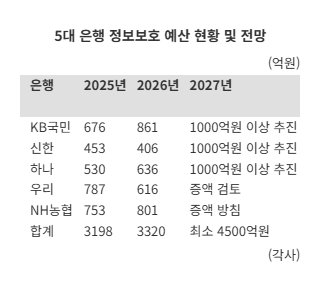
Kookmin Bank also plans to increase next year’s information security budget to at least 100 billion won, raising it by at least 14 billion won from this year’s 86.075 billion won. Hana Bank has also decided to raise its budget from 63.635 billion won this year to at least 100 billion won next year. Woori Bank is considering increasing its information security systems budget by at least 20% from this year.
As a result, the three banks—Kookmin, Shinhan and Hana—are expected to have a combined information security budget of at least about 300 billion won next year. That would be an increase of at least 100 billion won compared with the approximately 190.3 billion won they allocated this year.
NH NongHyup Bank is also considering increasing its information security budget for next year. It has begun drawing up its 2027 business plan and is currently gathering business objectives and draft budget proposals from each department. The specific investment amount is expected to be finalized after internal review between late November and early December.
NongHyup Bank allocated 80.134 billion won to information security. Even if Woori and NongHyup banks simply maintain this year’s funding levels, the five banks’ information security budgets for next year would total about 450 billion won. The overall budget is expected to grow further if increases by the two banks are included.
The five banks allocated a total of 332 billion won to information security this year. By bank, Kookmin had the largest budget, followed by NongHyup, Hana, Woori and Shinhan. Although this year’s total rose by a modest 12 billion won from about 320 billion won last year, the hacking incidents have prompted the banks to signal their largest annual increase on record. Shinhan Bank and Woori Bank cut their information security budgets by 10.4% and 21.7%, respectively, from the previous year.
Earlier, on the 19th, the heads of the five banks appeared at the National Assembly’s National Policy Committee’s parliamentary audit of the Financial Supervisory Service. They said they agreed on the need to strengthen security systems in response to the string of hacking incidents and would expand related investment.
However, some are skeptical that an increase in security budgets of this scale will lead to fundamental prevention of hacking incidents. As attacks using AI become increasingly varied, building security systems to prevent data leaks affecting the five banks’ total customer base—estimated at at least 140 million people—is bound to entail enormous costs.
An official at a commercial bank said, “Because responding to security threats using AI involves substantial costs, we are considering realistic investment options,” and added, “However, attack types and methods have become so varied lately that, realistically, it is difficult to prevent every attack in advance by increasing the budget only modestly.”
[email protected] Seo Ji-yoon Reporter