Companies with Workplace Fatalities Face Administrative Surcharges of Up to 5% of Operating Profits; Bill Passes at Blue House Cabinet Meeting
- Input
- 2026-10-20 14:58:01
- Updated
- 2026-10-20 14:58:01
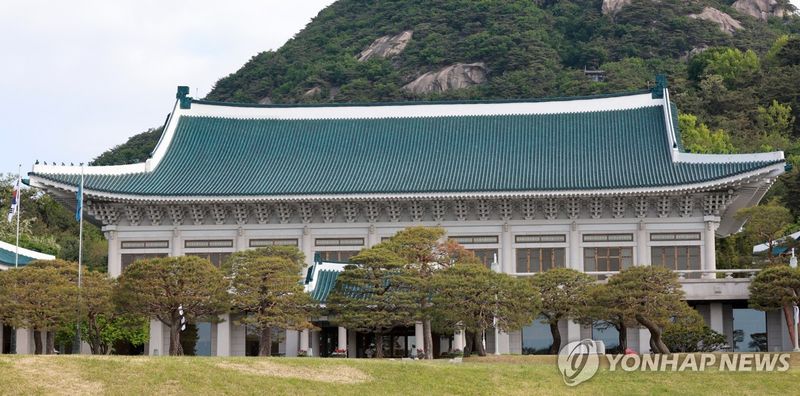
[Financial News] On the 20th, the Cabinet approved a draft promulgation of amendments to the Occupational Safety and Health Act that would strengthen financial penalties on companies where fatal industrial accidents occur. Under the amendments, companies in which at least three workers die within a year due to violations of safety and health obligations would face administrative surcharges of up to 5% of their operating profits.
The government deliberated and approved a total of 39 agenda items, including the draft promulgation, at the 45th Cabinet meeting, chaired by President Lee Jae-myung, held that day at the main building of the Blue House. The items comprised 22 draft promulgations of laws, one bill, 15 draft presidential decrees and one general agenda item.
The amended Occupational Safety and Health Act allows an administrative surcharge of up to 5% of an employer’s operating profits if at least three workers have died in industrial accidents over the past year due to violations of safety and health obligations. The administrative surcharges collected will go to the Industrial Accident Compensation Insurance Fund and be used for accident-prevention programs.
The authority to stop work at worksites will also be expanded. When there is an imminent risk of an industrial accident, or concern that one may occur, workers, workers’ representatives and honorary industrial safety inspectors may demand that the employer stop work. Subcontracted workers will also be able to directly demand a work stoppage from the principal contractor.
The conditions under which the Minister of Employment and Labor may order a work stoppage will also be broadened. Such an order may be issued not only when a serious accident occurs but also when a worker is unconscious following an accident or it is unclear whether the worker is alive, among other cases. If an employer who has been ordered to take corrective measures, such as installing safety railings, fails to do so and there is an imminent risk of an industrial accident, work may not resume until the corrections are completed.
The provisions on fines and expanded work-stoppage rules will take effect six months after promulgation.
Legislation related to housing support was also approved. The draft promulgation of amendments to the Housing Benefit Act adds maintenance fees as a type of benefit and provides for the setting of payment criteria and methods. It also stipulates that housing benefits may be paid separately to the unmarried children of people entitled to housing benefits who do not actually receive them.
An amendment to the Enforcement Decree of the Private Rental Housing Act provides a basis for the Korea Housing & Urban Guarantee Corporation (HUG) to hold and manage deposits for the ‘Jeonse-Wolse Safe Trust’ program. The aim is to allow tenants to live in jeonse housing at an affordable cost without the risk of their deposits not being returned, while enabling landlords to receive stable monthly income without worrying about late payments.
An amendment to the Enforcement Decree of the Information Security Industry Act expands the scope of entities required to disclose information-security details to include all companies listed on the KOSPI and KOSDAQ markets, as well as those required to obtain Information Security Management System (ISMS) certification. The measure is intended to strengthen information-security capabilities across the country.
A draft promulgation of amendments to the Animal Protection Act also passed, allowing orders prohibiting people at risk of repeat animal abuse from keeping animals. It also clarifies that animals found wandering without an owner or left behind at veterinary hospitals and similar places are included among lost or abandoned animals.
A basis was also established for a ‘Local Preference Index’ to support balanced growth across regions. An amendment to the Enforcement Decree of the Special Act on Decentralization of Local Autonomy and Balanced Regional Development requires the index to reflect factors including distance from Seoul, the level of social and economic development, and the risk of regional decline due to population loss.
[email protected] Seong Seok-woo Reporter