Amid export boom, Middle East remains under the 'shadow of war' as plant orders plunge 40%
- Input
- 2026-10-20 16:47:08
- Updated
- 2026-10-20 16:47:08
[Financial News]
Exports continue to boom, nearing the $1 trillion mark, but the Middle East market has yet to recover from the effects of the prolonged war. Exports of major goods, including automobiles and general machinery, have declined amid disruptions to traffic through the Strait of Hormuz, and overseas plant orders have also contracted. The government is working to boost contract wins, including through financial support, in response to delays in new project tenders in the Middle East and intensifying competition for contracts.
According to the Ministry of Trade, Industry and Energy on the 20th, exports to the Middle East last month totaled $1.6 billion as of the 25th, down 14.1% from the same period a year earlier. Since late February this year, when the war in the Middle East broke out, exports to the region have declined for seven consecutive months. The drop was particularly steep in March, when exports fell 49.4%.
By category, exports of automobiles fell 16% year on year, general machinery 37%, and auto parts 12%. In particular, despite automotive exports increasing 9.2% in North America and 15.3% in the European Union (EU), weakness in the Middle East and Asia also weighed on exports, leaving total automotive exports in September at just $6.05 billion, down 5.5% from a year earlier.
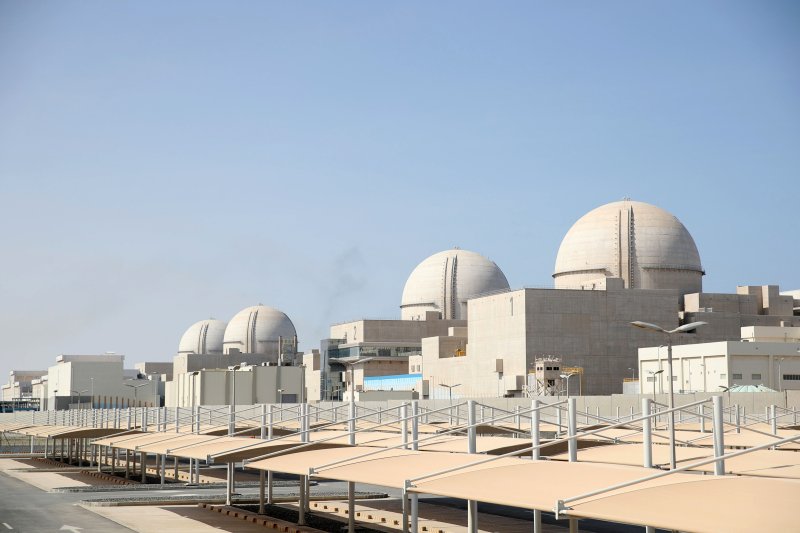
Plant orders in the Middle East have also taken a hit. Through the third quarter of this year, orders for plants in the region totaled $5.83 billion, down 39.8% from the same period last year. Industry sources say the prolonged war in the Middle East has delayed the tendering schedules for some new local projects, while competition with rival countries such as China has also intensified.
Over the same period, total overseas plant orders fell 34.8% year on year to about $25 billion. The base effect of last year's contract win for the Dukovany nuclear power plant in the Czech Republic also contributed to the decline.
The decline in Middle East plant orders is easing somewhat. The rate of decline, which stood at 91.1% in the first quarter, narrowed to 72.5% in the first half and 39.8% cumulatively through the third quarter. This was driven by continued contract wins for large projects, including a urea fertilizer plant in Saudi Arabia. However, uncertainties such as delays in project tenders due to the prolonged war remain.
The government is stepping up support to help revive contract wins in the Middle East. The Ministry of Trade, Industry and Energy held a meeting that day with major plant companies, including Daewoo Engineering & Construction, Samsung E&A and Hyundai Engineering & Construction, to discuss obstacles to winning contracts and ways to provide support. It plans to provide financial assistance and tender information, facilitate networking with project owners, and pursue high-level consultations through the Korea Trade Insurance Corporation and the Korea Trade-Investment Promotion Agency (KOTRA), among others.
The ministry also decided to publish overseas plant order statistics regularly every quarter and share analysis by region and facility type. Bae Jun-hyeong, Director-General for Trade Cooperation at the Ministry of Trade, Industry and Energy, said, "We will do our utmost to strengthen support across the board so that our companies can secure more opportunities to win contracts."
[email protected] Park Ji-young Reporter