As pension fund losses mount, pension reform resurfaces: “France’s crisis is not someone else’s problem”
- Input
- 2026-10-20 15:49:06
- Updated
- 2026-10-20 15:49:06
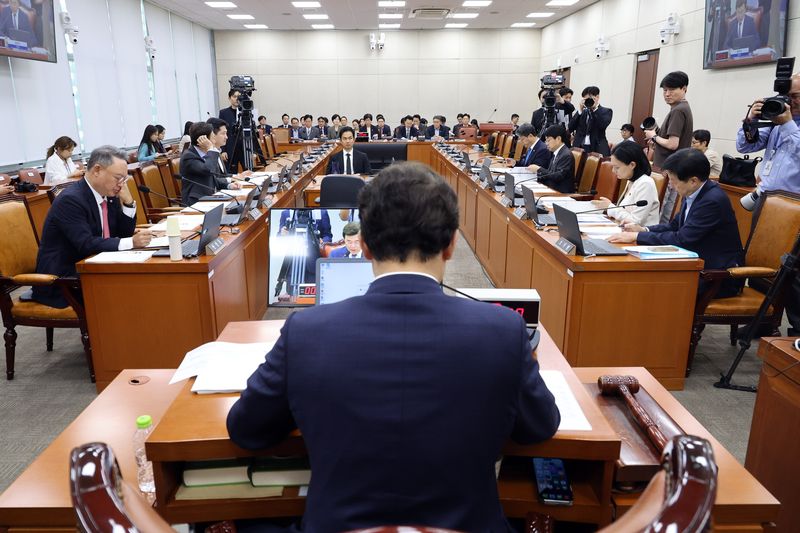
[Financial News] As the value of the National Pension Service’s domestic stock holdings plunged, discussions on pension reform—which had lain dormant during the KOSPI boom—are resurfacing. The National Assembly’s Special Committee on Pension Reform, which is discussing structural pension reform and the introduction of an automatic adjustment mechanism, was launched after the parametric reform in March last year, which increased both contributions and benefits, but made little headway. It had been criticized for being effectively idle, as the high returns recorded during the KOSPI’s sharp rise had reduced the perceived need for discussion.
Political circles said on the 20th that calls for pension reform are rising again after the value of the National Pension Service’s domestic stock holdings reportedly fell by more than 182 trillion won in about 100 days.
In March last year, the National Assembly passed an amendment to the National Pension Act by agreement between the ruling and opposition parties, gradually raising the National Pension contribution rate from 9% to 13% and increasing the income replacement rate to 43%. Soon afterward, it launched the Special Committee on Pension Reform to discuss structural reform, but the committee repeatedly made little progress. It held only four plenary meetings last year, and has held four meetings this year as well, the most recent in September.
The political momentum behind calls for pension reform faded amid a stock market boom that saw the KOSPI soar as high as “9,000 points.” This came as the semiconductor boom and rising KOSPI drove high investment returns. According to the National Pension Service’s Fund Management Division, the National Pension Fund posted a 27.22% return from January to June, earning about 401.4 trillion won. With analyses suggesting that the fund’s depletion date would be pushed back, a sense took hold that the urgency of structural reform had also diminished.
But the mood changed sharply after the recent KOSPI plunge erased at least 182 trillion won from the value of the National Pension Service’s domestic stock holdings. The cumulative investment return from January to July was a respectable 14.84%, but critics say the country must not cling to rosy forecasts and miss the right time to pursue reform. Concerns that “it’s not someone else’s problem” have also been voiced, with people pointing to recent protests in France against rising living costs that have even turned violent. The deterioration of pension finances is among the factors behind the large-scale protests in France. On the 19th, People Power Party lawmaker Na Kyung-won wrote on social media (SNS): “While astronomical amounts of debt were being poured into pensions and cash-based welfare with an eye to winning votes, rats were swarming in the classrooms of minors who cannot vote.” She argued, “We need politics that leaves a future behind, not politics that hands out money.”
Reform of the basic pension at the government and National Assembly levels is also failing to gain traction. The Ministry of Health and Welfare plans to begin offering differentiated basic pension payments next year to the 70% of older people with the lowest incomes. Criticism poured in across party lines at the Special Committee on Pension Reform: “I doubt there is any real commitment to reforming the system” (Rep. Seo Young-seok of the Democratic Party of Korea) and “Is it right to define the entire 70% as poor and give them money?” (Rep. Woo Jae-jun of the People Power Party). Because the proposed changes also require an amendment to the law, they need to be discussed by the committee.
A multi-tiered income security system involving the civil service pension, the teachers’ pension and retirement pensions has yet to be seriously discussed. The committee has also not decided whether to introduce the automatic adjustment mechanism, which was set aside for future discussion during the parametric reform. After the ruling and opposition parties jointly held a policy forum on pension reform on the 28th of last month and reviewed various reform proposals led by experts, they plan to step up efforts to begin substantive discussions. At the time, committee chair and People Power Party lawmaker Yoon Young-seok said, “I will fully reflect the views presented at the forum and ensure that pension reform is achieved in the 22nd National Assembly.”
[email protected] Lee Hae-ram Reporter