One month until the CSAT: If your heart races, 'inhale for 4 seconds, exhale for 6'... How students can manage their condition
- Input
- 2026-10-20 14:13:30
- Updated
- 2026-10-20 14:13:30
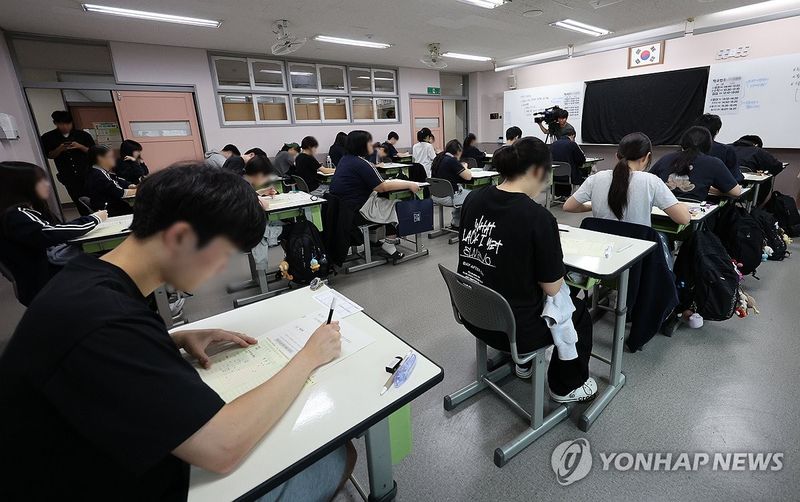
[Financial News] Inhale for 4 seconds and exhale for 6. Students who are suffering from a racing heart and nausea as the CSAT approaches would do well to practice this breathing technique regularly. The idea is to practice calming the body's response first, rather than trying to forcibly suppress tension.
As the 2027 College Scholastic Ability Test approaches on November 19, students may find it difficult to manage their condition due to lack of sleep, tension, digestive problems and other issues.
Ease tension with breathing, and align sleep with the exam schedule
Professor Kim Yun-na of the Student Care Clinic at Kyung Hee University Korean Medicine Hospital explained, "The pressure of an exam can manifest as physical symptoms such as a racing heart or nausea," adding, "When you're tense, even problems that usually feel familiar can seem difficult, so it's a good idea to learn in advance how to manage tension in a way that works for you."
Professor Kim said, "Even if you try not to feel tense, your body responds naturally," adding, "Rather than trying to force your anxiety away, you need to practice regulating your breathing to calm your body's response." Professor Kim went on to advise, "Make a habit of inhaling for 4 seconds and exhaling for 6, repeating this 10 times, and put it to use when you feel tense." If tension causes tightness around the forehead, gently pressing the Yintang point between the eyebrows may help; for a racing heart or nausea, gently applying pressure to the Neiguan point on the inside of the wrist is another option.
Sleep management is also important. If you have trouble falling asleep or often wake during the night, you should consider not only how long you sleep but also accompanying symptoms such as tension and fatigue. Staying up later to increase study time can lead to accumulated sleep deprivation, which may undermine concentration and overall condition.
Professor Kim stressed, "It's important to get enough sleep while gradually aligning your body's rhythm with the exam schedule," adding, "Rather than adjusting only your bedtime, you should also take your usual daily routine and physical condition into account." It's a good idea to start the day in a bright place and practice waking up and eating at the times required by the actual CSAT schedule. If your head feels heavy or your eyes are tired, gently pressing the Yintang point or the Zanzhu point at the inner ends of the eyebrows may help.
A more sensitive stomach: Stick to familiar foods rather than trying something new
Stress can affect the movement and sensation of the stomach, causing bloating or abdominal pain. Irregular eating or bowel habits can also worsen discomfort, so it's important to check your usual digestion and eating patterns as the CSAT approaches.
Professor Kim advised, "Eating and bowel habits are closely linked to physical and emotional factors such as tension and fatigue," adding, "Rather than suddenly changing your diet before the exam, it's better to eat regularly the foods you usually find easy on your system."
For abdominal pain, you can try drinking ginger tea, which warms the stomach and aids digestion, or applying pressure to the Liangqiu point just above the outer side of the kneecap. If you feel bloated, gently pressing the Hegu point on the back of the hand, between the thumb and index finger, may help.
[email protected] Jeong Myeong-jin, medical specialist Reporter