'Stock Manipulation' and 'Technology Leaks': Who Will Investigate? ... Concerns Over Overlapping Investigative Powers Amid Proliferation of Special Judicial Police
- Input
- 2026-10-20 15:02:32
- Updated
- 2026-10-20 15:02:32
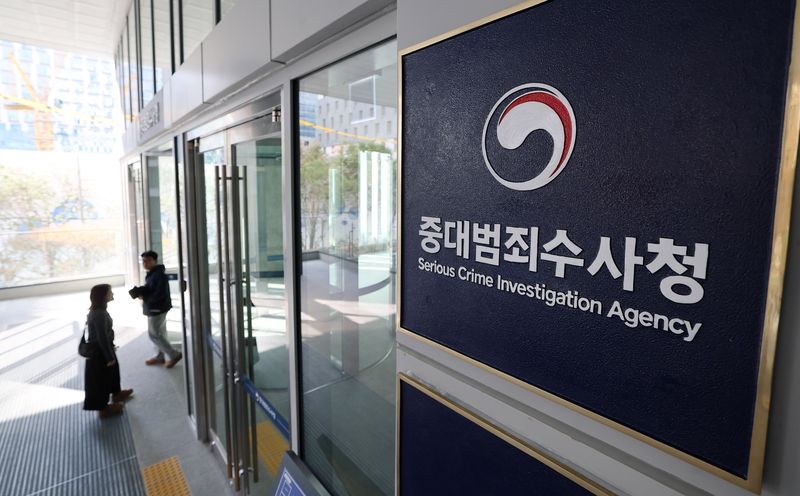
[Financial News] As the launch of the Serious Crime Investigation Agency (SCIA) reshapes the corporate-crime investigation system, coordinating jurisdiction among investigative agencies has emerged as a challenge. The Serious Crimes Investigation Agency and the Financial Supervisory Service’s special judicial police for capital-market crimes have overlapping investigative remits. With the Ministry of Trade, Industry and Energy also pushing to introduce special judicial police to investigate technology leaks, the landscape of agencies responsible for corporate-crime investigations is expected to become more complex.
According to legal circles and relevant authorities on the 20th, the Ministry of Trade, Industry and Energy announced its plan the previous day at the 76th Industrial Technology Protection Committee meeting to introduce special judicial police to investigate technology leaks. The aim is to respond swiftly to technology-leak crimes by granting ministry officials direct investigative authority. Earlier, on the 11th of last month, Democratic Party of Korea lawmaker Heo Seong-mu introduced as lead sponsor an amendment to the Act on the Duties of Judicial Police Officers that would authorize ministry officials in grades 4 through 9 to investigate crimes including violations of the Act on the Protection of Industrial Technology and the National Advanced Strategic Industries Act, as well as the illegal export of strategic goods under the Foreign Trade Act. The bill is pending before the Legislation and Judiciary Committee.
The question is how to divide responsibilities with existing investigative agencies. The Ministry of Intellectual Property’s special judicial police currently investigate trade secret misappropriation and patent infringement under the Unfair Competition Prevention Act, among other offenses. The move to grant investigative authority to the Ministry of Trade, Industry and Energy, which has relevant expertise, is understood to reflect the fact that offenses under the Act on the Protection of Industrial Technology are not included in the current scope of duties. The ministry is responsible for protecting national core technologies and advanced strategic technologies.
However, the Serious Crimes Investigation Agency Act also includes violations of the Act on the Protection of Industrial Technology among the serious crimes it can investigate in certain circumstances, creating overlapping jurisdiction. The police also have dedicated units investigating industrial technology leaks in Seoul, Gyeonggi and other areas. If an investigation overlaps with that of another investigative agency, the Serious Crime Investigation Agency may request that the case be transferred, and the agency receiving the request must comply unless it has a legitimate reason not to. Discussions over case allocation and transfer criteria are expected to become more important once the ministry’s special judicial police are established.
Overlapping jurisdiction is also expected in capital-market crime investigations. The Serious Crimes Investigation Agency Act includes violations of the Capital Markets Act among the offenses the agency can investigate, overlapping with the remit of capital-markets special judicial police in cases involving market-price manipulation, the use of nonpublic information and unfair trading. The Serious Crimes Investigation Agency can investigate related crimes such as embezzlement and breach of trust in addition to Capital Markets Act violations, while special judicial police must limit their investigations to the scope of duties set out in law. Major law firms therefore say discussions are needed to determine which agency should handle cases that capital-markets special judicial police are already investigating or in which they have begun compulsory investigative measures.
Institutional mechanisms to resolve competing claims of jurisdiction are not yet fully in place. The provision of the Criminal Procedure Act establishing the Investigative Jurisdiction Coordination Council takes effect next February. Until then, agencies will have to rely on discussions among themselves and procedures for transferring cases. Even after the council is established, it remains unclear whether it will be able to bring about effective coordination when interests conflict.
Lee Geun-woo, a professor in the Department of Law at Gachon University, pointed out, “Investigative jurisdictions often overlap not only among the Serious Crimes Investigation Agency, the police and special judicial police, but also among special judicial police units themselves. This can lead to power struggles between agencies, with the stronger agency taking cases that could produce results.” He added, “Jurisdictional disputes arise because the agencies cannot reach agreement, so I question whether a coordination body alone can resolve them,” and said that having the courts decide jurisdiction should also be considered.
[email protected] Choi Eun-sol Reporter