Ruling party and presidential office take a hard line with Brunson but tread carefully with Washington, walking a tightrope in U.S. relations ahead of year-end OPCON talks
- Input
- 2026-10-20 14:28:33
- Updated
- 2026-10-20 14:28:33
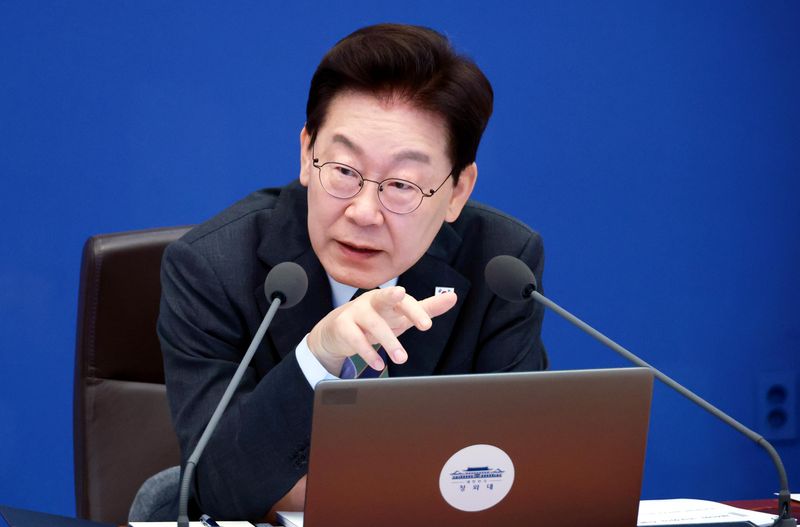
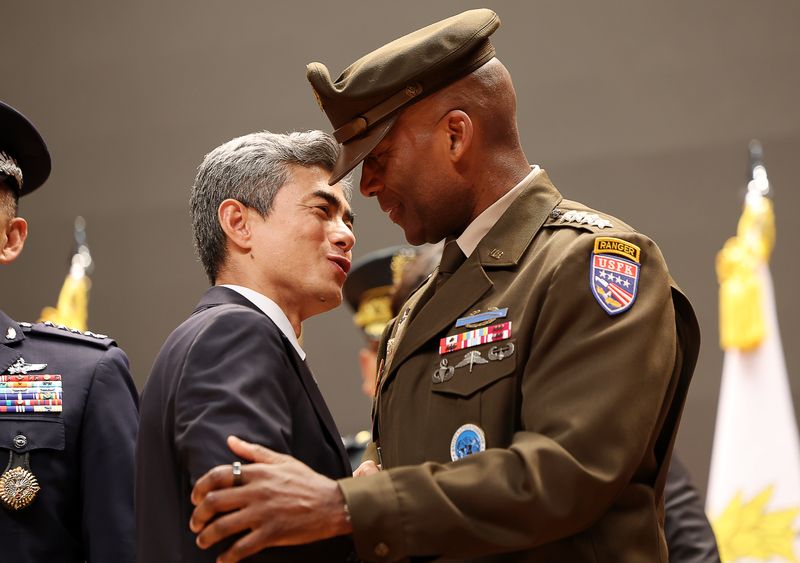
Kim Min-seok, leader of the Democratic Party of Korea, said on the party’s YouTube channel Minti07 on the 20th, responding to General Brunson’s argument that the criteria for assessing the OPCON transfer should be revisited in light of changes in the security environment, including North Korea’s advances in missile capabilities: “There is no reason to say that anything in particular needs to be changed just because the security environment has changed.” General Brunson had earlier referred to the distance between Beijing and Seoul while explaining the need to deploy a U.S. Forces Korea Multi-Domain Task Force (MDTF). The remarks have prompted interpretations that, in line with a plan to expand U.S. Forces Korea’s role to include countering China, the ability to respond to China could also be incorporated into the OPCON transfer conditions.
The ruling party and presidential office are concerned that changes to the assessment criteria could delay the timeline for bringing OPCON back under South Korean control. The current conditions for transferring OPCON comprise three areas: the South Korean military’s ability to lead combined defense, its ability to respond to North Korea’s nuclear and missile threats, and the security environment on the Korean Peninsula and in the region. If the ability to counter China or contributions to regional security operations are also included, the scope of verification could broaden and the process could take longer. As President Lee is pursuing the return of OPCON by the end of his term in June 2030, additional conditions could disrupt the government’s timeline. At a press conference the previous day, Lee also described OPCON as a matter of “military sovereignty” and stressed that “it must be brought back early.” This was seen as signaling an approach to the return of OPCON as an issue of sovereignty, rather than merely a transfer of authority based on a U.S. assessment.
The controversy surrounding General Brunson has spread beyond the conditions for transferring OPCON to the issue of territorial sovereignty. In response to General Brunson’s remark that “from the United Nations Command’s perspective, the Republic of Korea begins at the southern fence line,” Kim Min-seok criticized it as “highly inappropriate wording.” Democratic Party lawmaker Kim Byung-joo, a special adviser to the Blue House on defense policy, also said of the remark on YTN radio’s Jang Seong-cheol’s News Myeongdang the previous day that it had “violated the spirit of the ROK-US agreement.”
The ruling party and presidential office are nevertheless calibrating their response, distinguishing General Brunson’s remarks from the U.S. administration’s official position. Both Kim Min-seok and special adviser Kim Byung-joo criticized the commander’s remarks while stressing that Washington’s position was different. They are wary of criticism of the commander escalating into a conflict with the U.S. government.
This is because the two sides need to narrow their differences over the transfer of OPCON at the SCM later this year. The 58th SCM, initially expected to take place in November, may be postponed to December as the two countries coordinate their major schedules. The government plans to complete this year the Full Operational Capability (FOC) assessment of the Future Combined Forces Command and determine a target year for the transfer, but it still needs to narrow the two sides’ differences over the assessment results. With General Brunson’s call to revisit the assessment criteria added to the mix, disagreements could emerge at the SCM not only over whether the existing transfer conditions have been met, but also over the scope of the criteria’s application.
Beyond OPCON, there is a long list of issues requiring coordination between South Korea and the United States. In addition to the U.S. side’s demand that part of the investment funds be remitted in advance within this year, the two sides must discuss investment terms for nuclear power and Alaska liquefied natural gas (LNG) projects in the United States, as well as how to disburse funds for the $150 billion (about 210 trillion won) ROK-US shipbuilding cooperation project Make American Shipbuilding Great Again (MASGA). The issue of deployment to the Strait of Hormuz has also entered the picture, expanding the negotiating agenda to cover the economy and security broadly. Special adviser Kim says issues such as security and trade should be handled separately, but with several items on the negotiating table at once, it is difficult to rule out their influencing one another in practice.
Meanwhile, the Blue House is pursuing direct communication between the leaders, including by setting up a task force (TF) to prepare for a golf meeting with U.S. President Donald Trump. Special adviser Kim also spoke of the need to persuade President Trump directly through a golf meeting. With the possibility of a meeting being discussed around the Group of 20 (G20) summit in Miami, United States, in December, the key question is whether summit diplomacy can find common ground on the intertwined issues, from the conditions and timing of the OPCON transfer to U.S. investment and deployment to the Strait of Hormuz.
[email protected] Song Ji-won Reporter