International Shipping Decarbonization Regulations: A New Growth Opportunity for Busan’s Maritime Industry
- Input
- 2026-10-20 13:52:19
- Updated
- 2026-10-20 13:52:19
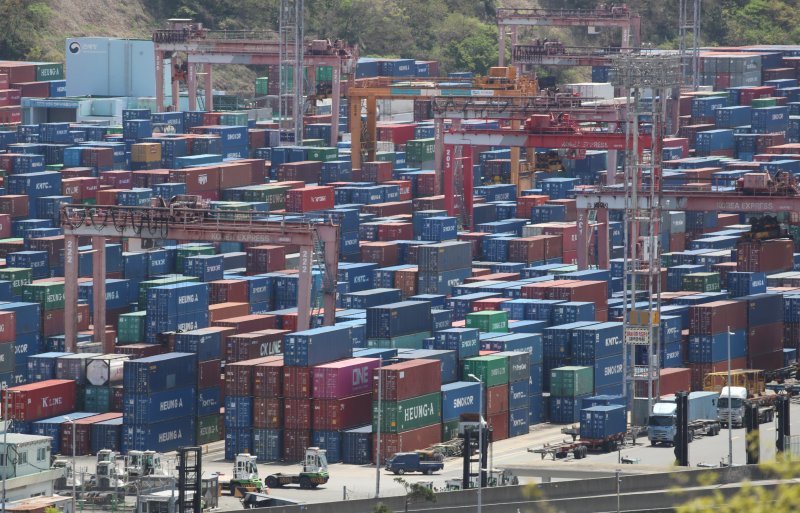
[Financial News] With the international community’s efforts to achieve carbon neutrality and tighter regulations on decarbonizing international shipping expected to bring considerable structural changes to Busan’s maritime industry, some say the changes should be viewed as an opportunity to upgrade the city’s maritime-related industries.
According to a report titled “The Impact of Strengthened Carbon Regulations on the Busan Regional Economy: A Focus on the Maritime Industry,” jointly conducted by the Bank of Korea’s Busan Branch and Professor Nam Hyun-jeong of Korea Maritime and Ocean University and released on the 20th, the impact of regulations on decarbonizing international shipping on Busan’s economy will be felt in three areas: shipbuilding, ports and shipping.
In shipbuilding, demand is expected to rise for high-efficiency vessels and vessels powered by alternative fuels. In the port sector, service infrastructure supporting eco-friendly vessels will need to be expanded. In shipping, route optimization and adjustments to operating speeds are expected to become more important to reduce fuel and carbon-emissions costs.
Specifically, in shipbuilding, a scenario in which the price of European Union Allowances (EUA) rises by 52.2% is estimated to spur about 10.7 trillion won in domestic investment in eco-friendly vessels. The resulting production-induced effect in the Busan region was estimated at about 1.592 trillion won, the employment-induced effect at 8,991 jobs, and the value-added effect at 626.8 billion won.
Notably, 78.7% of the production-induced effect was found to arise through industrial links with Ulsan, Gyeongnam and Jeonnam, highlighting the importance of building a regional supply chain. The report said Busan needs to strengthen its supply chain for eco-friendly shipbuilding equipment and materials while expanding high-value-added professional services such as research and development, testing, certification and finance.
For the port sector, the report estimated the production, employment and value-added effects of investment in eco-friendly port service infrastructure. As international shipping becomes more decarbonized, the importance will grow of services such as supplying eco-friendly fuels and bunkering, shore-side power supply facilities (AMP), electrification of port equipment and smart energy management, which support port calls by vessels powered by eco-friendly and alternative fuels. Applying these estimates to the 22.1 billion won investment in eco-friendly port service infrastructure currently underway at Busan Port, the report estimated that it would generate about 27.6 billion won in production, 126 jobs and 10.9 billion won in value added in the Busan region. In other words, every 10 billion won invested in eco-friendly ports would generate about 12.49 billion won in production, 4.92 billion won in value added and 57.7 jobs.
The report said support should be provided to shipping companies so they can manage fuel, carbon and regulatory compliance costs in an integrated manner for each vessel and voyage, and refine their route and vessel-operating strategies.
The report also said developing the Northern Sea Route (NSR) could be a way to refine operating strategies over the long term. If the route between Busan and Rotterdam via the Suez Canal were replaced with the NSR, the shorter distance would reduce fuel consumption and carbon dioxide emissions by 28.6%, saving an estimated $526,000 (780 million won) in fuel costs and $116,000 (170 million won) in European Union Emissions Trading System (EU ETS) costs.
However, the report said the NSR should be approached as a long-term research and demonstration project that takes into account safety, seasonality and operational infrastructure. It also noted that the costs of slow steaming associated with longer voyage times and lower vessel turnover should be considered.
Professor Nam, who authored the report, said, “These findings show that carbon regulations can serve as a new growth engine for Busan’s maritime industry, particularly in shipbuilding, ports and shipping.” He added, “When designing policy responses, the focus should be on building up the maritime industry’s capacity for transition within the region rather than simply compensating for regulatory costs.”
[email protected] Kwon Byeong-seok Reporter