“Meet Gotjawal in Pyeongchang” ... National Institute of Korean Native Plants opens greenhouse showcasing Jeju vegetation
- Input
- 2026-10-20 11:10:11
- Updated
- 2026-10-20 11:10:11
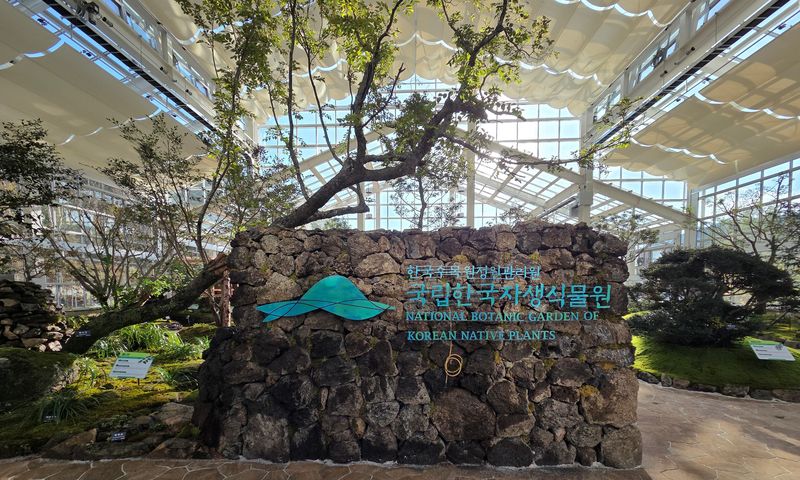
The Korea Arboreta and Gardens Institute (KAGI), an organization under the Korea Forest Service, said on the 20th that it had opened a greenhouse at the National Institute of Korean Native Plants featuring a recreation of Jeju’s distinctive native vegetation.
The greenhouse was created to overcome the climatic limitations of the high-altitude region in the northern part of the Korean Peninsula and establish a secure foundation for conserving native plants from the southern regions, while giving visitors the opportunity to view a diverse range of plant resources regardless of the season.
Inside the greenhouse, the distinctive landscapes of Jeju—its oreum and Gotjawal—have been meticulously recreated, and 118 native plant species, including Jeju sanbeodeul, hwanggeun and chaejinmok, have taken root. In particular, 33 rare, endemic and endangered plant species whose habitats are threatened by climate change are also on display, including baekseohyang, jukjeolcho, gaegasinamu, sogwinamu, gaetdaechunamu, pachoilyeop and sambaekcho, adding to the greenhouse’s ecological value.
The National Institute of Korean Native Plants plans to strengthen its conservation and research capabilities for native plants vulnerable to climate change following the greenhouse’s opening. It will continue conducting detailed growth surveys of the plants on display and expand special exhibitions and hands-on educational programs to raise awareness of the value of native plants.
“With the opening of this greenhouse, people can now see valuable native plants from Jeju and the southern regions firsthand in Pyeongchang,” said Go Gyeong-chan, director of the National Institute of Korean Native Plants. “We will continue to serve as a bridge that promotes the value of native plants while ensuring the systematic conservation of endangered species.”
The opening of the greenhouse is seen as having taken the ex-situ conservation capabilities of national arboreta and botanical gardens to a new level as they respond to plant habitat shifts caused by recent global warming and the climate crisis. Rare subtropical and temperate plants previously concentrated in southern coastal and island areas have been established in the greenhouse environment of the high-altitude inland region of Gangwon, which has a continental climate. The greenhouse is expected to serve as a hub for the distributed conservation of plant resources in preparation for rapid climate change. It is also expected to contribute to revitalizing the local economy in conjunction with the expansion of ecotourism infrastructure in Pyeongchang.
[email protected] Kim Won-jun Reporter