“Mining profits from neglected forests”: Japan’s financial and trading houses join forces on a ₩847 billion forest fund
- Input
- 2026-10-20 10:18:22
- Updated
- 2026-10-20 10:18:22
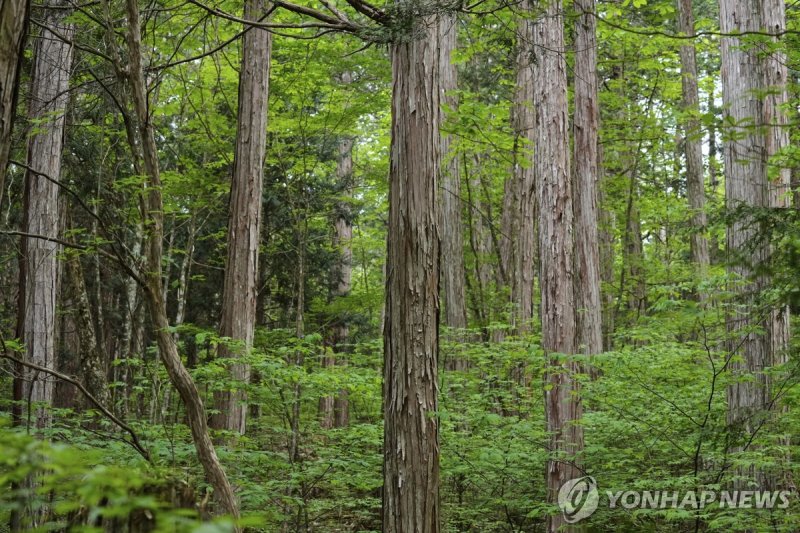
【Financial News, Tokyo = Correspondent Seo Hye-jin】Japanese financial institutions, general trading companies and major construction firms are joining forces to establish a forest fund worth ¥100 billion (about ₩847 billion). The plan is to consolidate forests left unmanaged because of aging owners and complicated ownership arrangements, then generate revenue by selling timber and carbon credits. Attention is focused on whether private capital can be invested in local forests that have become difficult to manage and deliver stable returns to investors.
According to The Nikkei on the 20th, Advantage Partners, a major Japanese private equity firm, plans to launch a large fund specializing in forest investments in Japan as early as next spring. It will start with ¥20 billion (about ₩169.4 billion) and plans to expand its investment to ¥100 billion within five to seven years. It will be the first large fund focused on investing in Japanese forests.
More than 10 companies are looking to participate. Sumitomo Mitsui Trust Bank, MUFG Bank, Ltd. (MUFG Bank), Tokyo Century and Marubeni are in talks to join the fund. Obayashi Corporation and Kyushu Electric Power are also considering ways to cooperate in timber use and distribution.
The first investment targets will be forests in the Tohoku and Kyushu regions. When asset management companies established by local businesses, including regional banks, buy forest land, the fund will acquire rights related to timber and other products from those companies. It will then sell timber, biomass fuel and carbon credits that offset greenhouse gas emissions, and distribute the proceeds to investors. It is also developing a plan to give investing companies priority allocation of carbon credits.
The target annual return is 6–7%. Rather than generating capital gains by reselling assets, the model is designed to earn returns over the medium to long term by keeping the land and growing trees. Smart forestry companies such as Temix Green will also participate, with plans to digitally manage each tree individually and improve inventory management efficiency.
Japanese forests are difficult to consolidate into large-scale projects because ownership is highly fragmented. Many forests have also been left unmanaged as their owners have grown older. The fund focuses on bringing together scattered forest rights to increase the utilization of these resources.
Financial institutions in Canada and Australia are expanding their forest fund businesses. However, it remains untested whether the same approach can generate returns in Japan, where plots are small and ownership arrangements are complex. The Nikkei forecast that “this initiative will serve as a test of a Japanese-style forest investment model.”
After building experience managing natural capital through forest investments, Advantage Partners is also considering expanding its investment targets to farmland, lakes and wetlands. Its long-term goal is to increase its natural capital investments to ¥1 trillion (about ₩8.47 trillion).
[email protected] Seo Hye-jin Reporter