Proposal to Connect Chuja Offshore Wind Project to National Power Grid; Jeju Urges National Assembly to Improve Policies
- Input
- 2026-10-20 09:55:17
- Updated
- 2026-10-20 09:55:17
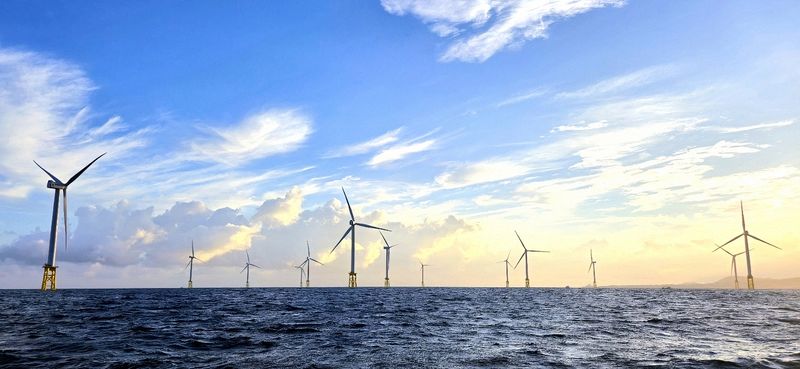
【Financial News Jeju = Reporter Jeong Yong-bok】 Jeju Province will ask the National Assembly to connect the Chuja offshore wind project to the national power grid and exempt energy storage systems (ESS) from grid-use fees. It will also request relief for Jeju from the burden of regionally differentiated industrial electricity rates, as well as expanded financial support for the transition to electric vehicles.
According to Jeju Special Self-Governing Province on the 20th, a National Assembly field visit delegation led by Kim Jeong-ho, chair of the Climate, Energy, Environment and Labor Committee, will tour eight climate- and energy-related sites in Jeju over two days, from that day through the 21st. The visit, linked to the parliamentary audit, is intended to review the operations of power-generation facilities and hear about areas where policy improvements are needed.
Governor Wi Seong-gon of Jeju Province plans to meet with lawmakers on the delegation at around 3 p.m. on the 20th at Energy Nuri Plaza in Haengwon-ri, Gujwa-eup, Jeju City. Lee Chang-heum, Jeju Province’s deputy governor for climate and the economy, will explain the status of climate and energy policies in Jeju and outline key proposals.
The main proposal is to include the Chuja offshore wind project in the 12th Basic Plan for Electricity Supply and Demand and pursue its connection to the national power grid. The Basic Plan for Electricity Supply and Demand is a mid- to long-term plan that sets out the amount of electricity the government expects to need, the power-generation facilities required, and the direction for expanding transmission networks. The 12th plan, covering 2026–2040, is currently being drafted.
Jeju Province is also seeking an exemption from grid-use fees for ESS connected to the distribution network. ESS facilities store electricity when there is a surplus and supply it during periods of high demand. They help balance electricity supply and demand as renewable power generation fluctuates with weather conditions. Jeju Province’s proposal aims to reduce the cost of using the power grid for these storage facilities.
Relieving the burden on Jeju from the introduction of regionally differentiated industrial electricity rates is also among the proposals. The request is for support measures that take into account the impact on regional industries of a policy change that would set different rates depending on where electricity is produced and consumed, among other factors.
Jeju is a region where renewable energy facilities have grown rapidly. As of August this year, renewable energy facilities in the province had a capacity of 1,283.1 MW, accounting for 55.9% of total power-generation capacity. Renewable energy accounted for 25.6% of power generation.
There were 50,718 electric vehicles, accounting for 12.2% of registered vehicles in the province. Jeju Province is expanding the deployment of renewable energy and electric vehicles with the goal of achieving carbon neutrality by 2035, but it also faces policy challenges related to power-grid stability, associated costs, and the financial burden of the transition to electric vehicles.
The National Assembly delegation will visit eight sites, including the Bukchon Battery Energy Storage System (BESS) power plant, Doosan Wind Power Center, the Jeju Control Center, which operates a virtual power plant (VPP), Hallim Offshore Wind Farm, and the Gosan District Atmospheric Monitoring Station. A virtual power plant is a system that connects generation and storage facilities distributed across multiple locations using information and communications technology and manages them as if they were a single power plant.
Hallim Offshore Wind Farm is a 100-MW offshore wind facility completed last December. Korea Electric Power Corporation, Korea Midland Power, and KEPCO Engineering & Construction, among others, took part in the project. Residents of three nearby villages invested 30 billion won through a cooperative, equivalent to 4.7% of the total project cost. The project was designed to distribute part of its power-generation revenue to residents.
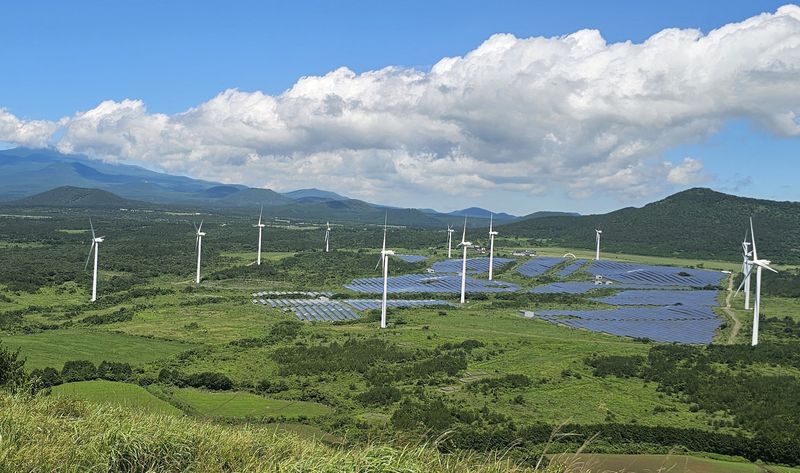
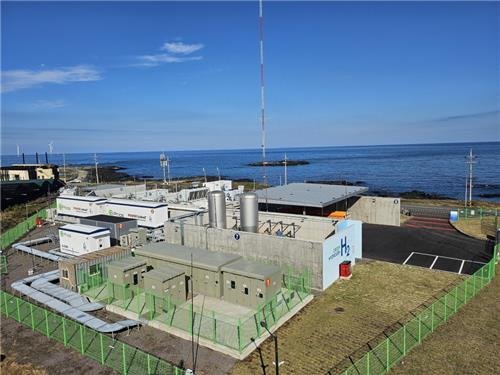
Green hydrogen production is another major example of Jeju’s energy transition efforts. Since September, a direct power purchase agreement (PPA) has been in effect to supply a nearby green hydrogen production facility with electricity generated at the Haengwon coastal wind power facility in Gujwa-eup. The project connects a 3-MW wind power facility with a 3.3-MW hydrogen production facility, using renewable electricity to produce hydrogen.
Jeju Province plans to follow up on the issues and proposals raised during the visit through further consultations with relevant ministries. Matters such as connecting Chuja offshore wind to the power grid and exempting ESS from grid-use fees require further review of national power policy and related systems; no such measures will be finalized during this field visit.
Governor Wi Seong-gon said, “The challenges Jeju faces in expanding renewable energy and electric vehicle adoption are ones that other regions where renewable energy is growing will soon face as well. I ask for the National Assembly’s attention and support so that the experience Jeju has accumulated and the challenges identified on the ground can lead to policy improvements at the national level.”
[email protected] Jeong Yong-bok Reporter