KGM, Husi Partners join forces to address EU Carbon Border Adjustment Mechanism ... “Build a system to calculate emissions from parts”
- Input
- 2026-10-20 10:08:14
- Updated
- 2026-10-20 10:08:14
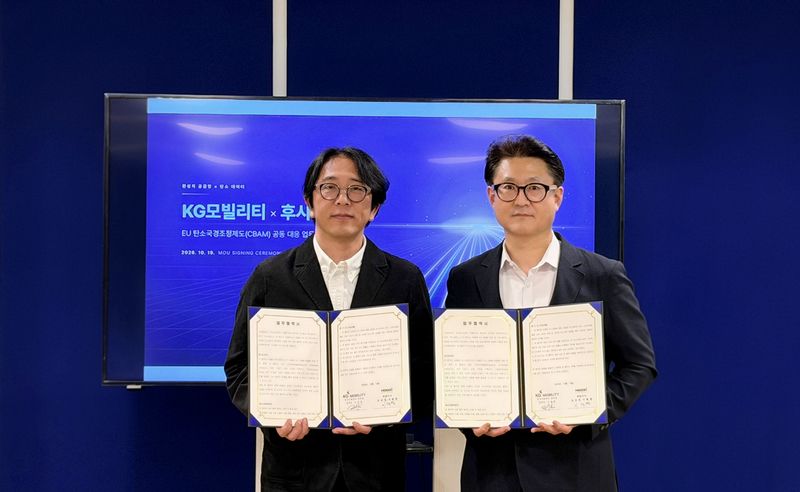
KGM said on the 20th that the signing ceremony was held on the 19th at Husi Partners’ office in Yeongdeungpo-gu, Seoul. Lee Yong-heon, executive director and head of KGM’s Research Planning Center, and Husi Partners CEO Lee Haeng-yeol attended with other officials.
CBAM is a mechanism that charges for carbon emissions generated in the production of goods imported into the EU. Since January this year, it has applied to six product groups, including steel and aluminum. A plan is being pursued to expand its scope from 2028 to include auto parts that are not currently covered.
Products covered by the mechanism must purchase CBAM certificates in line with their emissions. If actual emissions data cannot be submitted, the default values set by the EU for each country apply. These default values carry a surcharge that rises from 10% in 2026 to 30% from 2028 onward.
Through this cooperation, KGM will develop a system for calculating emissions by part and establish a foundation for collecting and verifying carbon data across its supply chain. It plans to extend this work in stages to managing CBAM certificate costs, building a framework that will enable the entire supply chain to respond to European carbon regulations.
Before signing the agreement, KGM began pilot work with Husi Partners last July. They collected data on material inputs, process energy and proof of origin from major suppliers that produce steel, aluminum and other materials used in vehicle models exported to Europe, and calculated the embedded emissions of each product in accordance with EU regulations.
Executive Director Lee Yong-heon said, “This agreement is meaningful as a first step toward proactively responding to European carbon regulations together with our partner companies. We will expand the calculation system developed through the pilot project across the supply chain and continue to strengthen our export competitiveness.”
[email protected] Kim Dong-chan Reporter