LH saves 6.5 billion won by sharing construction resources; reuses 500,000 m3 of soil
- Input
- 2026-10-20 09:29:28
- Updated
- 2026-10-20 09:29:28
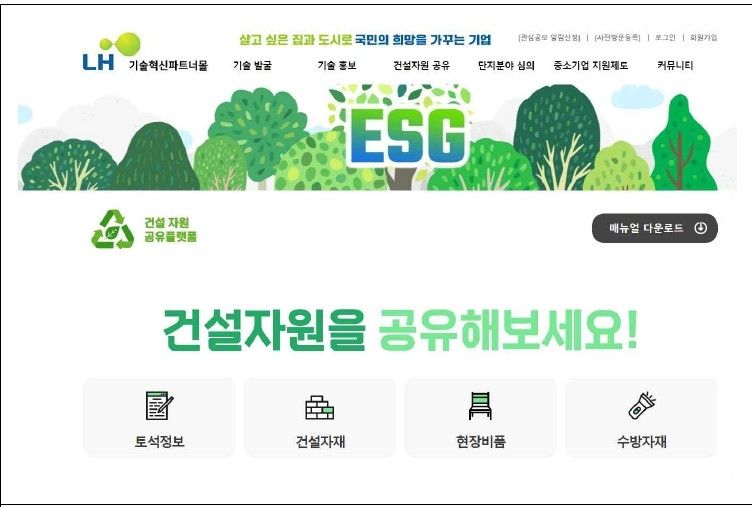
[Financial News] About 6.5 billion won in costs has been saved by transferring surplus soil, safety barriers and temporary fences from one construction site to another instead of discarding them. The savings are an outcome of the Construction Resource Sharing Platform launched last November by Korea Land and Housing Corporation (LH). So far, 52 sites have listed surplus resources, and 16 listings have led to actual sharing.
According to LH on the 20th, resources reused at new sites through the platform include 500,000 m3 of soil, 2,348 PE safety barriers and drums, 731 m of temporary fencing, and 50 PC safety barriers. Sites can list leftover materials brought in for construction or items that can be reused, and sites that need them can put them to use. The items available for sharing include not only construction materials but also soil and rocks, office supplies and flood-control materials. The platform also has an “automatic matching function” that connects sites offering items with those seeking them. Private construction company sites can use it, too, even if they are not commissioned by LH.
The platform also serves as a channel for donating items free of charge. Its first donation was a modular home. After displaying it at the “2025 Smart Construction, Safety & AI EXPO,” held at KINTEX in Goyang, Gyeonggi Province, from November 5 to 7 last year, LH sent the home through the platform to a local welfare center for people with disabilities instead of dismantling and discarding it. This enabled the resources to be put to use again while also benefiting the local community.
The platform concept was first unveiled last October. At the time, LH cited a case in which a nearby apartment construction site took unused paving blocks that had been brought to a site in one district and used them to build a construction office. LH explained that the site giving away the blocks could save on waste-disposal costs, while the recipient could reduce its material-purchasing costs. In less than a year, the concept has been borne out by savings of several billion won.
Resource recycling in construction is drawing attention because the construction sector accounts for a large share of waste. According to the National Indicator System (e-Nara Indicators), construction waste as a share of all waste generated rose from 15.7% in 1996 to 36.5% in 2024. However, while 52 sites have posted resource listings, only 16 sharing arrangements have been completed, leaving it a challenge to expand participation and increase the rate of successful matches.
Lee Sang-jo, head of LH’s Smart Construction and Safety Headquarters, said, “By enabling surplus resources generated at construction sites to be reused where they are needed, we aim to contribute not only to cost savings and more efficient use of resources but also to putting ESG management into practice.” He added, “We will continue to identify successful resource-sharing cases and expand participation among construction sites to foster a culture of resource circulation across the construction industry.”
[email protected] Jeong Gyeong-su Reporter