Hana Securities Takes on Shin Dong-kook’s Loan; Next March Is the Key Variable [fn Market Watch]
- Input
- 2026-10-20 15:30:45
- Updated
- 2026-10-20 15:30:45
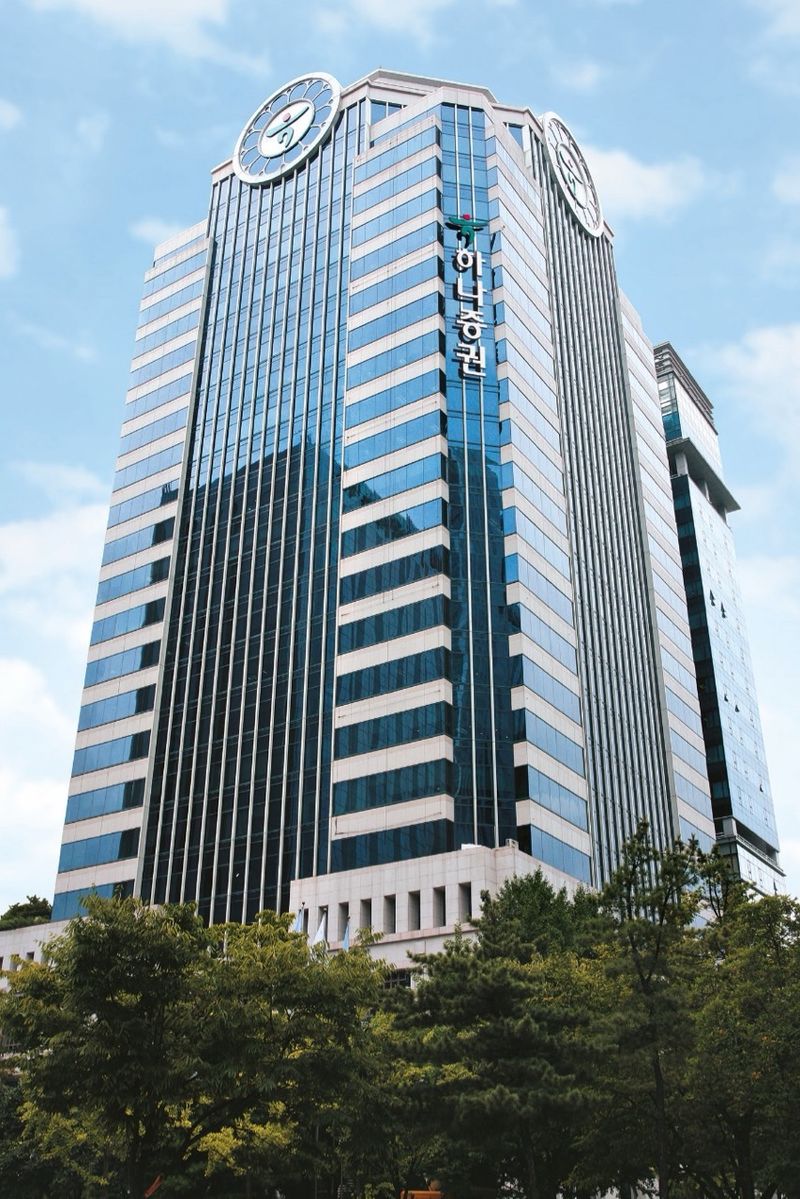
According to the investment banking (IB) industry and the Financial Supervisory Service’s Data Analysis, Retrieval and Transfer System (DART), among other sources, the funds Chairman Shin raised from financial institutions using shares in Hanmi Science and Hanmi Pharmaceutical as collateral totaled 432.2 billion won as of the end of September. Hana Securities accounted for 234.2 billion won, or 54.2%, of the total outstanding loans. The remaining 198 billion won was provided by Korea Securities Finance.
On the 21st of last month, Chairman Shin fully repaid the 113.2 billion won he had borrowed from NH Investment & Securities. On the same day, he restructured the loans by taking out new loans of 98 billion won from Hana Securities and 60 billion won from Korea Securities Finance.
The newly issued Hana Securities loan carries an annual interest rate of 4.45% and a collateral maintenance ratio of 200%. These are stricter terms than those of related stock-backed loans arranged earlier, which had annual interest rates of 4.10–4.30% and collateral maintenance ratios of 140–160%. A 200% collateral maintenance ratio means that the assessed value of the pledged shares must be kept at 20 billion won or more for every 10 billion won borrowed. If a fall in the share price pushes the collateral value below a certain level, the borrower may be required to provide additional collateral or repay part of the loan.
Legal disputes over the pledged shares are also seen as a source of uncertainty. Recently, a court granted a request by the side of Song Young-sook, chair of the Hanmi Pharmaceutical Group, and Vice Chair Lim Joo-hyun for a provisional seizure of Hanmi Science shares worth 10 billion won. The shares covered by the order include those Chairman Shin pledged to Hana Securities and Korea Securities Finance.
A provisional seizure order alone does not extinguish existing financial institutions’ security interests or make it impossible to recover their loans. Its actual impact may vary depending on when the security interest was established, whether it preceded or followed the provisional seizure, and the rights set out in the contracts. Analysts say it will be important to consider the possibility of legal restrictions arising when the security interests are exercised and the shares are disposed of in the future.
Chairman Shin previously won a first-instance ruling in a lawsuit seeking contractual penalties in the 60-billion-won range. However, questions have also been raised over whether he may have violated the Capital Markets Act’s mandatory tender offer rules while acquiring his stake in Hanmi Science through off-market transactions. His side rejected the allegations, saying that, according to advice from law firm Yoon & Yang, the obligation was not triggered because, excluding exceptions such as transactions between specially related parties, there were fewer than 10 counterparties relevant to determining whether a tender offer was required.
The possibility of further borrowing has also been raised. Chairman Shin disclosed earlier this month that he had agreed to buy an additional 1,382,832 Hanmi Science shares for about 69.3 billion won and planned to fund the entire purchase through borrowing from financial institutions. If the new loan is fully drawn while the existing loans remain outstanding, the total amount of stock-backed loans would rise to about 501.5 billion won. The final amount may vary, however, depending on the new lender, the loan terms and whether the loan is actually drawn.
The financial sector is focused on next March because the maturities of Chairman Shin’s existing stock-backed loans are concentrated in the middle to latter part of that month. If extensions or refinancing do not proceed smoothly, his repayment burden could grow. In particular, if falling collateral values require him to provide additional collateral or sell shares, this could also affect the governance structure of the Hanmi Pharmaceutical Group.
A Hana Securities representative explained, “The loan secured by Chairman Shin’s shares was one we had planned to arrange for more than 200 billion won early in the year, but we could not proceed because our credit limit had been used up. We went ahead once capacity became available. The purpose of the loan and the borrower’s individual actions are not matters for the lender to get involved in, and we proceeded after a legal review found no issues.” The representative added, “We secured stability by setting the collateral ratio under stricter terms than those for ordinary secured loans,” and emphasized, “Even if a violation of the Capital Markets Act is found, Hanmi Science shares are high-quality assets, and there would be sufficient demand from institutional investors in the event of a forced sale. We therefore believe there will be no problem recovering the loan.”
[email protected] Kim Hyun-jung Reporter