Private rentals must also report maintenance fees; cities and provinces gain authority to set rent increases by ordinance
- Input
- 2026-10-20 13:29:14
- Updated
- 2026-10-20 13:29:14
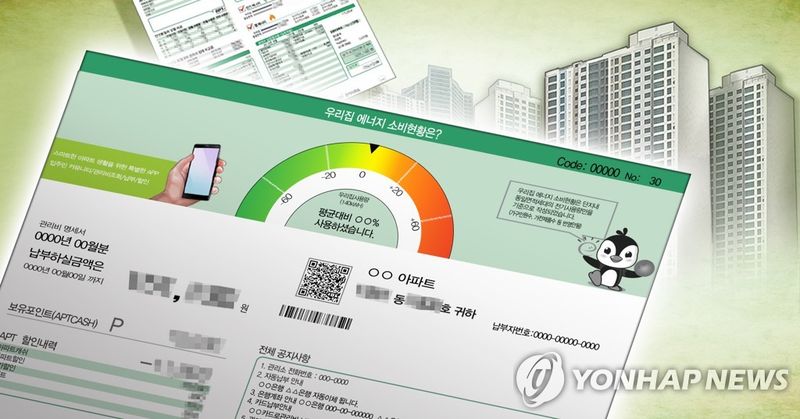
[Financial News] Tenants in privately rented homes will also be able to check local government filings to see how much landlords charge for maintenance and usage fees and how those fees are calculated.
According to the Ministry of Land, Infrastructure and Transport on the 20th, a partial amendment to the Enforcement Decree of the Special Act on Private Rental Housing, which includes these provisions, passed a Cabinet meeting that day. The amended decree will be promulgated on the 27th. It will take effect six months after promulgation, around late April next year. The ministry said the aim is to make the management of maintenance and usage fees more transparent and to improve oversight of rental housing.
The revision focuses on preventing so-called “stealth rent increases,” in which landlords effectively raise monthly rent under labels such as maintenance or option fees. Registered private rental housing operators receive tax benefits, including having properties excluded from aggregation for the comprehensive real estate holding tax, but in return may raise rents by no more than 5% a year. However, as rental demand has surged, cases have emerged in which rents and maintenance or option fees are raised all at once, and the government has viewed this as a way to evade the cap on rent increases. When the bill was announced for public comment in July, a ministry official said there had recently been cases of rents being raised under the guise of option fees, and explained that the measure was intended to improve transparency around maintenance and usage fees. The amendment was open for public comment from July 14 to August 24. The burden on tenants is also growing. According to the Korea Real Estate Board, Seoul’s monthly rent price index for row houses and multi-family homes stood at 101.75 this past May, up 4.65% over the year. Concerns have been raised that young and low-income households are under particularly heavy pressure, since at least 80% of registered rental homes in Seoul are non-apartment housing.
The authority to set the scale of rent increases will be extended to regional governments. Until now, only city, county, and district governments could set the rate of rent increases by ordinance within the 5% limit. Under the amendment, city and provincial governments will also be able to set the rate by ordinance, but only for private rental housing complexes with 100 or more units. The change is said to reflect requests from local governments, including the Seoul Metropolitan Government.
The information that must be reported will also expand. Until now, rental housing operators have listed the lease term and rent when reporting a contract; for purchased rental housing, they have also submitted the loan amount, and for quasi-housing, information on tenants. Going forward, they must also provide the amount of maintenance and usage fees or how those fees are calculated. The channels for publicizing reported rental terms will also expand. Mayors, county governors, and district heads have so far published them only in local government gazettes, but will also have to post them on their websites. Tenants will also be able to check whether a rental deposit guarantee has been obtained through the Rental Housing Information System (RentHome).
Some administrative fines will be reduced. The change reflects local governments’ view that the fines are excessively high for minor violations such as simply failing to file a report. For a first offense, the fine will drop from 5 million won to 3 million won, and for a second offense, from 7 million won to 5 million won. The fine for a third offense will remain 10 million won, as it is now.
[email protected] Jeong Gyeong-su Reporter