Dongja-dong Jjokbang Village designated as public housing district ... first step toward 2,150 homes after five years
- Input
- 2026-10-20 11:00:00
- Updated
- 2026-10-20 11:00:00
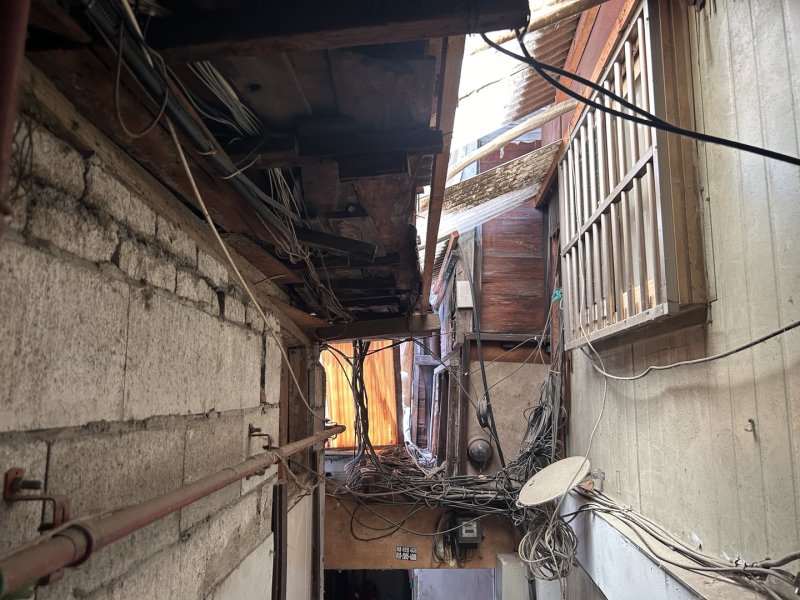
[Financial News] A total of 2,150 homes—1,000 public rental units and 1,150 units for sale—will be built in the Dongja-dong jjokbang village area across from Seoul Station. With the government designating and publicly announcing the area as a public housing district, the project is taking its first legal step more than five years after plans were first announced. Residents of the jjokbang village will be first to receive rental housing equipped with basic living facilities, while tax and compensation arrangements for landowners and other property owners will also be revised.
According to the Ministry of Land, Infrastructure and Transport on the 20th, the district covers 47,573.9 square meters, and the Korea Land and Housing Corporation (LH) will lead the project. The government has set a schedule to begin construction in 2029, after completing district planning, compensation and relocation, and to finish construction and move-ins in 2032. The government says that, because the site is adjacent to Seoul Station and lies in the heart of Seoul amid a concentration of office and commercial facilities, the project is expected not only to supply a large number of homes but also to transform the area into a high-density, mixed-use space.
Safeguards to protect existing owners’ property rights will also be strengthened. The rules are to be revised so that a household holding just one presale right received as in-kind compensation can claim deductions, including the special deduction for long-term residence, when it sells the right. The transfer price will be tax-exempt up to 1.2 billion won, while the portion above that amount will qualify for preferential treatment under the special deduction for long-term residence, of up to 80%. The entitlement to in-kind compensation will also be transferable once. However, the buyer must not own a home, the number of people eligible for in-kind compensation must not increase, and transfers are limited to cases where ownership is passed on by existing residents. In November, residents unable to afford their contributions will gain the option of receiving profit-sharing housing as in-kind compensation. The price will be negotiated between the owners and the project operator and set at roughly 50–80% of the sale price for homes under the standard in-kind compensation scheme.
Private construction companies will also be brought into the project. On the 4th of last month, the government revised its project implementation guidelines to allow private construction companies to participate in public housing projects as joint project operators. The aim is to combine the public sector’s project management capabilities with the private sector’s construction expertise.
The plan also includes measures for jjokbang residents. Dongja-dong’s jjokbang village has long been regarded as an area in urgent need of housing improvements, with aging buildings packed closely together and even basic living facilities in short supply. Existing residents will receive priority to move into public rental housing with an exclusive floor area of at least 21 square meters. Each home will have its own cooking facilities, bathroom and toilet, and heating and cooling systems. Residents will be able to stay in temporary accommodation during construction, and support will continue from relocation through resettlement.
Lee Jae-pyeong, the Ministry of Land, Infrastructure and Transport’s director for housing supply policy, said, “With this designation, the Dongja-dong project has entered a concrete implementation phase, making it important to ensure that the follow-up procedures proceed smoothly.” He added, “Going forward, we will support the stable resettlement of jjokbang residents, fully take into account the views of the residents’ committee, and work with relevant agencies to advance the project.”
[email protected] Jeong Gyeong-su Reporter