“You shut down your business and now you want moving costs?” ... ‘I Am Solo’ Season 28’s Hyunsuk finally takes legal action against a tenant
- Input
- 2026-10-20 05:50:00
- Updated
- 2026-10-20 05:50:00
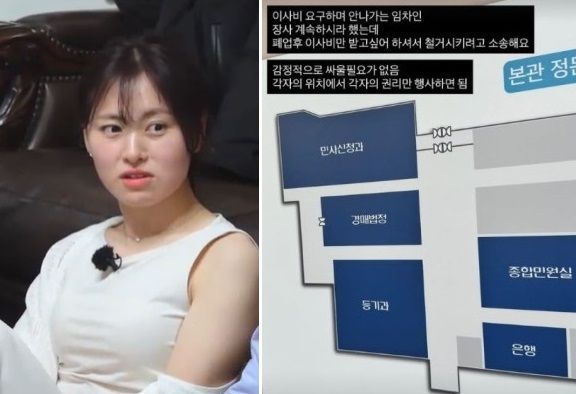
[Financial News] Hyunsuk (stage name), who became known after appearing on the divorced-singles special of Season 28 of SBS Plus and ENA’s variety show I’m Solo (I’m SOLO), has taken legal action against a commercial tenant refusing to vacate a property she won at auction. She made clear she was taking a firm stance toward the tenant, who had stopped operating the business but was holding out while demanding excessive moving expenses, saying, “There’s no need to fight emotionally; I’ll exercise my legal rights.”
Hyunsuk recently shared on social media that she had begun legal proceedings, saying, “I’m filing a lawsuit to have a tenant who is refusing to leave unless paid moving expenses evicted.” She said, “I told the existing tenant to keep running the business, but after shutting it down, they wanted only moving expenses, so I ultimately decided to file suit.” She stated firmly, “There’s no need to argue emotionally. Each of us just needs to exercise our respective rights from our respective positions.”
Born in 1988, Hyunsuk is a single mother and florist raising three children on her own. When she appeared on the show, she drew attention by naming real estate auctions as both a personal-finance hobby and a side business. The current lawsuit is also believed to stem from a dispute over the transfer of possession of a commercial property she won at auction.
It is common for buyers of commercial buildings at real estate auctions to run into disputes with existing tenants. Typical cases involve junior-ranking tenants whose rights are not enforceable against the new owner, or tenants whose lease has already expired, refusing to vacate while demanding moving expenses (settlement payments) ranging from several million to tens of millions of won.
Once the successful bidder pays the full sale price, ownership transfers immediately. As a rule, a tenant without enforceable rights against the new owner cannot claim a right to remain in unauthorized possession, and must restore the property to its original condition—removing interior fixtures and returning the premises—when the existing lease ends.
Typically, within six months of paying the balance, a successful bidder at auction can apply to the court for an “order for delivery of real estate” and secure an enforceable title relatively quickly. However, if the occupant is not eligible for such an order, the parties dispute the facts concerning the right to possession, or the case involves a failure to restore the property to its original condition by removing interior fixtures, the buyer must file a formal “lawsuit for delivery (eviction) of the building and restoration to the original condition.”
“Avoid emotional responses... seek a provisional injunction barring transfer of possession and claim damages at the same time”
Real estate legal experts advise avoiding emotional confrontations and promptly pursuing legal procedures when facing a tenant’s unreasonable refusal to leave during an eviction process.
The first step should be to seek a “provisional injunction prohibiting transfer of possession.” If the occupant unlawfully transfers possession to a third party while the lawsuit is underway, the judgment may not apply to the new occupant, leaving the successful bidder to go through another lawsuit against them.
The successful bidder can also pursue a claim for restitution of unjust enrichment equivalent to rent for the period of unauthorized occupancy, or a claim for damages. If the tenant refuses to remove the fixtures voluntarily and they have to be removed through court-ordered enforcement, the buyer can later seek reimbursement from the tenant for the full enforcement costs and demolition expenses.
A real estate auction expert emphasized, “Some occupants take advantage of the fact that compulsory enforcement can take several months and routinely demand unreasonable moving expenses, but possession without a legal basis constitutes unlawful occupation. If an amicable settlement appears unlikely, promptly filing for an order for delivery and a lawsuit for eviction to increase the pressure is the best way for a successful bidder to reduce additional financing costs and losses.”
[email protected] Moon Young-jin Reporter