Indictment Agency: “An increase in requests for supplementary investigations is inevitable”
- Input
- 2026-10-19 18:26:39
- Updated
- 2026-10-19 18:26:39
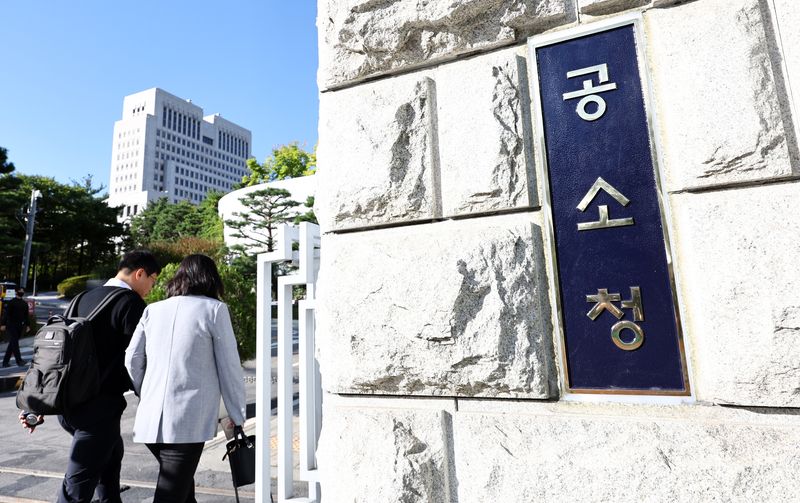
The Indictment Agency issued a statement to the press on the 19th, explaining that there would be no mass transfer to the police and other agencies of around 180,000 unresolved cases following the agency’s launch, despite concerns to that effect.
An Indictment Agency official said, “Most of the agency’s current unresolved cases are those that investigative agencies, such as the police, have finished investigating and referred to us. An agency prosecutor reviews each case file and decides whether to indict, and will request a supplementary investigation on a case-by-case basis only when further investigation is needed.”
The Indictment Agency said it was difficult to accurately estimate how many cases would be subject to requests for supplementary investigations, but that an increase in the rate of such requests was in some respects inevitable with prosecutors’ supplementary investigation authority abolished.
Under the amended Indictment Agency Act and the Criminal Procedure Act of the Republic of Korea, cases in which prosecutors directly initiated investigations will be handled by the Indictment Agency or transferred to the Serious Crime Investigation Agency, the police, or other competent investigative authorities within a grace period of up to 90 days. Transfers have been completed, following consultations with investigative agencies, for around 1,980 cases in which prosecutors had directly placed individuals on wanted lists. Around 300 cases among those initiated by prosecutors have been selected for priority transfer and are being sent in stages to the Serious Crime Investigation Agency and the police.
The explanation came after figures released by the Indictment Agency on the 7th confirmed that unresolved cases had climbed to an all-time high. According to the agency and other sources, there were 186,307 unresolved cases at prosecutors’ offices nationwide at the end of last month, up 45,794 in three months from 140,513 at the end of June. Compared with 164,822 at the end of August, the figure rose by 21,485 in just one month. Legal circles believe that most of these are cases referred by other agencies.
With prosecutors unable to conduct supplementary investigations directly into referred cases since the 2nd, forecasts suggest that many will be sent back to the police. There are also concerns that cases will flood in at year-end when the 90-day grace period expires. Lee Jin-su, acting Minister of Justice, said during a parliamentary audit that unresolved cases per prosecutor’s office numbered as many as around 500, a substantial increase from the 50 to 100 cases seen two to three years ago.
The practical work of transferring cases is also slow. With no digital infrastructure in place for exchanging case files, the Serious Crimes Investigation Agency will have to use some functions of the police’s Korea Information System of Criminal Justice Services (KICS) alongside paper records for the time being. The number of cases to be transferred to the police and the Serious Crimes Investigation Agency is also expected to exceed 100,000.