SCIA Chief Kim Ji-yong: Whether to attend Cabinet meeting to be decided in consultation with relevant agencies
- Input
- 2026-10-19 18:26:31
- Updated
- 2026-10-19 18:26:31
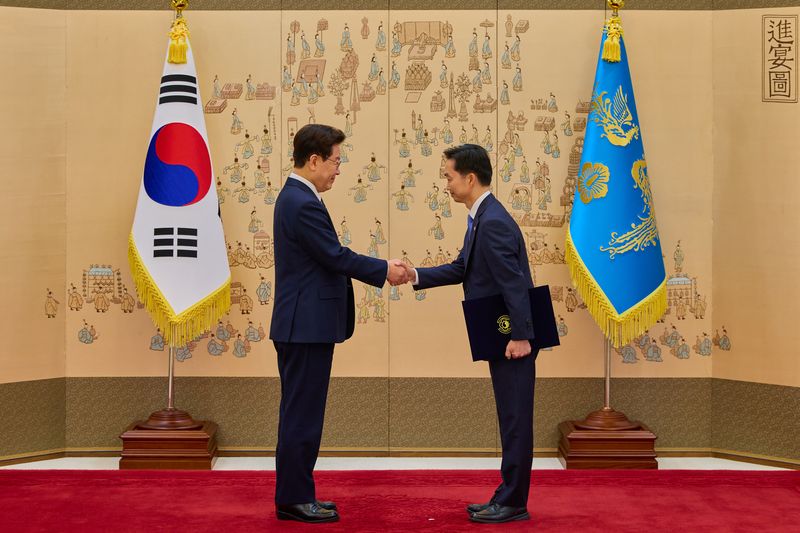
Speaking to reporters on his way into work at SCIA headquarters in Jung-gu, Seoul, on the morning of the 19th, Kim said, “The first priority is the early stabilization of the SCIA.” He said that when he first reported for work on the 16th, he had appointed Deputy Chief Jeon Jong-min to head a task force dedicated to the agency’s early stabilization. “I asked [Jeon] to quickly put in place the personnel and material infrastructure needed for the agency to operate normally,” he explained.
He went on to stress, “There were various problems in the past, including the Prosecution Service’s abuse of its investigative powers, and at their root was the politicization of investigations. We will uphold fairness, neutrality and procedural justice without fail.” He also pledged to ensure there were no gaps in protecting vulnerable members of society and crime victims.
The responsible-investigation system will also be fleshed out. Kim said, “Existing investigative agencies tended to neglect their responsibility after referring a case. The point is not necessarily to aim for an indictment, but to investigate and handle a case according to what the facts show—if the allegations are unfounded, treat them as unfounded; if they are substantiated, treat them as substantiated.” Detailed operating standards are to be set out in a manual later.
Investigative results are also beginning to emerge. The Narcotics Investigation Division 4 of the Seoul Regional Serious Crime Investigation Agency urgently arrested foreign national A, who is suspected of purchasing 2.5 kg of cannabis overseas, and obtained an arrest warrant the previous day. It was the first arrest warrant issued since the SCIA was launched.
Existing cases initiated by the Prosecution Office are also being transferred in stages. According to the Prosecution Office, around 300 prosecutor-initiated cases are subject to transfer to the SCIA and police combined. An official at the Seoul SCIA said, “We have been in talks since last week and are taking over cases as they are ready.”
However, the Korea Information System of Criminal Justice Services (KICS) can still perform only limited functions, such as transferring cases and changing the agency responsible for them. The Seoul SCIA is handling cases by first receiving and reviewing paper records, then assigning new case numbers.
Whether Chief Kim will sit in on Cabinet meetings is also under consideration. Asked whether he wished to attend, Kim replied, “We will make an appropriate decision in consultation with the relevant agencies and in accordance with the applicable laws and regulations.” An SCIA official said, “We will review not only the relevant rules but also past cases of investigative agency heads, such as prosecutors general and National Police Agency chiefs, attending Cabinet meetings, and consult the ministry responsible. Nothing has been decided at this point.”
Experts say an internal management system is needed to support the responsible-investigation system. A law school professor at a university in the capital region said, “When there is an acquittal, it is necessary to distinguish whether the problem lay in the investigation or in maintaining the prosecution, among other things, and evaluate it accordingly. If the investigation was unlawful, those responsible should be held accountable; if the problem was an established practice, a feedback process to improve the system is needed.”
Other internal issues remain, including an inspection related to Im Eun-jeong, chief of the Gwangju SCIA, and the transfer into the agency of an investigator who was subject to inspection while working for the Prosecution Service. Whether Kim can link investigative results to normalizing the organization while establishing internal discipline is seen as a challenge for him.
[email protected] Choi Eun-sol Reporter