Lee Chan-jin: “FSS to submit reform plan and tighten reins on ‘financial-sector security’”
- Input
- 2026-10-19 18:16:39
- Updated
- 2026-10-19 18:16:39
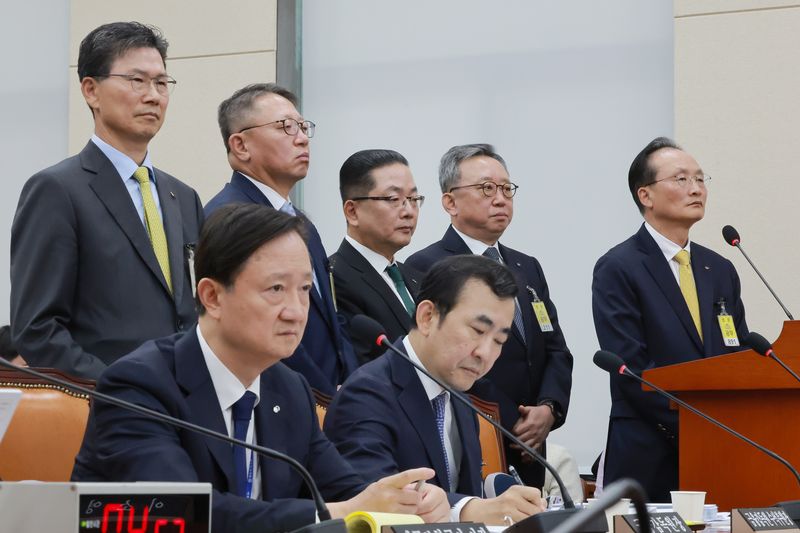
At a parliamentary audit by the National Assembly’s National Policy Committee in Yeouido, Seoul, on the 19th, the FSS governor answered a question from Han Chang-min of the Social Democratic Party about the delay in announcing the reform plan, saying, “Consultations with the Financial Services Commission are almost complete, and there are no major disagreements.” He added, “I expect it to be submitted sometime in November.” Earlier, in January, the Public Institutions Management Committee had deferred designating the FSS as a public institution while calling for reforms.
In his work report to the parliamentary audit, Lee stressed, in connection with information leaks resulting from recent cyberattacks in the financial sector, “We will quickly address security vulnerabilities through a thorough investigation into the causes, among other measures.”
Lee said, “Given the public’s great concern over a recent series of security breaches, we will actively encourage financial firms to strengthen their own security capabilities so they can respond effectively, including with AI-based defenses against AI-based attacks. We will reinforce institutional safeguards, including stronger analysis and assessment of security vulnerabilities, mandatory identification and management of IT assets, and expanded simulated-hacking exercises, including AI-based penetration.” Cyber threats using AI are spreading, but the domestic banking sector’s response remains limited, and the FSS intends to encourage greater investment.
According to data obtained from the FSS by the office of Park Sang-hyeok, a Democratic Party of Korea lawmaker and secretary of the National Policy Committee, 20 banks in South Korea conducted a total of 78 simulated-hacking exercises through August this year. Only nine of them—11.5% of the total—involved AI agents. This is the first year banks have used AI agents in simulated-hacking exercises.
Lee also said he would verify the defensive approaches used by Woori Bank and Nonghyup Bank, where no information leaks have been confirmed to date. When Han Min-soo of the Democratic Party of Korea asked what distinguished banks where information leaks had occurred from those where they had not, Lee replied, “They stayed true to the basics,” adding, “Woori Bank had a multi-factor authentication system, while Nonghyup Bank had no points of exposure to external attacks.”
Lee Hwan-ju, president of KB Kookmin Bank, said, “We apologize for causing concern to our customers and the public over a hacking incident at a financial institution that should be founded on trust. We will secure sufficient budgets and staffing to prevent a recurrence.” Hana Bank President Lee Ho-sung also said, “We apologize for causing concern. We will expand our budget and staffing, put AI systems in place, and work to ensure that such damage does not recur.”