Arts and Culture Promotion Fund’s available funds plunge 75% in five years...Calls to tighten oversight over honoraria “payback” [2026 parliamentary audit]
- Input
- 2026-10-19 16:44:26
- Updated
- 2026-10-19 16:44:26
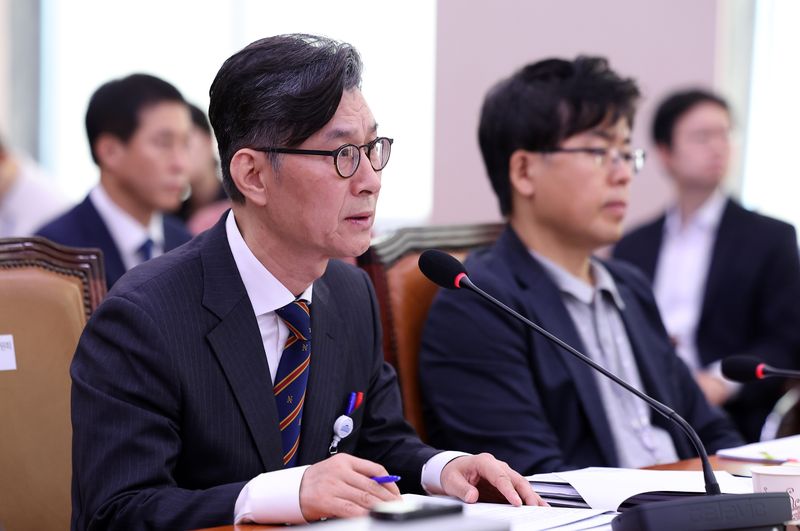
At a parliamentary audit by the National Assembly of the Republic of Korea’s Culture, Sports and Tourism Committee on the 19th, Democratic Party of Korea lawmaker Im Oh-kyung called for measures to secure additional funding to support the expanded grants.
Data released by Rep. Im show that expenditures from the Arts and Culture Promotion Fund rose about 46%, from 332.2 billion won in 2020 to 485 billion won in 2025. Over the same period, available funds fell about 75%, from 167.2 billion won to 41.1 billion won.
The fund’s reserves also fell for four consecutive years, from 115.339 billion won in 2021 to 41.162 billion won in 2025. Reserves are estimated at 49.014 billion won at the end of this year, about 19.1% more than the 41.162 billion won recorded last year.
The composition of the fund’s revenue also became an issue, alongside changes in its balance. This year, 82% of its revenue is expected to come from other funds and accounts. Rep. Im said that a structure reliant on external funding would make it difficult to continue expanding grant programs needed by artists.
In response, ARKO Chair Lee Beom-heon said, “We are working on measures at the committee level and discussing them with several lawmakers.”
He added, “We are considering ways to secure revenue from punitive surcharges on ticket scalping and undistributed copyright royalties as new funding sources for the Arts and Culture Promotion Fund,” and said there would be active cooperation with relevant agencies to seek alternatives.■ 39% of honoraria “paid back”...Calls to strengthen settlement proceduresARKO’s current grant application rules restrict applications from applicants who have failed to comply by the deadline with an order to return subsidies, as well as from organizations or individuals notified that they are excluded from carrying out projects or are disqualified due to improper receipt of funds, among other reasons.
In materials released ahead of the parliamentary audit, Rep. Im called for stronger settlement procedures for grant-funded projects. A special audit conducted in February this year found that a theater company had received 105 million won from the Arts and Culture Promotion Fund for a 2019 project and recovered some of the honoraria it had paid to 14 participants.
The honoraria paid totaled 45,352,800 won, of which 17,696,100 won was deposited into a separate account managed by the organization’s head. That amounted to about 39% of the honoraria. Rep. Im said indications of suspected payback were also found in a 2024 project for which the same organization received 155 million won.
ARKO’s ethics management rating fell from C for its 2024 performance to D+ for its 2025 performance. The evaluation panel cited declining internal perceptions of integrity and the risk of improper receipt of funds during the review and settlement of subsidy projects.
In the materials, Rep. Im stressed, “The settlement system for improper receipt of funds must be strengthened, and the Arts and Culture Promotion Fund’s financial structure, which relies on transfers from external sources, must be fundamentally improved.”
[email protected] Jang In-seo Reporter