Four Years as a Juvenile Court Judge: What Only Began to Come into View Outside the Courtroom [The Complexities of Juvenile Trials]
- Input
- 2026-10-19 16:16:20
- Updated
- 2026-10-19 16:16:20
A Judge Goes Beyond the Courtroom
When people think of a judge, they usually picture someone sitting on the bench, reading case files and handing down a ruling. I used to think the same way. After working in trial courts for more than 10 years, I thought a judge’s job ultimately came down to wrestling with case files.
But after I became a juvenile court judge, that view changed completely.
I could not properly adjudicate juvenile cases by holding hearings only inside the courtroom. At times, I had to take off my robe and climb into a van, and visit juvenile detention centers and residential care facilities in person. I needed to see for myself where the children were questioned, where they lived, and how the dispositions we ordered were carried out in practice.
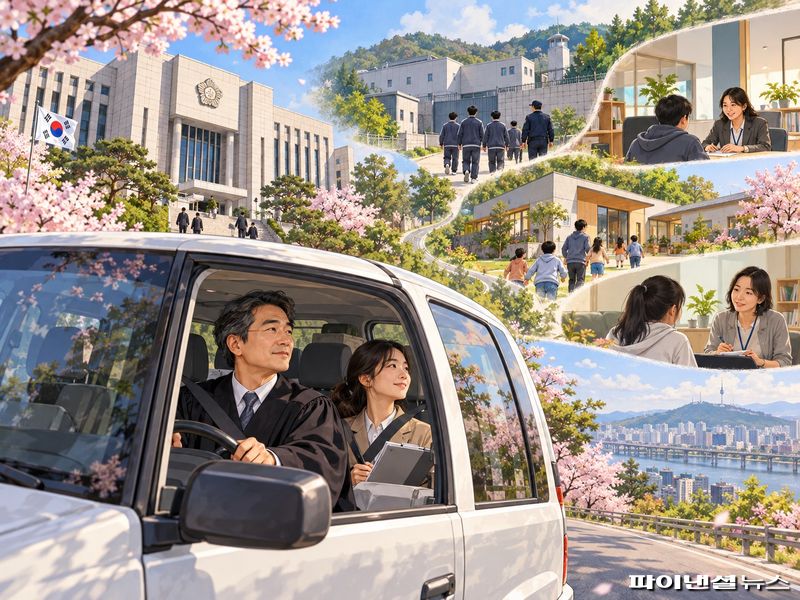
Looking back, that was the busiest, most unfamiliar, and at the same time most vivid period of my career as a judge.
I handled juvenile cases for one year starting in February 2016, and then for three years from March 2019 through February 2022. That adds up to four years in all.
At the time, there were more than 3,000 judges across the country, but only around 20 handled juvenile cases. The number was much smaller still if you count only those who focused exclusively on juvenile cases rather than also handling other work, such as criminal trials.
Moreover, juvenile court judges typically handled the work for a year, or at most two, before moving to another court division. In that respect, my four years handling juvenile cases were quite an unusual experience.
Thanks to that experience, even now that I am a lawyer, I handle quite a few juvenile and school-violence cases.
What a Few Courtroom Experiences Alone Cannot Teach You
But when I counsel clients on related cases these days, I often come across situations that give me some cause for concern.
A search online turns up a flood of content along the lines of ‘How to get a lighter disposition in juvenile court,’ ‘Three things juvenile court judges consider important,’ and ‘Prepare just this and your disposition will change.’
Of course, some of it is helpful. But in my view, quite a few people make definitive claims based on their experience assisting in a handful of cases without having fully understood the overall structure of juvenile proceedings.
Juvenile proceedings are quite different from ordinary criminal trials.
In fact, they are more inquisitorial in nature than criminal trials, and the juvenile court judge is broadly involved from the investigation process through the hearing, the final disposition, and its subsequent implementation. So someone who has only been in court a few times may find it difficult to understand the role of each investigative agency or what each individual disposition means in practice.
To be honest, I was no different.
I joined the juvenile court after working as a judge in trial courts for more than 10 years, but during my first year there were far more things I did not know than things I did. It was only in my second year as a juvenile court judge that I began to see, in a fuller perspective, the roles of the various agencies, the effects of different dispositions, and how a single order for an investigation could affect the proceedings that followed.
Perhaps the most dangerous expert in the world is not someone who knows nothing about a field, but someone who knows a little. That is especially true when they start selling that ‘little bit of knowledge’ to others in a confident voice.
What surprised me most when I first took up my post in the juvenile court was how often I had to go on work trips.
For nearly 10 years before that, I had presided over trials and, apart from on-site inspections, had hardly ever left the courthouse. But after becoming a juvenile court judge, I spent about one day a week out of the office during my first six months on the job.
The reason was simple.
How could I send a child somewhere without knowing what kind of place it was?
I personally visited more than 40 or so institutions, including juvenile detention centers, juvenile classification and review centers, probation offices, delinquency prevention centers, child welfare facilities known as ‘No. 6 facilities,’ and agencies that administer attendance and community service orders.
I visited some places, such as juvenile detention centers, about once a year, but I had to visit No. 6 facilities and others more often to monitor the implementation of dispositions. It would not be an exaggeration to say that, throughout the year, I spent about one day a week visiting outside institutions.
At first, it all felt quite unfamiliar.
In my previous life as a judge, the routine was to be buried in case files from morning until evening. There were many days when I barely saw the sunlight.
But once I began working as a juvenile court judge, I traveled with fellow judges and investigators in a court van to facilities all over the country. I saw the rooms where the children actually lived and listened to staff members on the ground. On the way back, we sometimes sought out local specialties to eat.
At the time, I thought it was exhausting, but looking back now, it was a truly special period.
When Model Students Judge Juvenile Offenders
Another thing that surprised me after joining the juvenile court was a program called
'Youth Participation Court.'
Relatively exemplary students were selected from schools in the area to form a panel. They attended hearings for juveniles who had committed minor offenses and recommended appropriate requirements to the juvenile court judge. It was a form of participatory justice.
In principle, it sounded reasonable.
The idea was for students of the same age to advise juvenile offenders, while giving the participating students a chance to think more deeply about the rules of their community.
But as I presided over the actual proceedings, something about it continued to trouble me.
For the students on the panel, it could be a special experience. It might even have helped with college applications or their résumés.
But the picture looked different from the juvenile’s perspective.
On one side sat children chosen at school as model students; on the other, a child brought to court for an offense sat with their head bowed.
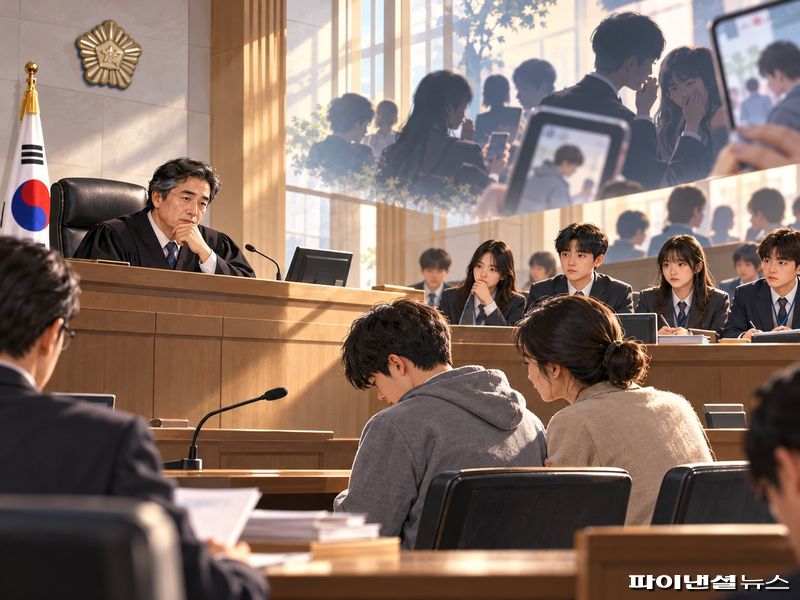
To put it somewhat bluntly, at times it felt like ‘gold-spoon students judging dirt-spoon students.’
Above all, the family circumstances and personal situations of the juveniles on trial and their guardians were exposed far too much in front of their peers.
It seems I was not the only one with these concerns. More and more juvenile court judges came to share similar misgivings, and the program has now become virtually defunct.
The Stage COVID Brought to a Halt Reopens Online
But among the programs I encountered in the juvenile court, one in particular has stayed with me most vividly.
It was the ‘Youth Culture Festival.’
Seoul Family Court, Suwon Family Court, Incheon Family Court, and Chuncheon District Court took turns hosting an annual cultural festival for juveniles placed in child welfare facilities.
It was not simply a talent show.
Many of the children placed in No. 6 facilities had little experience of being properly cared for at home. As a result, many had low self-esteem.
One important purpose of the festival was to give them the chance, even just once, to feel ‘I can accomplish something too’ by preparing dances, songs, and instrumental performances for months and appearing on a large stage.
The eighth Youth Culture Festival, hosted by Suwon Family Court and in which I played a leading role, was originally scheduled for 2019. For various reasons, it was postponed by a year and held in 2020.
But as it happened, it was 2020.
The very year COVID-19 brought the world to a standstill.
When preparations for the festival began in May 2020, we hoped that the pandemic might have eased somewhat by November. We even booked a venue that could hold about 1,000 people.
But the situation did not improve.
By around July that year, we were growing increasingly concerned.
'Could we really hold this event?'
And beyond that: 'Even if we could, would it really be right to go ahead?'
Some suggested that we use this opportunity to discontinue the Youth Culture Festival altogether.
There was also substantial opposition to that idea.
The festival was effectively the only chance for children in No. 6 facilities to spend months preparing for a performance and receive applause in front of hundreds of people. Was it right to take that opportunity away from them completely because of COVID?
I struggled with the decision too.
Then I had an idea.
“If we can’t predict how the pandemic will unfold, why not create an event that can go ahead under any circumstances?”
So I proposed an ‘online cultural festival with a multi-location live broadcast,’ with cameras set up at every No. 6 facility and all the facilities connected in real time.
Online live broadcasts are commonplace now, but the atmosphere was different in 2020.
When I first proposed the idea, people raised a number of concerns.
Would it really be technically feasible?
Would it turn into a shoddy event with just a few screens connected?
Would we run into nothing but problems while preparing with a vendor and end up ruining the event?
Some even suggested making it a prerecorded broadcast instead.
During that process, Park Jong-taek, the former chief judge of Suwon Family Court, strongly supported the multi-location live broadcast approach. Thanks to him, we were able to start looking for a vendor that could put on the event the way we envisioned.
Of course, the hard part came after that.
Choosing a vendor was not easy, and even after we had selected one, new problems came up every week.
We held working-group meetings almost every week.
It felt as though each meeting did not solve one problem, but instead gave rise to two or three new ones.
Several times, I wondered, ‘Why did we ever start this?’
But when the best option was not possible, we chose the next best; if that was difficult too, we looked for another approach.
That was how we worked through the problems one by one.
And at last, the day of the event arrived.
The result was unexpected.
After the event, people at the venue even said, “It was actually more fun than an in-person event.”
Because the children did not have to travel from their facilities, many more of them could take part. Another unexpected advantage was that we did not have to worry about a juvenile possibly absconding from the venue.
The Moment the Children Called Out ‘Mom’
But if you ask me what I remember most about that day, a different scene comes to mind before the technical success or the scale of the event.
It was the moment when children staying at Salesio at the time sang ‘Mom,’ a song by the singer Ra.D.
About 60 children sang together.
Their voices were all different.
Their pitches were all different too.
Some were a little early, while others were a little late.
But as the song reached its climax and the children all cried out ‘Mom’ at the top of their voices, the atmosphere in the venue changed completely.
The children at the other facilities, watching on screen, fell silent too.
The judges, the investigators, and the staff were all left speechless.
I knew that many of those children either did not really know their mothers or, even if they did, were unable to live with them.
That made those words all the more painful to hear.
'Mom.'
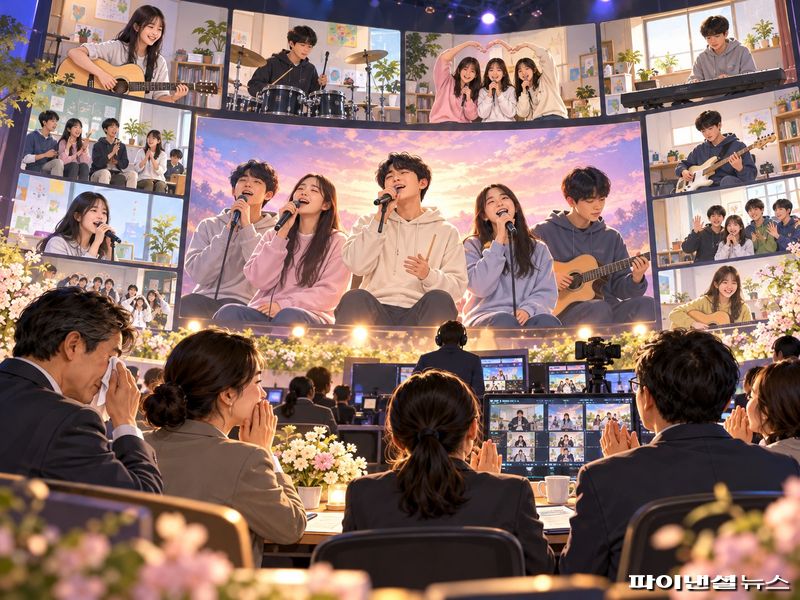
Perhaps what the children sang onstage was not really a song.
Perhaps it was their voices calling out to the person they missed most.
In the end, I could not hold back my tears either.
I quietly wiped them away when no one was looking.
And after the event, I called my mother for the first time in a very long while.
I said something I rarely managed to say.
“Mom, I love you.”
Later, after I became a lawyer, I happened to meet the singer Ra.D in person.
I told him that special story from that day as well.
I told him that one of his songs had moved the hearts of children living in a care facility, and that a judge who heard the song had called his mother after a long time and told her he loved her.
On sunny days like these, I sometimes think back to my time as a juvenile court judge.
In 2019, the respected Presiding Judge Yoon Woong-gi, then assigned to Juvenile Division 1, and I, then assigned to Juvenile Division 2, traveled around southern Gyeonggi Province in a court van.
With just two judges handling all juvenile cases in southern Gyeonggi Province, it was certainly not an easy time.
Strangely, though, looking back now, that was the most energetic period of my life as a judge.
It was a time when I went beyond judging a child’s wrongdoing in the courtroom and considered where that child would return to.
A time when I did not stop at issuing a disposition, but checked how it actually affected a child’s life.
And a time when I learned that some children may need an adult who believes in them more than they need punishment.
When I meet with judges still working in the courts these days, I hear that the working conditions for juvenile trials are becoming increasingly difficult.
Cooperation with agencies responsible for implementing dispositions has become more difficult than before, and while the capacity of No. 6 child welfare facilities is limited, the number of children who need to be placed in them continues to grow, I am told.
There are more children who need somewhere to go, but no places to send them.
Few things could be more frustrating for a juvenile court judge.
Even amid a rising caseload, a shortage of facilities, and increasingly strained relationships among the agencies, somewhere at this very moment a juvenile court judge is likely poring over a child’s case file and wrestling with what to do.
What does this child need right now?
Should the child be sent home?
Would probation be enough?
Or should the child be separated from their family for a time and given a different environment in which to be cared for?
Juvenile court is not merely about deciding which numbered disposition to impose on a child who has done something wrong.
At times, it is also about considering what kind of life that child might lead in the future.
That is why I still believe the work juvenile court judges do is both extremely difficult and special.
As someone who did that work years ago, I would like to express my deep respect for the juvenile court judges, investigators, and personnel at agencies responsible for implementing dispositions across the country who continue to do their work quietly every day, even as conditions worsen.

(Kim Tae-hyeong, Partner at Barun Law LLC) Attorney Kim Tae-hyeong specializes in family law and inheritance. After being appointed as a judge in 2007, he concluded his 17-year judicial career in 2024, when he left his post as a presiding judge at Suwon Family Court, and joined Barun Law LLC. During his judicial career, he handled family law and inheritance matters as well as juvenile cases for a total of eight years, starting in 2012. In particular, during the five years before retiring from the judiciary (2019–2024), he served as a specialist judge in family and juvenile cases at Suwon Family Court, handling numerous family law and inheritance cases and developing expertise in the field. He is also the author of the bestseller Inheritance, Divorce, Juvenile Trials, and the Court as Explained by a Chief Judge (Pakyoungsa Publishing Co., 2023).
[email protected] Kim Yeong-gwon Reporter