Jeju 4.3–Yeosu–Suncheon Incident Education Partnership: Plans to Expand Student and Teacher Exchanges
- Input
- 2026-10-19 16:07:31
- Updated
- 2026-10-19 16:07:31
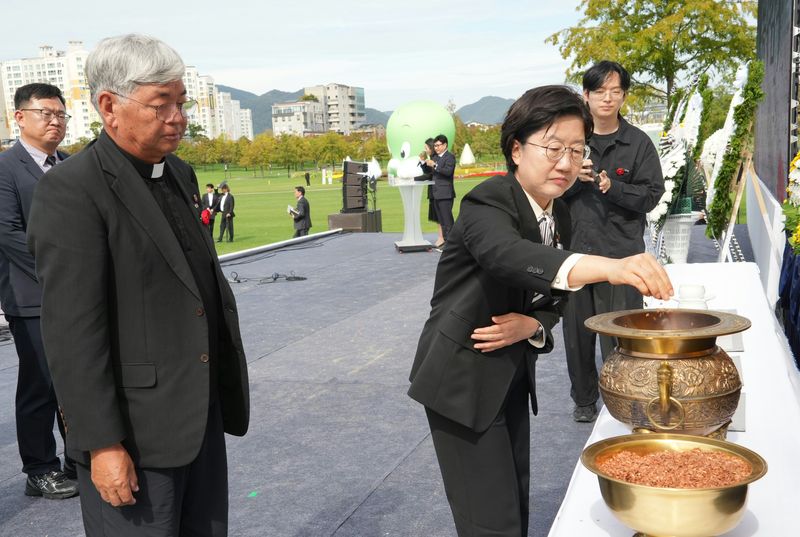
【Financial News, Jeju = Reporter Jeong Yong-bok】 Plans are underway to expand exchanges between students and teachers from the two regions through peace and human rights education covering both Jeju 4.3 and the Yeosu–Suncheon Incident.
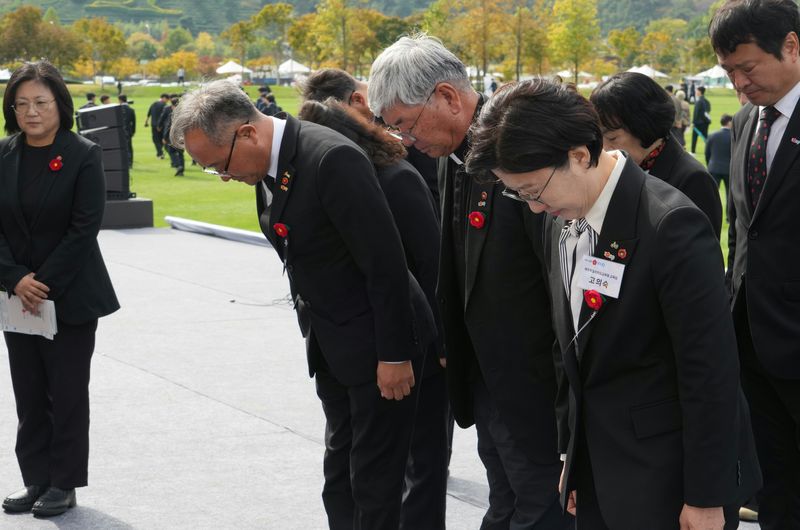
According to the Jeju Special Self-Governing Provincial Office of Education on the 19th, Superintendent Ko Ui-suk attended the 78th-anniversary joint memorial ceremony for the Yeosu–Suncheon Incident at 10 a.m. that day at Ocheon Green Plaza in Suncheon, Jeonnam-Gwangju Integrated Special City. It was the first time Superintendent Ko had attended a joint memorial ceremony for the Yeosu–Suncheon Incident since taking office.
The ceremony was hosted by the Committee for Investigation of the Truth of the Yeosu–Suncheon Incident and Restoration of Honor for Its Victims, and organized by Jeonnam-Gwangju Integrated Special City and Suncheon City. The official government-level memorial event was held to honor the victims and comfort their bereaved families.
Superintendent Ko laid flowers and burned incense alongside Im Mun-cheol, chairman of the Jeju 4.3 Peace Foundation; Kim Chang-beom, chairman of the Association for the Bereaved Families of the April 3 Victims; and bereaved families of Jeju 4.3 victims. It was an occasion for families of victims from Jeju and the Yeosu–Suncheon Incident to commemorate the victims together and reflect on the historical ties between the two regions.
Jeju 4.3 and the Yeosu–Suncheon Incident are directly connected through the military’s 1948 order to suppress Jeju. The Yeosu–Suncheon Incident began on October 19 that year, when some soldiers of the Republic of Korea Army’s 14th Regiment, stationed in Yeosu, South Jeolla, refused an order to deploy to suppress the Jeju 4.3 Incident.
Armed clashes subsequently continued in Yeosu, Suncheon and nearby areas, and many civilians were killed during the government’s suppression operations. The current Special Act on the Yeosu–Suncheon Incident includes within its scope related armed clashes that occurred from October 19, 1948, to April 1, 1955, as well as civilian deaths during the suppression operations, among other matters.
The government enacted the Special Act on Investigation of the Truth of the Yeosu–Suncheon Incident and Restoration of Honor for Its Victims in 2021, and it took effect in 2022. Procedures are underway under the act to investigate the truth of the incident and restore the honor of victims and their bereaved families.
School education linking the two incidents already has an institutional foundation. On March 12, 2021, the Jeju Special Self-Governing Provincial Office of Education and the then Jeollanam-do Office of Education signed a memorandum of understanding to promote peace and human rights education on Jeju 4.3 and the Yeosu–Suncheon Incident.
The agreement includes administrative and financial support for commemorative events, occasion-based lessons and experiential learning related to the two incidents, as well as training and educational programs for students and teachers. It also recommends that schools in the two regions use history education programs focused on Jeju 4.3 and the Yeosu–Suncheon Incident when planning school trips or experiential learning visits to the other region.
The plans to expand cooperation announced by Superintendent Ko at the memorial ceremony build on the existing education agreement. In particular, they set a direction for future cooperation, with Ko expressing an intention to expand student and teacher exchanges with the Jeonnam-Gwangju Integrated Special City Office of Education, which launched in July this year.
“The pain of 10.19 is no different from the pain of 4.3, so we must strengthen joint education,” Superintendent Ko Ui-suk said. “In cooperation with the Jeonnam-Gwangju Integrated Special City Office of Education, we will expand support for solidarity programs, including student and teacher exchanges.”
[email protected] Jeong Yong-bok Reporter