“U.S. Intelligence Assets Make Many Stupid Mistakes”—Song Young-gil Cites Misjudgments in the Iran, Iraq and Vietnam Wars
- Input
- 2026-10-19 16:09:24
- Updated
- 2026-10-19 16:09:24
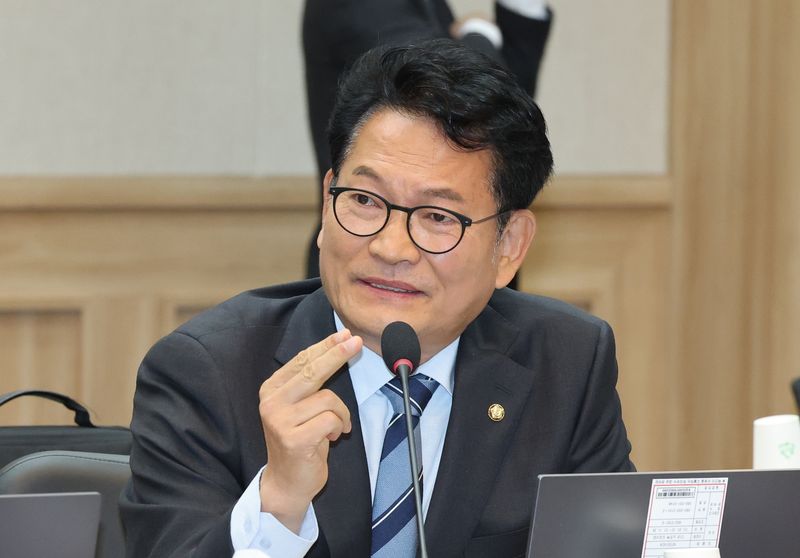
Song also stressed that South Korea should independently assess signs of enemy activity using its own intelligence assets. His remarks come as the U.S. has been restricting the provision of security intelligence on North Korea for at least six months, and are expected to have repercussions.
At the National Assembly National Defense Committee’s audit of Army Headquarters at Gyeryongdae in Gyeryong City, South Chungcheong Province, on the 19th, Song said, “U.S. intelligence assets and judgment capabilities are by no means omniscient,” making the same point.
Song said, “It is said that the Trump administration was lured into bombing Iran by Netanyahu and the Mossad, and this has plunged the U.S. into a serious crisis,” adding, “The U.S. was swayed by intelligence from Netanyahu and the Mossad and made the wrong judgment.”
Referring to the incident on February 28, the first day of the U.S. war with Iran, when U.S. forces mistakenly bombed a girls’ elementary school in the Minab area of Iran, killing around 100 civilians, he said, “The CIA had provided the (target) information 10 years ago,” and pointed out, “They committed this stupid criminal act because they failed to properly assess the situation.”
Song went on to cite the 1964 Gulf of Tonkin incident, which was used to escalate the Vietnam War, and false intelligence about nuclear and weapons of mass destruction during the 2003 Iraq War. He said the U.S. had made many foolish mistakes, including “deliberately distorting information and invading.”
Song said, “The alliance with the U.S. is important, but South Korea’s national interests are never 100% aligned with U.S. interests,” adding, “Failing to take an independent stance ourselves with the intelligence assets we have now is not acting independently.”
He stressed, “We must independently decide whether to start a war that will determine the fate of our nation and assess signs of enemy activity,” adding, “Our military must have the ability to assess information from its own intelligence assets if we are to avoid being drawn into a war.”
It has not yet been confirmed whether Song’s remarks align with the Blue House’s position. Appointed special advisor on peace diplomacy effective the 1st of this month, Song is tasked with assisting President Lee Jae-myung on his peace diplomacy policy.
There is also substantial opposition to the idea, with critics arguing that restricting U.S. intelligence sharing on North Korea could make it impossible to prevent all North Korean missile attacks in advance. A conservative opposition figure said, “If the U.S. military restricts information about the various missiles launched by North Korea, security on the Korean Peninsula could be put at risk,” adding, “Ukraine’s recent experience of facing major difficulties during the war after being restricted from receiving security intelligence via U.S. satellites is proof.”
The South Korean and U.S. military authorities have coordinated to track the trajectories and other details of North Korean missiles each time they are launched. However, South Korea’s military is reportedly somewhat limited in its independent ability to detect North Korean submarine-launched strategic cruise missiles and other such weapons.
[email protected] Kim Kyung-soo Reporter