Pan-progressive camp grows louder amid South Korea-U.S. tensions; hard-line voices emerge within ruling party too
- Input
- 2026-10-19 16:01:26
- Updated
- 2026-10-19 16:01:26
According to political circles on the 19th, the Rebuilding Korea Party plans to make opposition to an upfront $10 billion payment by year’s end for a U.S. nuclear power plant construction project a party-level issue. After defining the $120 billion South Korea-U.S. nuclear framework as “tribute for nuclear power plants” and calling for the upfront payment to be halted on the 14th, Rebuilding Korea Party lawmaker Seo Wang-jin said the party would now raise the issue in earnest. Fellow party lawmaker Cha Kyu-geun also stressed, “I clearly oppose the plan to send $10 billion in advance by the end of the year,” adding, “The first step should be to submit the project’s feasibility assessment and investment-recovery plan to the National Assembly for review.” Rebuilding Korea Party lawmaker Kang Kyung-sook likewise said, “The advance payment must never be made,” and added, “The Rebuilding Korea Party will act as a ‘red team’ to ensure the government does not cross a red line that must never be crossed in the name of pragmatism.”
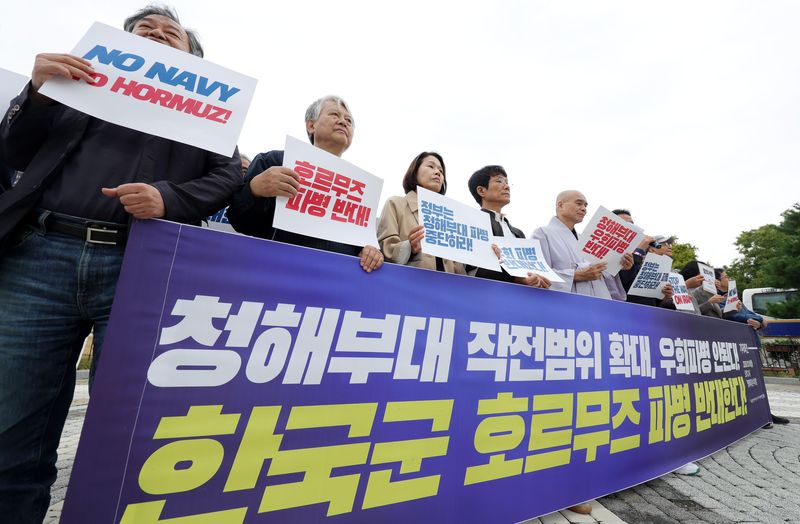
On the issue of deploying troops to Hormuz, solidarity among progressive parties is going a step further and expanding to include some in the DPK. The four progressive parties—the Rebuilding Korea Party, the Progressive Party, the Basic Income Party and the Social Democratic Party—have urged DPK leaders to pass a resolution opposing the deployment. They are also scheduled to raise the issue of indirect deployment resulting from an expansion of the Cheonghae Unit’s operational area at a National Assembly forum on the 21st, co-hosted by DPK lawmaker Lee Yong-seon, Rebuilding Korea Party lawmaker Kim Jun-hyung, Progressive Party lawmaker Yoon Jong-oh and Basic Income Party lawmaker Yong Hye-in. The minor progressive parties are increasing pressure on the government over investment in the U.S. and troop deployment while also building ties with some members of the ruling party.
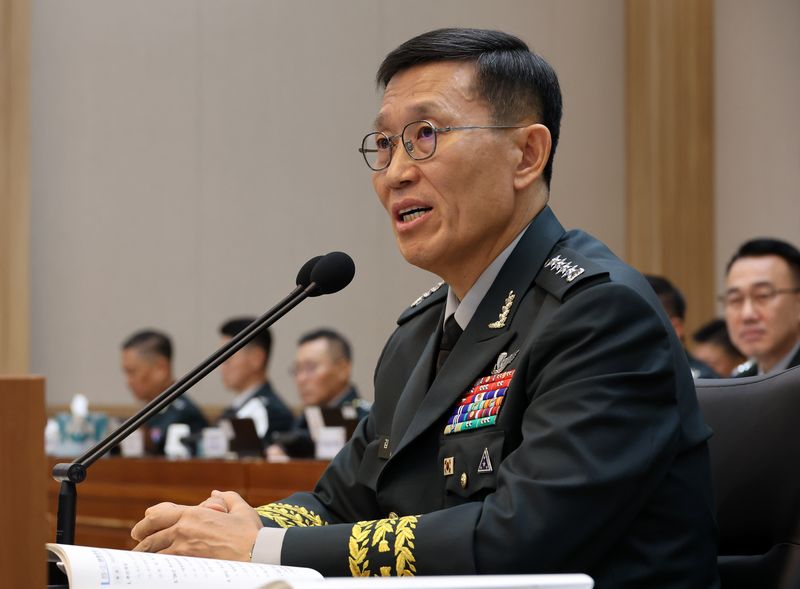
At that day’s parliamentary audit by the National Assembly’s National Defense Committee, DPK lawmaker Min Hong-cheol also took issue with Commander Brunson’s remarks. Army Chief of Staff General Kim Kyu-ha responded to the comment about territory by saying, “I cannot agree,” while emphasizing that “when viewed in terms of the South Korea-U.S. alliance and military-to-military relations, assessments of Commander Brunson need to be cautious and restrained.” In effect, he drew a line on the issue of territorial sovereignty while cautioning against letting it escalate into a conflict at the alliance level.
The problem is that the government cannot avoid negotiations with the U.S. It has to finalize the terms of investment in the U.S., while sensitive security issues such as the transfer of OPCON and troop deployment to Hormuz remain unresolved. The government’s consideration of a possible expansion of the Cheonghae Unit’s operational area, alongside its emphasis on the principle of non-involvement in war, also reflects its need to take both U.S. demands and domestic opposition into account. In particular, for the foreign and security policy team, including National Security Office Director Wi Seong-lac, who prioritizes managing the South Korea-U.S. alliance, the challenge is to preserve room for negotiations with Washington while also managing hard-line views within the ruling camp.
The political burden also falls on DPK leaders. Amid controversy over former party leader Jung Cheong-rae’s U.S. visa issuance, Kim Min-seok, who is pursuing a visit to the U.S. after the midterm elections, cannot help but be mindful of the spread of hard-line views toward the U.S. within the ruling camp. Since taking office, Kim has pledged to strengthen party-to-party diplomacy with the U.S., China and Japan, and expanding communication with Washington will require him to consider the demands of both party hard-liners and the pan-progressive camp. As minor progressive parties expand their political space around South Korea-U.S. issues, the government and DPK leadership are accumulating challenges they must address.
[email protected] Song Ji-won Reporter