“A bus with no driver’s seat is on the move” ... Lotte Innovate showcases autonomous driving technology in Gangneung
- Input
- 2026-10-19 16:52:37
- Updated
- 2026-10-19 16:52:37
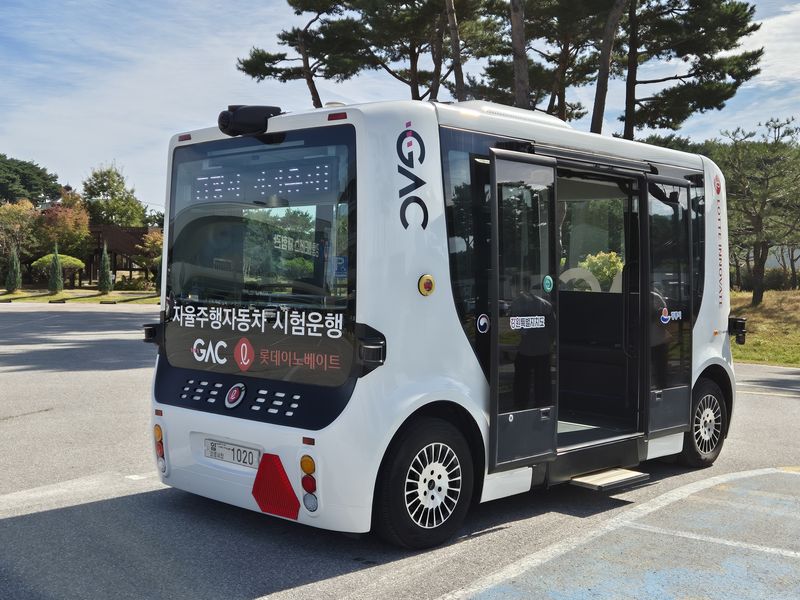
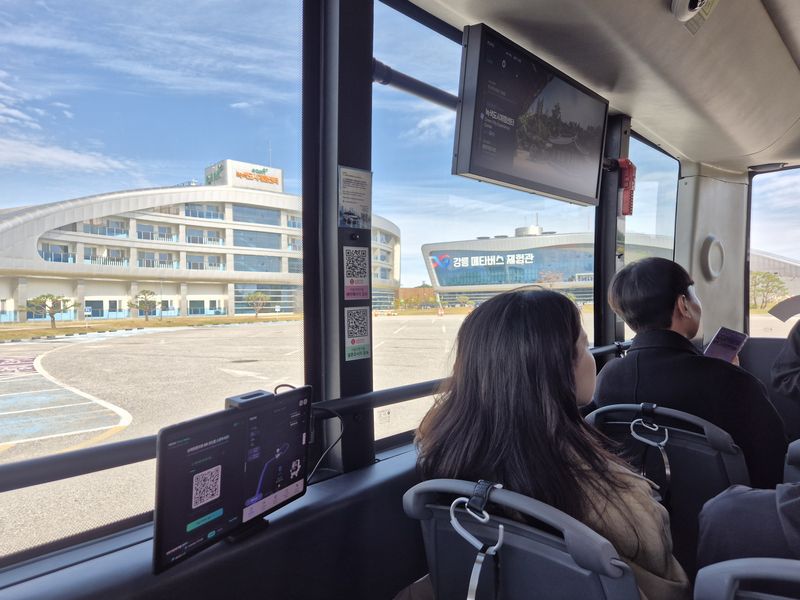
[Financial News]#. A compact autonomous bus with four wheels and a rounded rectangular body. Its interior, surrounded by floor-to-ceiling windows, has eight seats. There is no separate driver’s seat. It can carry up to 15 passengers, including standing passengers, and has a top speed of 40 km/h. One safety attendant rides in each vehicle, and it can be switched to manual control in an emergency.
This is Lotte Innovate’s autonomous shuttle, MUVU (Mubu), which we tried out at the 2026 ITS World Congress, which opened in Gangneung, Gangwon Province, on the 19th. Lotte Innovate has been operating autonomous driving services in Gangneung since January 2023, building up its technical expertise and operational experience. Autonomous shuttles currently run on three routes in Gangneung. The company says it has continued to improve its driving technology and service operations in real-world road conditions.
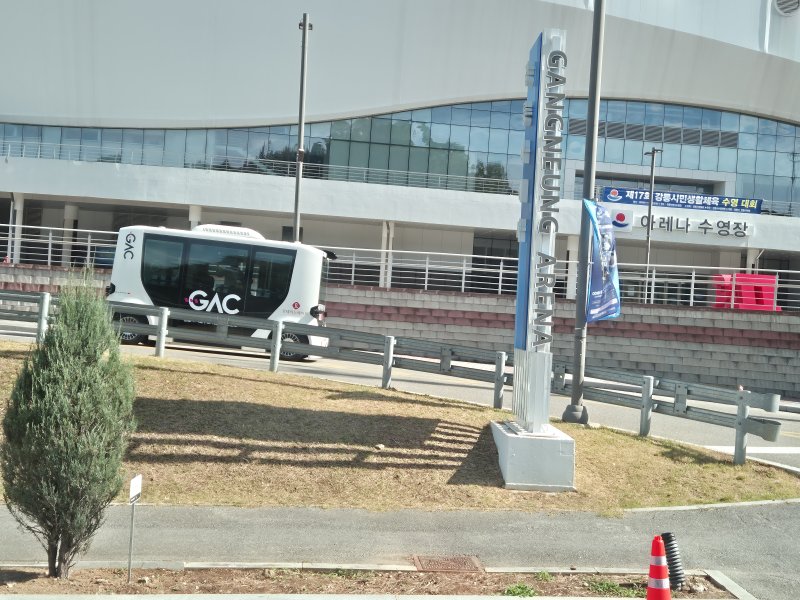
■ Remote control of a shuttle 300 km awayDuring the ITS World Congress, Lotte Innovate is operating MUVU shuttles between the parking lot in front of the Olympic Museum and the beach in Gangneung. The aim is to give visitors from Korea and abroad a firsthand experience of autonomous driving services on real roads. The company also showcased a range of autonomous driving technologies at its exhibition at the Gangneung Speed Skating Stadium.
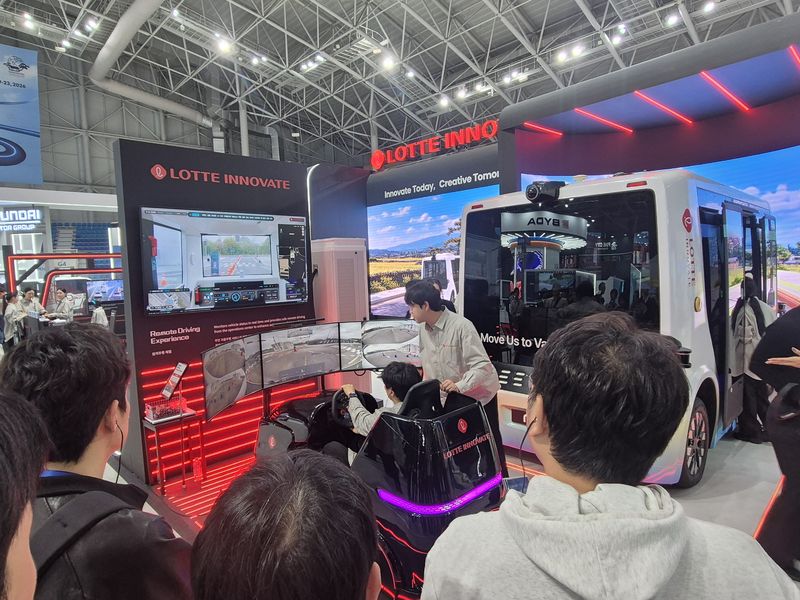
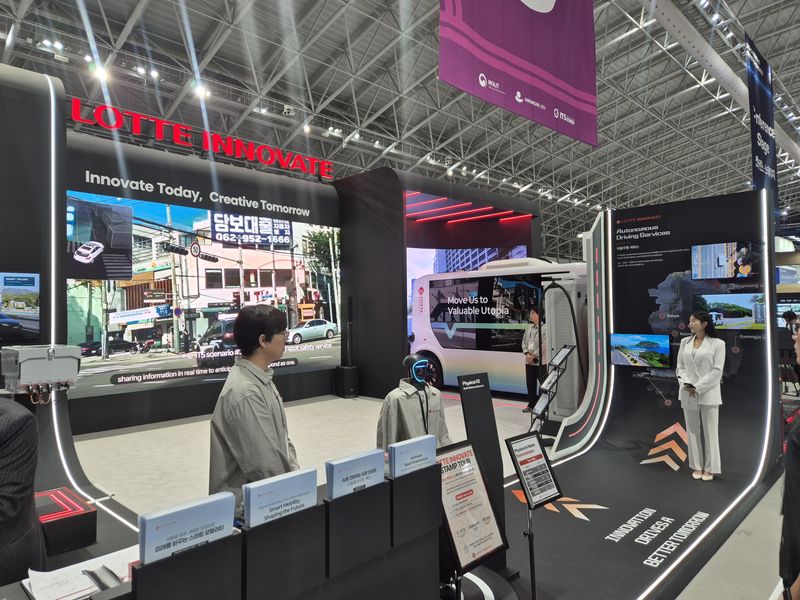
The “Autonomous Driving Zone” at the Lotte Innovate exhibition, which we visited that day, featured a virtual ride experience combining a driverless MUVU with a large curved light-emitting diode (LED) screen. Visitors could especially try remotely operating an autonomous shuttle at the Korea Intelligent Automotive Parts Promotion Institute’s test track in Daegu, about 300 km from Gangneung. They could also watch the vehicle move in real time via video.
The “Autonomous Driving Zone” at the Lotte Innovate exhibition, which we visited that day, featured a virtual ride experience combining a driverless MUVU with a large curved light-emitting diode (LED) screen. Visitors could especially try remotely operating an autonomous shuttle at the Korea Intelligent Automotive Parts Promotion Institute’s test track in Daegu, about 300 km from Gangneung. They could also watch the vehicle move in real time via video.
Lotte Innovate said MUVU autonomously controls its speed and direction, and uses an automatic stopping function to guard against accidents if there is a risk of colliding with a vehicle ahead. It also has remote-control capabilities using 5G and LTE networks to respond to emergencies.
Visitors from Korea and abroad continued to stream into the Autonomous Driving Zone. International visitors showed interest in Lotte Innovate’s autonomous driving technology and related government policies, while ordinary citizens looked with curiosity at the driverless autonomous shuttle.
Visitors from Korea and abroad continued to stream into the Autonomous Driving Zone. International visitors showed interest in Lotte Innovate’s autonomous driving technology and related government policies, while ordinary citizens looked with curiosity at the driverless autonomous shuttle.
In addition to autonomous driving, the exhibition showcased next-generation cooperative intelligent transport systems (C-ITS) and artificial intelligence (AI)-based smart tolling technology. Under the concept “Connect to Innovate,” Lotte Innovate divided the exhibition into three zones: C-ITS, smart tolling and autonomous driving.
The company showcased technology that prevents traffic accidents through real-time information sharing between roads and vehicles, as well as AI video-based toll collection that processes tolls using only license plate recognition, without a Hi-Pass electronic toll collection system terminal. It also introduced technology that recognizes the license plates of vehicles traveling across multiple lanes in real time.
The ITS World Congress is the world’s largest intelligent transportation systems event, with about 90 countries taking part. It began in Paris, France, in 1994 and is being held in Korea for the third time this year, in Gangneung, following Seoul in 1998 and Busan in 2010.
■ Targeting 300% growth in mobility business by 2030Lotte Innovate plans to use this exhibition as an opportunity to strengthen its integrated mobility business by combining AI and autonomous driving technology with its experience in building and operating transportation infrastructure. Rather than stopping at building individual transportation systems, the company aims to advance integrated solutions that connect vehicles, roads and traffic data. It is also pursuing overseas market expansion based on its domestic business experience.
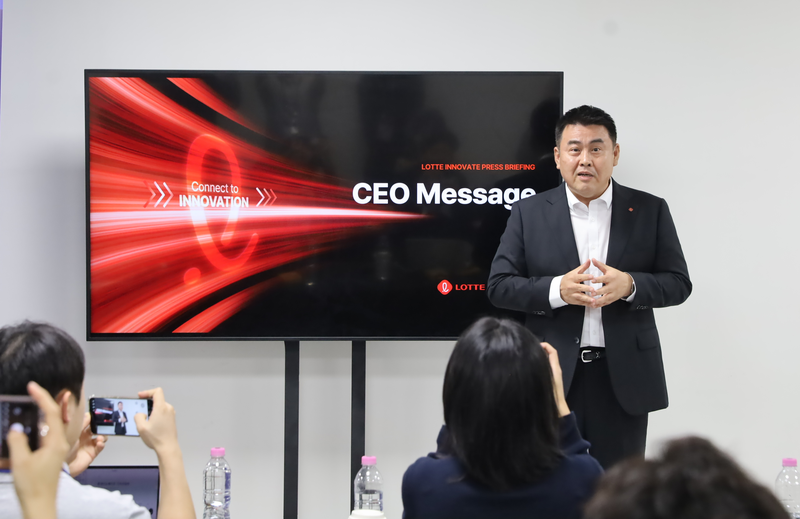
At a press briefing that day, Lotte Innovate CEO Kim Kyung-yup said, “We want to expand the value we provide to customers through our mobility business,” adding, “Our goal is to transform everyday life through technology.”
Lotte Innovate aims to grow its mobility business by 300% by 2030. The company plans to develop mobility—which currently accounts for less than 10% of its overall business—into a new growth engine. It also plans to ramp up pilot projects starting next year.
The company is also accelerating its push into overseas markets. CEO Kim said, “This ITS World Congress will be an important opportunity to introduce Lotte Innovate’s mobility business to the global market,” adding, “I believe there are opportunities to expand into various regions, including Malaysia and Mexico.”
Unlike automakers, Lotte Innovate believes its strength lies in ensuring the safety of autonomous driving, drawing on its experience in building and operating transportation infrastructure. The company says it focuses on operating vehicles and transportation systems according to established rules and using AI technology to improve both safety and convenience.
Yoon Tae-eun, head of Lotte Innovate’s Mobility Division, said, “We want to expand our AI mobility pilot cities next year and extend commercialization, including by operating Gangneung as a mobility city,” adding, “We will also continue to make progress by completing C-ITS deployments in all areas where they are needed by 2030.” [email protected] Reporter Yeon Ji-an
[email protected] Yeon Ji-an Reporter