In the “Climate Crisis and AI Era,” Konkuk University Examines Inequality Created by Infrastructure
- Input
- 2026-10-19 14:51:36
- Updated
- 2026-10-19 14:51:36
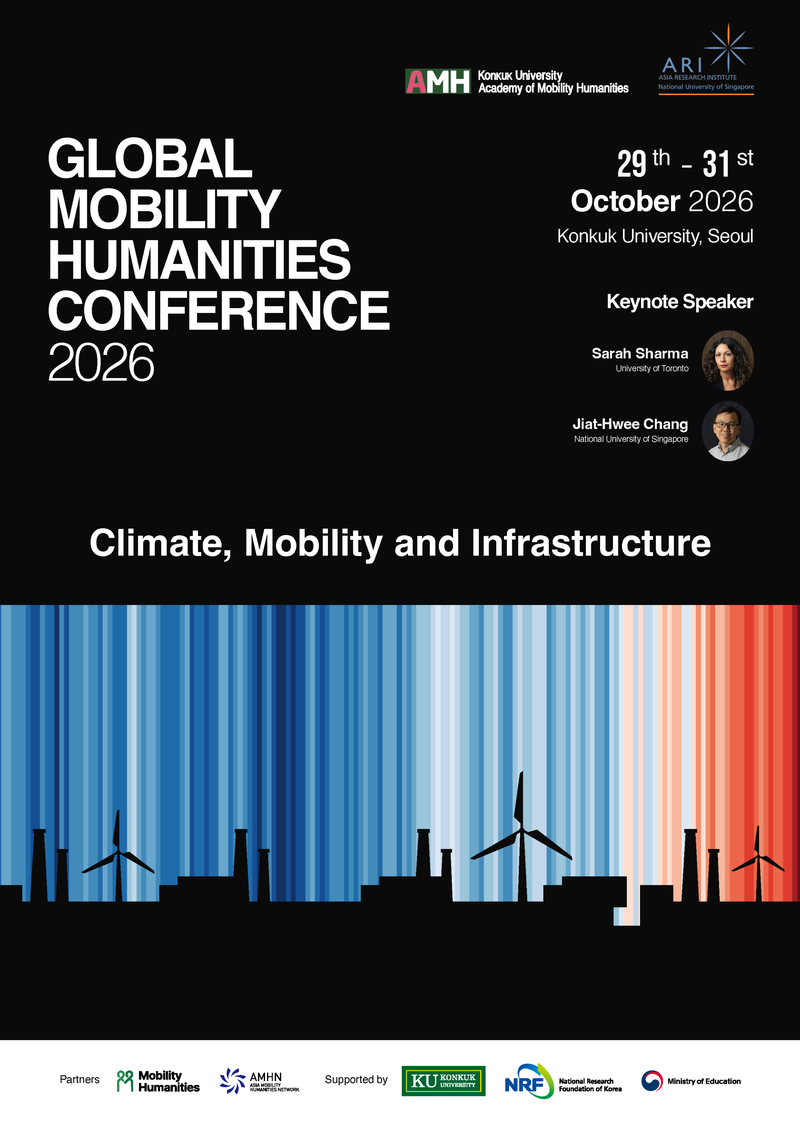
[Financial News] As the climate crisis and advances in cutting-edge technologies such as artificial intelligence (AI) become part of everyday life, an international academic conference will examine from a humanities perspective how these changes create and deepen social inequality.
Konkuk University’s Institute for Mobility Humanities announced on the 19th that it will host the “2026 Mobility Humanities World Conference” over three days, from October 29 to 31, at the Law Building on Konkuk University’s campus in Gwangjin-gu, Seoul.
The conference, co-hosted by Konkuk University’s Institute for Mobility Humanities and the National University of Singapore’s Asia Research Institute, will be held under the theme “Climate, Mobility, and Infrastructure.” Researchers in the humanities and social sciences from Korea and abroad will gather to discuss mobility and infrastructure issues in the era of the climate crisis from multiple perspectives.
The conference views infrastructure not simply as technical facilities, but as a foundation that organizes human life and the environment. In particular, it will focus on who bears the burdens as technology and infrastructure are used to address the climate crisis, and what forms of inequality they create.
On the first day of the conference, the 29th, Professor Sarah Sharma of the University of Toronto in Canada will deliver the keynote address. Professor Sharma will analyze how everyday digital technologies such as smartphones, applications, and AI assistants provide convenience while reproducing existing gendered divisions of labor and inequality. She will also examine whose labor and time these technologies depend on, and propose alternatives from a feminist perspective.
On the final day, the 31st, Professor Jang Jia-hwei of the National University of Singapore will give a lecture. Professor Jang will use the cooling infrastructure at stadiums during the 2022 FIFA World Cup in Qatar as a case study. Professor Jang will discuss how cooling facilities designed to combat extreme heat made conditions comfortable for players and spectators, but exposed the migrant workers involved in their construction and maintenance to extreme heat, raising questions about inequality in infrastructure for addressing the climate crisis.
A total of 14 sessions will also be held during the conference. Konkuk University researchers will present on literary and cultural representations of climate and infrastructure, legal responsibility for the climate crisis, the legacy of fossil-fuel infrastructure, AI and digital twins, and other topics. A separate session will also be held to share the work of early-career researchers.
[email protected] Kim Man-gi Reporter