Kookmin Bank detected signs of hacking immediately ... but was slowest to report to its president
- Input
- 2026-10-19 15:42:53
- Updated
- 2026-10-19 15:42:53
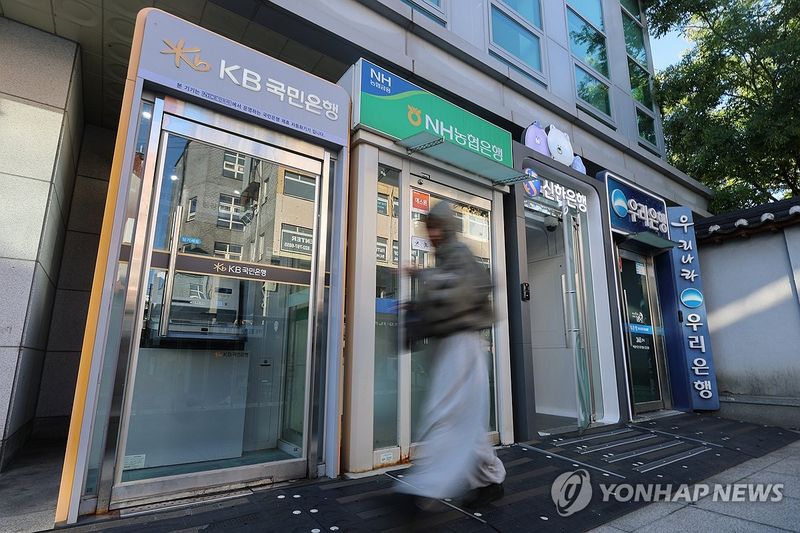
[Financial News] During a recent series of cyberattacks on the financial sector, KB Kookmin Bank detected suspicious signs at the same time as the initial access, but took the longest among the five major banks to report them to management, it has been confirmed. There are calls to assess the effectiveness of security response systems by distinguishing between each bank’s detection, blocking and internal reporting procedures.
According to data Lee Yang-soo, chair of the National Assembly Intelligence Committee and a People Power Party lawmaker, received from the five major banks on the 19th, it took 81 hours and 41 minutes for Kookmin Bank, 47 hours and 46 minutes for NH NongHyup Bank, 47 hours and 18 minutes for Woori Bank, 19 hours and 50 minutes for Hana Bank, and 14 hours for Shinhan Bank to report to their respective presidents after recognizing signs of hacking.
At 11:19 p.m. on Sept. 27, Kookmin Bank’s security operations center detected suspicious signs at the same time as the initial access. However, it did not report the incident to its chief information security officer (CISO) until 9:27 a.m. on Sept. 30, 58 hours and 8 minutes later, and to the bank president until 9 a.m. on Oct. 1.
It also took 8 hours and 45 minutes after detection to finally block the IP address and access route. Kookmin Bank explained that it needed time to conduct a detailed analysis of whether there was a threat and the possibility of a false positive, and that further analysis led it to judge the risk as high and report the matter to the CISO.
Hana Bank took the longest to recognize suspicious signs after the initial access. It recognized them at 3:40 p.m. on Oct. 1, 38 hours and 40 minutes after the initial access at 1 a.m. on Sept. 30.
However, based on threat information shared in connection with incidents at other financial firms, Hana Bank proactively blocked the IP address at 12:05 p.m. that same day, 3 hours and 35 minutes before it recognized the suspicious signs. It identified the connection to the breach at 8 p.m.; it reported the matter to the CISO at 10:42 p.m. and to the bank president at 11:30 a.m. the following day. It took 58 hours and 30 minutes from the initial access to the report to the bank president.
NH NongHyup Bank confirmed the initial connection at 10:44 a.m. on Sept. 29 and detected and blocked abnormal traffic at 12:01 p.m. It completed additional blocking of the IP address at 12:09 p.m., about eight minutes later. However, it did not report the matter to the CISO until 11:10 a.m. on Oct. 1, and to the bank president until 11:47 a.m. that same day. It took about 49 hours and 2 minutes from the initial connection to the report to the bank president.
Woori Bank detected abnormal traffic at 12:04 p.m. the day after the initial connection at 6:42 p.m. on Sept. 28, a gap of 17 hours and 22 minutes. It blocked the relevant IP address just seven minutes after detection, but did not report the matter to the CISO until 10:55 a.m. on Oct. 1, or to the bank president until 11:22 a.m. It took 64 hours and 40 minutes from the initial connection to the report to the bank president.
Shinhan Bank detected suspicious signs at 9:30 a.m. the day after the initial access at 6:04 p.m. on Sept. 28, a gap of 15 hours and 26 minutes. It reported the matter to the CISO at 1:56 p.m. that day and to the bank president at 11:30 p.m. It took 29 hours and 26 minutes from the initial access to the report to the bank president.
Rep. Lee Yang-soo said, “There was a significant difference among banks in the time it took to report suspicious signs to management and relevant agencies after they were recognized,” and added, “We need to thoroughly examine whether detection was delayed or time was spent assessing the level of risk or in the internal reporting process.” He went on to stress, “Financial authorities should clarify the standards for reporting and notifying authorities when serious signs of a breach emerge, and check whether those standards are actually being followed,” adding, “The response system should be overhauled so that the discovery of suspicious signs leads to swift decision-making and the prevention of damage.”
[email protected] Seo Ji-yoon Reporter