IL Chairman Song Seong-geun’s Ultra-High-Nickel Cathode Research Paper Published in International Journal
- Input
- 2026-10-19 14:13:59
- Updated
- 2026-10-19 14:13:59
[The Financial News] A research paper on ultra-high-nickel battery cathode materials, co-authored by IL Co., Ltd. Chairman Song Seong-geun as a co-first author, has been published in an international journal. Song is currently pursuing a PhD in the Next-Generation Smart Energy Convergence program at Gachon University.
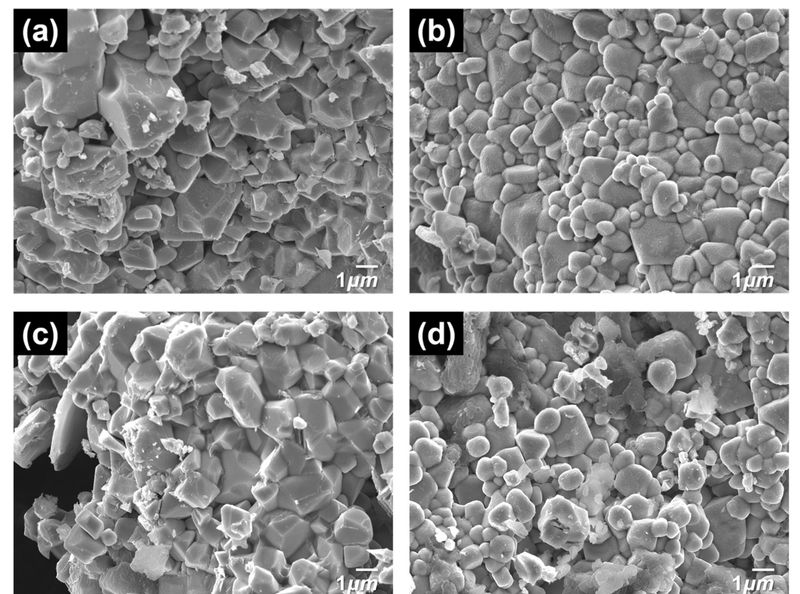
According to industry sources on the 19th, the paper, published in the SCIE-indexed international journal Batteries, analyzed how the molecular weight of the polymer material PVA (Polyvinyl Alcohol) and the calcination temperature affect the crystal structure and electrochemical performance of a cathode material (LNCO) composed of 94% nickel and 6% cobalt.
The research team, including Song, compared four types of cathode materials combining low- and high-molecular-weight PVA with calcination temperatures of 650°C and 750°C. The results showed that among the samples studied, the HMW-650 sample, made with high-molecular-weight PVA and calcined at 650°C, had the highest initial discharge capacity and long-term charge-discharge capacity retention.
The experiment was conducted in CR2032 coin-type half-cells using lithium metal as the counter electrode. The cells were evaluated at 60°C and 2.7–4.2 V. The HMW-750 comparison sample retained 82.62% of its capacity after 200 charge-discharge cycles.
Song said, “This study allowed us to confirm that the performance of high-nickel cathode materials depends not simply on raising the calcination temperature, but on the combined optimization of PVA molecular weight and heat-treatment conditions.”
High-energy-density battery materials are considered a key research area in fields including humanoid robot operating time, electric vehicle driving range, and ESS energy-storage efficiency. The findings constitute basic research on the synthesis and performance optimization of ultra-high-nickel, low-cobalt cathode materials and are expected to be used in future research on industrial battery material design.
Song said, “The figures in the paper, however, are results from evaluating lithium-ion battery half-cells using a liquid electrolyte. They do not directly verify the performance of finished all-solid-state battery cells or commercial batteries installed in humanoid robots, electric vehicles, and ESS.”
Earlier, IL Co., Ltd. announced progress on its 3D-printing-based battery manufacturing technology and hybrid manufacturing technology using thin and thick films for small all-solid-state batteries. The publication in an international journal is an academic achievement in high-nickel cathode materials, distinct from the validation of those all-solid-state technologies, and shows the scope of IL Co., Ltd.’s research into energy technologies for humanoid robots and future mobility.
Song said, “As the humanoid robot, electric vehicle, and ESS industries grow, the importance of materials research that improves both energy density and charge-discharge stability also increases.” He added, “This study is meaningful in that it confirmed the relationship between ultra-high-nickel cathode synthesis conditions and performance through experimental data.”
He added, “Drawing on the technical understanding I have built through my doctoral research, I will continue to explore the potential of future mobility, where humanoid robots, energy, and artificial intelligence (AI) operational data are connected.”
[email protected] Kang Gyeong-rae Reporter