Army Chief of Staff Says He “Cannot Agree” With U.S. Forces Korea Commander’s Remarks on Korean Territory
- Input
- 2026-10-19 17:37:31
- Updated
- 2026-10-19 17:37:31
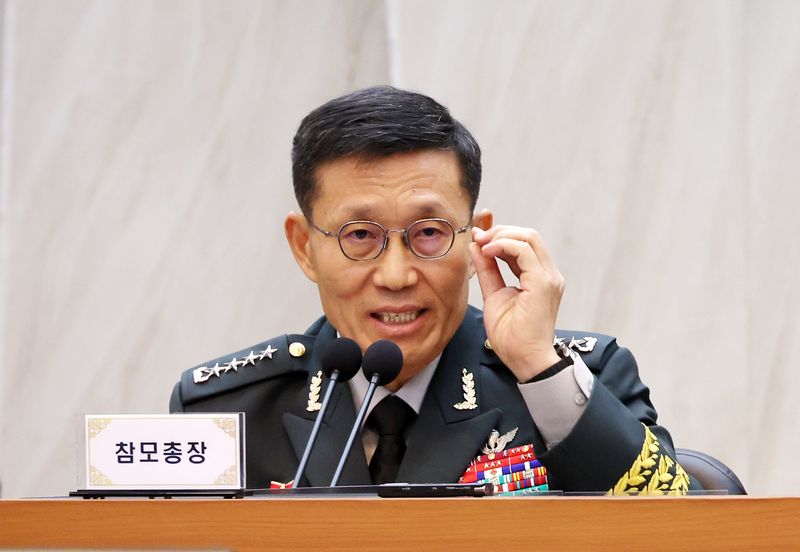
[Financial News] Army Chief of Staff General Kim Kyu-ha said on the 19th that he “could not agree” with remarks by U.S. Forces Korea Commander General Xavier T. Brunson to the effect that “Korean territory begins at the barbed-wire fence south of the Demilitarized Zone (DMZ).” As the remarks sparked controversy over whether they infringed on South Korea’s sovereignty, the Ministry of National Defense reportedly secured a response through communications with the U.S. Department of War (Department of Defense) saying it “strongly agrees with Korea’s position.”
General Kim gave this answer in response to lawmakers’ questions during the National Assembly Defense Committee’s audit of the Army at Army Headquarters in Gyeryongdae, South Chungcheong Province, that day.
Earlier, at a seminar in Washington, D.C., on the 14th, General Brunson said, “From the United Nations Command’s perspective, Korea begins at the barbed-wire fence south of the Demilitarized Zone (DMZ),” prompting controversy over whether the U.S. Forces Korea commander had disregarded the territorial sovereignty of the Republic of Korea.
As the controversy spread, the United Nations Command also sought to defuse it, saying, “There is no question about the sovereignty of the Republic of Korea.”
At the time, in a separate statement, the United Nations Command explained that General Brunson’s remarks were “an explanation of the responsibilities assigned to the Commander of the United Nations Command under the Armistice Agreement within the DMZ and the Joint Security Area (JSA).” It added that “these responsibilities are military and administrative in nature and do not alter the sovereignty of the Republic of Korea, and the remarks were likewise not intended to address the issue of the Republic of Korea’s sovereignty.”
General Kim also offered his views on the transition of Wartime Operational Control (OPCON). When Democratic Party of Korea lawmaker Min Hong-cheol asked for his position on General Brunson’s remark that “the conditions for the OPCON transition have changed,” General Kim replied, “I think one should be cautious about making such remarks.” He added, however, that care should also be taken in assessing General Brunson.
Meanwhile, according to the Ministry of National Defense, the government recently conveyed its views to the U.S. through several channels regarding General Brunson’s public remarks on OPCON and the DMZ. The U.S. side reportedly responded that it fully understood and agreed with those views.
[email protected] Lee Jong-yun Reporter