Korean Air–Asiana Airlines Merger: Integration Costs of Up to 1 Trillion Won Could Affect Pace of Credit-Rating Improvement [fn Market Watch]
- Input
- 2026-10-19 13:30:55
- Updated
- 2026-10-19 13:30:55
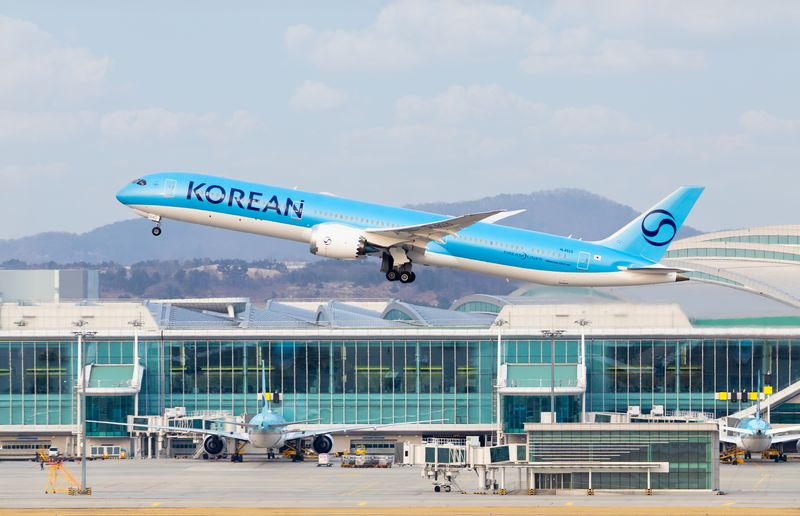
According to NICE Investors Service on the 19th, Korean Air estimates that integration costs related to its merger with Asiana Airlines will total about 900 billion to 1 trillion won. The costs are needed to integrate reservation and flight-operation systems and information technology (IT) infrastructure, change the brand, and unify organizational and staffing structures. Integration costs are expected to be concentrated around the time of the merger, while earnings improvements from adjusting overlapping routes, joint purchasing and more efficient maintenance are expected to emerge gradually after operations stabilize.
Korean Air is expected to absorb Asiana Airlines on December 16 and launch as the only full-service carrier (FSC) in South Korea. Plans are also underway to integrate Jin Air, part of the Korean Air group, with Air Busan and Air Seoul, which belong to the Asiana Airlines group.
Moon A-young, a principal researcher at NICE Investors Service, said, “The merger will strengthen Korean Air’s market position and business stability over the medium to long term,” but added, “In the early stages of integration, however, spending and investment in new aircraft will constrain improvements in cash flow and the financial structure.”
Large-scale aircraft investments are also a factor slowing improvements in the financial structure. Including Korean Air’s additional contract for 103 Boeing aircraft, the combined airline will have about 260 new aircraft remaining on order. Replacing older aircraft and modernizing the fleet can reduce fuel and maintenance costs over the long term, but will require substantial investment in the short term.
Researcher Moon pointed out, “On a separate-company basis as of the end of June this year, Korean Air’s operating cash flow was 2.0781 trillion won, while Asiana Airlines’ stood at just 1.7 billion won,” adding, “There is also a wide gap in their debt ratios: 270.9% for Korean Air and 2,713.7% for Asiana Airlines.” This is why reducing the combined company’s debt after taking on Asiana Airlines’ financial burden is seen as a key task in improving its credit standing.
The merger nevertheless has considerable potential to improve earnings. NICE Investors Service analyzed that, based on 2025 figures, Korean Air’s average fares on routes to the Americas and Europe are about 25% higher than Asiana Airlines’. It estimated that if the fare gap between the two airlines narrows by 50% after the merger, additional annual revenue would be about 330 billion won; if it narrows by 75%, the figure would be about 500 billion won.
NICE Investors Service plans to closely monitor whether the merger synergies at Korean Air translate into actual improvements in profitability and cash flow, and how much the company can reduce its increased debt burden after integration spending is complete.
[email protected] Kim Hyun-jung Reporter