Oxygen was increased, but no test was conducted for 12 hours... Supreme Court: “Medical staff were negligent”
- Input
- 2026-10-19 11:23:20
- Updated
- 2026-10-19 11:23:20
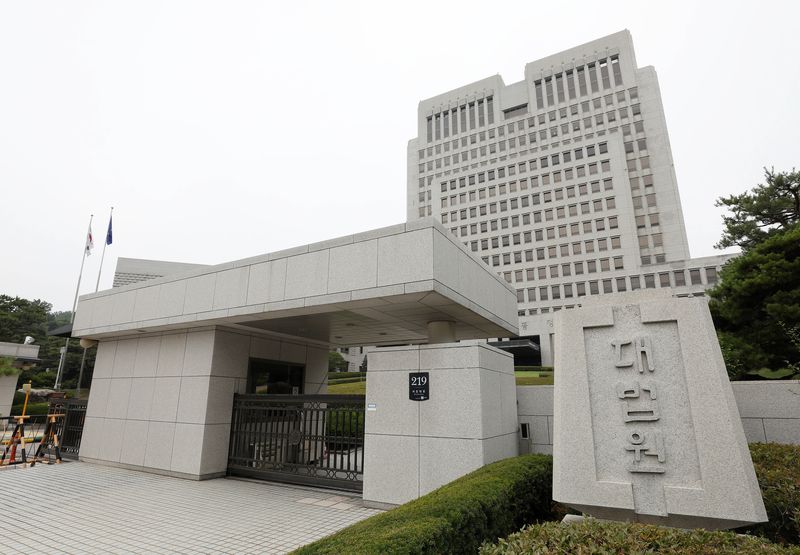
According to legal sources on the 19th, the Supreme Court’s Third Division, with Justice Eom Sang-pil as the presiding justice, overturned the lower court’s ruling against the plaintiffs and remanded the case to the Busan District Court. The ruling, issued on the 23rd of last month, concerned a damages suit brought by the family of Patient A against a hospital corporation in Busan and two medical staff members.
Patient A, who was in their 70s, had hypertension and diabetes, and part of their left lung was removed in 2001 due to lung cancer. After being hospitalized in January 2018 for pneumonia and an acute exacerbation of chronic obstructive pulmonary disease (COPD), they were discharged and readmitted on February 19 that year for edema. When their oxygen saturation fell to as low as 80% at around 9:30 p.m. on February 23, the on-call doctor increased the oxygen flow from 2 liters per minute to 3 liters. At around 3:50 a.m. the following day, the doctor switched them to an oxygen mask and increased the flow to 10 liters per minute.
Patient A’s consciousness became impaired at around 9 a.m. that day. However, an arterial blood gas test was not performed until 4:09 p.m., when respiratory acidosis caused by excessive carbon dioxide buildup was confirmed. This was 12 hours and 20 minutes after high-concentration oxygen therapy began, and seven hours after their consciousness became impaired. Patient A went into cardiac arrest at 6:03 p.m. that day and died on March 12.
There were two issues: whether failing to perform an arterial blood gas test at the time specified in the clinical guidelines could be considered negligence, and whether there was a causal link between that negligence and Patient A’s death. The first- and second-instance courts reached opposite conclusions.
The Busan District Court, in the first instance, found both negligence and causation, but limited the hospital’s liability to 20% after considering the contribution of Patient A’s pre-existing conditions to the death. The second-instance court, by contrast, denied negligence itself, reasoning that clinical guidelines are not mandatory and that the decision to test depends on a doctor’s judgment based on the patient’s condition. It said that even if there had been negligence, a causal link to the death was difficult to establish given Patient A’s advanced age and severe underlying conditions.
The Supreme Court overturned both findings. On negligence, it noted that COPD treatment guidelines call for an arterial blood gas test 30 to 60 minutes after oxygen therapy begins, and that the medical expert who assessed the case had also said it was difficult to regard this as a standard beyond the level of clinical practice in Korea. The relevant standard, the court said, is not the status of the clinical guidelines, but whether the best possible duty of care was exercised in light of clinical practice at the time.
The court found causation based on a precedent from August 2023. Under the legal principle in that ruling, causation is presumed if the patient’s side proves negligence and the likelihood that the negligence caused harm; the presumption is rebutted only if the medical staff prove facts to the contrary. This takes into account the difficulty patients face in proving causation because medical treatment requires a high level of expertise. The court said, “The failure to perform an arterial blood gas test in a timely manner and check whether carbon dioxide had accumulated in the body was one of the causes of the deceased’s worsening state of consciousness,” adding that the hospital had failed to provide evidence to rebut the presumption.
The attending physician, charged with causing death through occupational negligence over the same medical treatment, was found to have been negligent in the criminal trial, but was acquitted because a causal link to the death was not proven. The acquittal became final. Unlike in criminal cases, the burden of proving causation is relaxed in civil cases, so the outcome can differ.
[email protected] Kim Dong-gyu Reporter