Indictment Agency says no blanket transfer of 180,000 pending cases; acknowledges requests for supplementary investigations will rise
- Input
- 2026-10-19 11:19:21
- Updated
- 2026-10-19 11:19:21
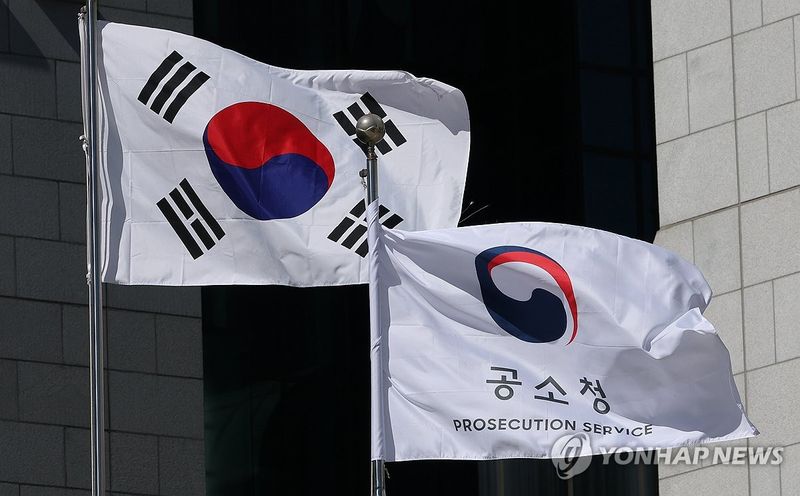
On the 19th, the Indictment Agency issued a media notice to reporters covering legal affairs, explaining its position on concerns that its launch would result in about 180,000 pending cases being transferred to the police and other agencies all at once.
An Indictment Agency official said, “Most of the agency’s current pending cases are cases that investigative agencies, including the police, have finished investigating and referred to us. Indictment Agency prosecutors review each case file and decide whether to indict, and request supplementary investigations on a case-by-case basis only when further investigation is needed.” The spokesperson explained that this did not mean all 180,000 cases would be transferred or become subject to requests for supplementary investigations.
The Indictment Agency said it was difficult to estimate precisely how many cases would be subject to requests for supplementary investigations, and that the request rate would inevitably rise to some extent because prosecutors can no longer conduct supplementary investigations. It added that requests would be made in stages after prosecutors review the cases, so the process would not involve a mass transfer all at once.
Under the amended Indictment Agency Act and the Criminal Procedure Act, cases in which prosecutors initiated investigations themselves will either be handled by the Indictment Agency within a grace period of up to 90 days or transferred to the competent investigative agency, such as the Serious Crime Investigation Agency or the police. The transfer of about 1,980 cases for which prosecutors had directly issued wanted notices has been completed after consultations with investigative agencies. Of the cases in which prosecutors initiated investigations, about 300 have been selected for priority transfer and are being sent in stages to the Serious Crime Investigation Agency and the police.
The explanation came after figures released by the Indictment Agency on the 7th confirmed that pending cases had climbed to a record high. According to the agency and other sources, prosecutors’ offices nationwide had 186,307 pending cases at the end of last month, up by 45,794 in three months from 140,513 at the end of June. That was an increase of 21,485 in just one month compared with 164,822 at the end of August. Legal circles believe that most of these are cases referred to prosecutors.
There are two main concerns. One is that many cases will be sent back to the police now that, since the 2nd, prosecutors have been unable to conduct supplementary investigations directly into cases referred to them. The other is that cases will pile up all at once at the end of the year, when the 90-day grace period expires. Acting Justice Minister Lee Jin-su said during a parliamentary audit that each prosecutor’s office had as many as about 500 pending cases, a sharp increase in workload compared with the 50 to 100 cases two to three years ago.
The practical work of transferring cases is also moving slowly. With no electronic infrastructure in place to exchange case files, the Serious Crime Investigation Agency will have to use some functions of the police’s Korea Information System of Criminal Justice Services (KICS) alongside paper records for the time being. Some predict that more than 100,000 cases will ultimately be transferred to the police and the Serious Crime Investigation Agency.
An Indictment Agency official said, “We will work closely with investigative agencies, including the police, and do our utmost to ensure that the overhaul of the criminal justice system does not delay case processing or cause inconvenience to the public.”
[email protected] Kim Dong-gyu Reporter