Lee Heon-uk, head of the Korea Real Estate Board: “Jobs are a report card for regional competitiveness ... We need to build a talent ecosystem”
- Input
- 2026-10-19 10:55:38
- Updated
- 2026-10-19 10:55:38
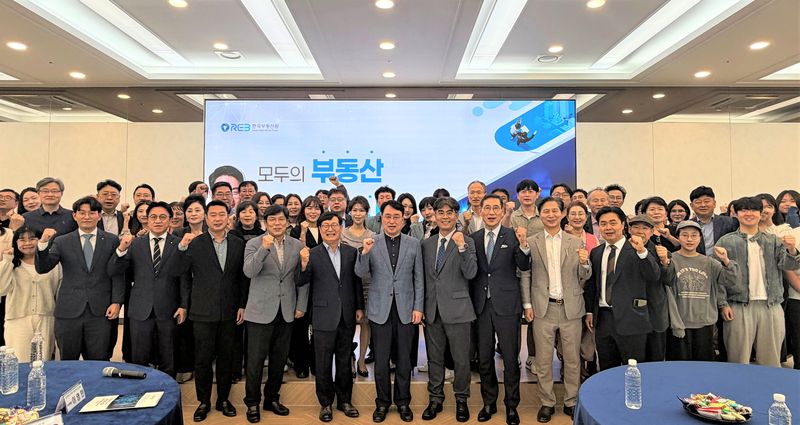
The Korea Real Estate Board said on the 19th that Lee had delivered a lecture titled “Real Estate for Everyone, Great Cities” at the “2026 Daegu University General Graduate School Department of Real Estate Distinguished Guest Lecture,” held at Seongsan Hall at Daegu University on the 17th.
“To ensure sustainable regional growth, building knowledge networks and a talent ecosystem must come before increasing the number of jobs,” Lee said, stressing that “jobs are merely a report card showing a region’s competitiveness.”
He assessed that urban competitiveness comes not only from the quality of individual cities but also from the connections between them. He explained that a sustainable talent ecosystem can be formed when regional universities, research institutions and businesses are connected and exchange knowledge and talent, and when the conditions for people to settle in a region—including education, transport, healthcare and culture—are in place.
He said spatial planning for the national territory should be redesigned around living and economic areas, across administrative boundaries. The approach would connect competitive hub cities capable of attracting talent and businesses to create polycentric mega-regional economic zones.
“Hub cities should not simply be places where jobs and industries are concentrated. They should become world-class knowledge hubs where universities, research institutions, businesses and talent connect to generate new knowledge and innovation,” Lee stressed. “These hubs need to be connected across wider regions so that areas outside the Capital Metropolitan Area can become genuine options for the talent and businesses concentrated in the Capital Metropolitan Area.”
He added, “The key to balanced national development is not distributing jobs among regions, but creating an environment where talent and businesses can choose a region for themselves.” He said, “The focus of regional policy must shift from the number of jobs to ecosystems where people and knowledge gather and connect.”
[email protected] Choi Ga-young Reporter