“Six in 10 companies receiving government R&D support pay less than 10% of technology royalties”
- Input
- 2026-10-19 10:14:00
- Updated
- 2026-10-19 10:14:00
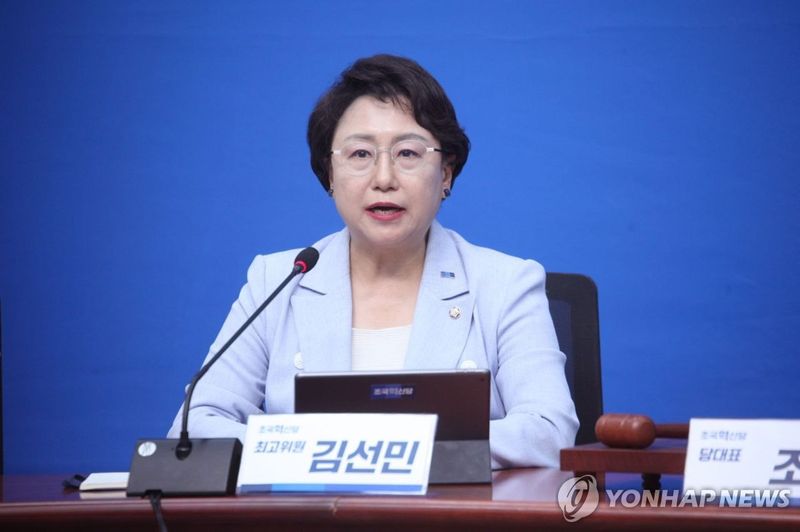
[Financial News] Six in 10 companies that received transferred government R&D technology paid less than 10% of the technology royalties owed, a report found.
On the 19th, Rep. Kim Seon-min, a member of the National Assembly’s Science, ICT, Broadcasting and Communications Committee, said an analysis of data provided by the Ministry of Science and ICT showed that from 2022 through August 2026, 545 of the 818 companies that paid technology royalties (66.6%) had a payment rate of less than 10%.
Companies with payment rates of at least 10% but less than 50% numbered 195 (23.8%), while 78 (9.5%) had rates of 50% or higher.
Over the same period, government grants for technology commercialization provided to companies totaled 206.9 billion won. Of that amount, 23.6 billion won was subject to royalty collection, but only 5.1 billion won was actually collected. The collection rate against the amount due was 21.6%; compared with the total grants, the amount actually collected was equivalent to 2.5%.
Among the managing institutions, the Korea Industrial Technology Association had the lowest collection rate, at 3.9%. The Institute of Information & Communications Technology Planning & Evaluation collected 6%, the National Research Foundation of Korea 13.8%, the INNOPOLIS Foundation 15%, and the Commercialization Promotion Agency for R&D Outcomes 16.6%. The Korea Drug Development Fund had a collection rate of 55.7%, highlighting wide differences among institutions.
Four companies that received technologies including “AI Tunnel Integrated Control Solution Technology” and “AI Technology for Shared Local-Delivery Logistics” paid no royalties at all. All four are managed by the Korea Industrial Technology Association, which has the lowest collection rate.
The Ministry of Science and ICT explained that companies voluntarily report the revenue they earn from transferred technologies, and that it had been unable to collect royalties because the companies in question did not report their revenue.
Rep. Kim said, “Because royalty payments depend on companies’ voluntary reporting, it is difficult to collect them properly,” and pointed out, “We need to examine not only the record of technology transfers but also whether the transferred technologies are commercialized and why generating revenue is difficult.” He added, “We must oversee the process from validating a technology’s marketability to providing follow-up commercialization support, so that technologies developed with taxpayers’ money lead to tangible results.”
[email protected] Yoon Hong-jip Reporter