“Weak links in AI borrowing begin to emerge,” stoking market-wide anxiety: NYT
- Input
- 2026-10-19 09:59:26
- Updated
- 2026-10-19 09:59:26
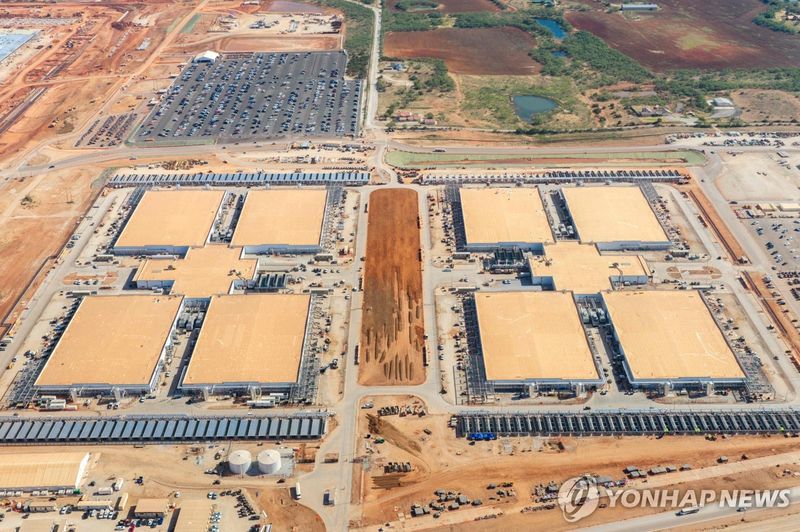
[Financial News] The enormous sums required to build artificial intelligence (AI) data centers, along with borrowing by companies in the sector that is unsettling the broader market, are fueling questions about whether data center businesses can actually generate strong returns.
The New York Times (NYT) examined the financing and debt problems of CoreWeave, Oracle and SoftBank on the 18th (local time), considering whether they are simply vulnerabilities at individual companies or signs of a structural problem that could spread across data center construction as a whole.
Recent concerns were amplified by CoreWeave.
Market sees at least a 60% chance of CoreWeave default
With debt reaching $72 billion (about 96.1 trillion won) as it operates 51 data centers, the market put the likelihood of default at 60% or higher.
Last week, the yield on CoreWeave’s corporate bonds topped 15%, putting them in junk-bond territory. Its stock fell 24%, plunging 12% in a single day on the 16th.
As CoreWeave’s business model has come under scrutiny, its structure has also been compared with that of office-space provider WeWork, which went through a crisis.
First, CoreWeave buys AI chips made by NVIDIA and other companies. It then signs lease agreements of at least 15 years with data center owners and installs the chips in those facilities to provide AI computing capacity. It then rents out the space to customers such as Meta, Microsoft (MS) and OpenAI.
The problem is that CoreWeave has to bear all the costs incurred in this process.
It has to pay for costs such as buying chips and building and operating data centers before leasing out the facilities, and it remains responsible for its lease agreements with the original data center owners even after customers such as Meta have reached the end of their rental periods.
Some investors are concerned that hyperscalers (operators of large-scale data centers) such as Meta and MS may not need to rent space from CoreWeave in the future.
They are concerned that by the time the leases expire, the data centers may be outdated or even completely useless.
CoreWeave spokesperson Lia Davis said she disagreed with these concerns.
In a statement, she said, “The complexity of our financing structure reflects sound management, and it is something we are proud of.”
CoreWeave CEO Michael Intrator also said in a memo to employees on the 14th, “We have confidence in our business model, our customers, our exceptional execution and the financial system we have built,” and described recent market moves as “irrational.”
Corporate bonds sell off... Yield spreads on AI-related corporate bonds jump at least 50%
Corporate bonds from other companies, including Oracle, also came under selling pressure in the market. However, their price declines have not been as steep as CoreWeave’s.
Large companies such as Meta and Alphabet are also continuing to borrow heavily, but their interest-rate premiums remain low.
According to investment bank Barclays, yield spreads on riskier AI-related corporate bonds have surged by at least 50% over the past six months.
Alexandra Coleman, founder of Azraq, a data center risk research organization, said, “The entire market is walking on thin ice.”
Economists, banks and private equity firms have been raising their estimates each week of the amount of debt needed to build AI systems.
David Munves, head of credit strategy at research firm AIR Platform, said, “The market is beginning to realize that there may be a potential mismatch between the money that must be committed and borrowed today and the ability to generate returns in the future.”
Another problem is that data center construction can be delayed by permitting issues or, in some cases, fall through altogether.
Oracle’s Wisconsin data center hits snags... Costs rise
Oracle’s 902-megawatt (MW) data center in Wisconsin, which was targeted to begin operating by 2028, has hit an obstacle after the approval schedule for power grid construction was delayed.
Data center research firm Aterio said it is becoming increasingly unlikely that the facility will begin operating before 2029.
Projects in New Mexico face similar permitting problems. Blue Owl, the data center developer, has started construction but is struggling to obtain a permit for power supply. Some of the $18 billion in debt tied to the project recently traded at 80 cents on the dollar, sources said.
[email protected] Lee Seok-woo, International Affairs Correspondent Reporter