Jeju construction employment rises 40% as it falls nationwide... share of regular workers is 11.7 percentage points lower
- Input
- 2026-10-19 09:49:55
- Updated
- 2026-10-19 09:49:55
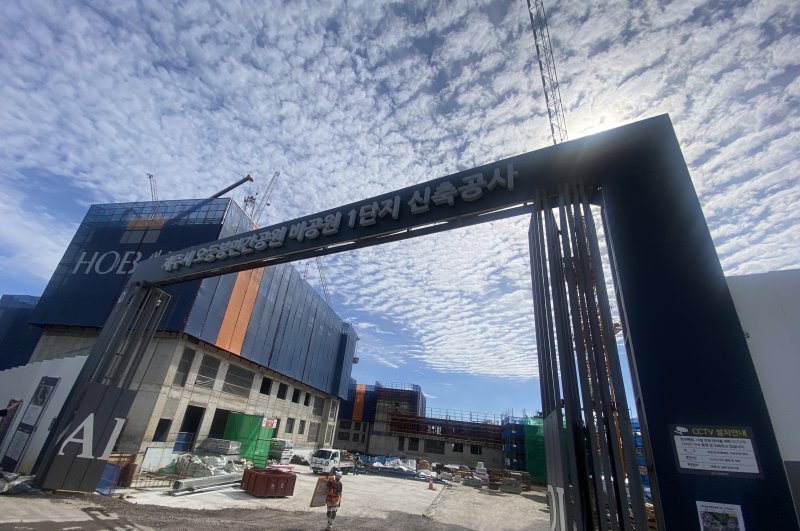
【Financial News, Jeju = Yong-bok Jeong】 While construction employment fell nationwide, it rose 40% in Jeju in a year. However, compared with two years earlier, the increase was just 5%, and regular workers accounted for 11.7 percentage points less of total employment than nationwide.
A comparison on the 19th of the National Data Agency’s “September 2026 Employment Trends” showed that nationwide construction employment fell by 48,000 (2.4%) from the same month last year. Following a decline of 32,000 in August, the drop widened by 16,000.
By contrast, 29,400 people were employed in Jeju’s construction industry, up 8,400 (40.0%) from the same month a year earlier. The figure was also up 31.5% year over year in August, showing a trend different from nationwide construction employment.
However, the 40% increase reflects the sharp contraction in construction employment in Jeju last year. Construction employment, at 28,000 in September 2024, fell by 7,000 to 21,000 last year before recovering to 29,400 this year. This year’s figure was 1,400 (5.0%) higher than two years earlier.
The base effect came into play: after employment plunged last year, the number rose this year, making the year-over-year growth rate appear large. The 40% increase alone is not enough to conclude that Jeju’s construction industry has emerged from its previous slump and entered a sustained recovery.
Signs of improvement are also evident in leading indicators related to construction. Jeju construction orders in the second quarter of this year, reported by the Jeju office of the National Data Agency, rose 464.2% from the same period last year, driven by an increase in civil engineering orders.
However, construction orders represent the value of contracts for work to be carried out in the future. The timing of increases in workers deployed on actual projects and in employment may differ from when contracts are signed. It has not been established how much the increase in orders in the second quarter affected the rise in construction employment in September.
The gap between nationwide figures and Jeju’s was even clearer in statistics on regular workers, which show employment type. In September, there were 16,924,000 regular workers nationwide, an increase of 253,000 from the same month last year. They accounted for 57.8% of all employed people, the highest figure ever for September. This contrasted with nationwide declines of 81,000 temporary workers and 55,000 daily workers, respectively.
Jeju showed the opposite trend. The number of regular workers fell by 1,900 (1.0%) year over year to 191,100. Regular workers made up 46.1% of the 414,700 employed people in total, 11.7 percentage points below the nationwide share.
Regular workers include people whose employment contracts last at least one year, as well as those who work continuously without a set contract term. The measure offers an indication of employment continuity, but does not show wage levels or actual working conditions.
In Jeju, employment growth and a decline in wage jobs occurred at the same time. Total employment in September rose by 12,400 (3.1%) from a year earlier, outpacing the nationwide increase of 0.4%. However, the number of wage workers fell by 200, while non-wage workers—self-employed people and unpaid family workers combined—increased by 12,600. Overall employment growth, in other words, did not correspond to an increase in stable wage jobs.
Employment declines were also evident in tourism- and distribution-related industries. Nationwide, employment in accommodation and food services fell by 97,000 from the same month last year. In Jeju, employment in wholesale and retail trade, accommodation and food services declined by 5,700 (5.8%). However, Jeju’s figures also include wholesale and retail trade, making it difficult to compare the size of the decline directly on the same industry basis.
Jeju’s labor market showed mixed trends: despite overall employment growth and a rebound in construction, the number of regular workers fell, as did employment in tourism- and distribution-related industries. Whether rising construction orders lead to actual construction work and sustained employment, and whether the share of regular workers narrows the gap with the nationwide figure, are expected to be key measures of the substance of employment improvement.
[email protected] Yong-bok Jeong Reporter