“Exactly like just before home prices fell in 2021” ... Han Mun-do says the real estate market is showing signs of being in its final stretch
- Input
- 2026-10-19 09:38:17
- Updated
- 2026-10-19 09:38:17
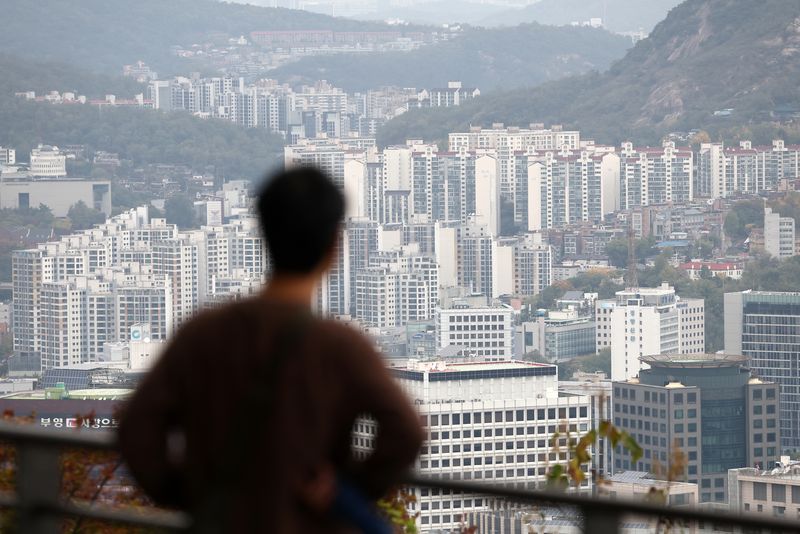
[Financial News] While Seoul apartment prices have been rising for a prolonged period, particularly in outlying areas, creating a misleading impression, analysts say signs of a full-fledged downturn are emerging on the ground, including a complete halt in buying demand and a sharp increase in listings.
On the 15th, Han Mun-do, a visiting professor in the Department of Real Estate at Seoul Digital University, appeared on the YouTube channel Pyo Yeong-ho TV and issued a strong warning that the current real estate market is showing a pattern strikingly similar to the period just before the 2021 downturn, and has effectively entered its “final stretch.”
“Sales, jeonse and monthly rents all declining ... a carbon copy of the indicators just before the 2021 downturn”
Professor Han focused on recent market indicators showing simultaneous declines in sales, jeonse and monthly rentals. He explained that demand typically shifts to jeonse or monthly rentals when home sales slow, but that all three types of transactions are now declining—a highly unusual trend.
“It was like that in 2021, too. Sales, jeonse and monthly rents all declined, but prices rose,” he said, pointing out that current indicators show that buying demand and the momentum behind price increases have completely stalled since Chuseok, while the financial capacity of end-users to support further buying has reached its limit.
Explaining the rise in home prices in Seoul’s outlying areas, Professor Han said, “For homes priced at 1.5 billion won or less, the maximum loan is 600 million won, and first-time buyers can get an LTV of up to 70%.” He said that after prices rose rapidly, the burden of loan interest increased, making it difficult for buyers to chase prices higher.

“Nowon apartments: from 600 million to 800 million won; interest on the extra 200 million overshoots”
For households earning 70 million won or less a year (newlywed couples and end-users account for at least 60% in Seoul), taking out a loan of around 500 million won means monthly principal and interest payments of 2 million to 2.5 million won, leaving housing costs excessive relative to effective income.
Professor Han argued that as home prices rose, the burden of borrowing grew too, reaching a level buyers could not manage, and cited apartment transactions in Nowon-gu, Seoul. As apartment prices rose from 600 million to 800 million won, “the interest on the additional 200 million won overshot,” he said. He explained that in outlying areas such as Nowon-gu, as well as in Mapo, Yongsan and Seongdong (Mayongseong), listings have surged while actual transactions have plummeted—a bizarre trend that continues.
He also noted that government bond yields had climbed above 4.4%, saying, “Because of our geopolitical position, our government bond yields have to be high. When government bond yields rise, the base rate should rise along with them, but right now self-employed people and businesses in Korea can’t withstand interest rates of 4%.” He added, “U.S. rates are higher, and that’s the dilemma. Money is drying up across the board.”
“Home-price gains spread to Seoul’s outlying areas ... a sign the market is in its ‘final stretch’”
Professor Han also cited the spread of rising home prices to Seoul’s outlying areas and the wider capital region as evidence that the market is in its “final stretch.” He argued that after price increases spread from Seoul’s core districts to outlying areas and then to less expensive locations, the number of places the trend could spread to further was limited.
Buying momentum that began in the Gangnam area has spread through Mayongseong and Nowon, Dobong and Gangbuk (Nodogang), and recently to outlying parts of the capital region, including Gwacheon, Hanam, Gwangmyeong, Osan and Pyeongtaek. This, he said, is a typical final stage of a bull market—the “final stretch.”
Finally, Professor Han called for a cautious approach to the government’s real estate policies. Citing cases where presale prices in the third-phase new towns and elsewhere have been set excessively high—beyond the increase in material costs—he said it was necessary to verify whether costs such as those for installing the metropolitan-area rapid transit network (GTX) had been improperly factored into the price cap. He also stressed that presale prices for large-scale housing supply plans, including the Seoripul District in Gangnam, should be finalized and announced early at a reasonable level (around half price).
[email protected] Kim Hee-seon Reporter